Historical context: This article reflects reporting published on November 19, 2026. The market prices and rate probabilities below are not current readings.
Bitcoin returned to around $62,000 for the second time in less than a week as investors weighed the prospect of further US interest-rate increases. Ether fell below $1,750, reaching a low of $1,735. The sell-off extended beyond crypto: over the preceding 24 hours, spot gold fell 3.6% and silver about 5%, while London copper dropped more than 4% intraday and London tin more than 8% at one point.
What was the market pricing?
Federal Reserve governor and FOMC voter Christopher Waller told CNBC that US inflation was moving in the wrong direction, with price pressure spreading into services. He favored a 50-basis-point increase in December, though he said a 25-basis-point move could be appropriate if the Fed clearly signaled another 25-basis-point increase in January. These were policy preferences, not decisions.
Minutes of the Fed’s October meeting showed disagreement over the pace of tightening. After a 25-basis-point increase in September, the Fed held its rate at 3.75%–4.00% in October. Most participants wanted time to assess the effects of policy, while governors Lisa Cook and Cleveland Fed president Beth Hammack dissented in favor of an immediate increase. Nearly all participants expected further increases over the following months if the economy evolved as anticipated; two raised the possibility of a December move exceeding 25 basis points if subsequent inflation data disappointed.
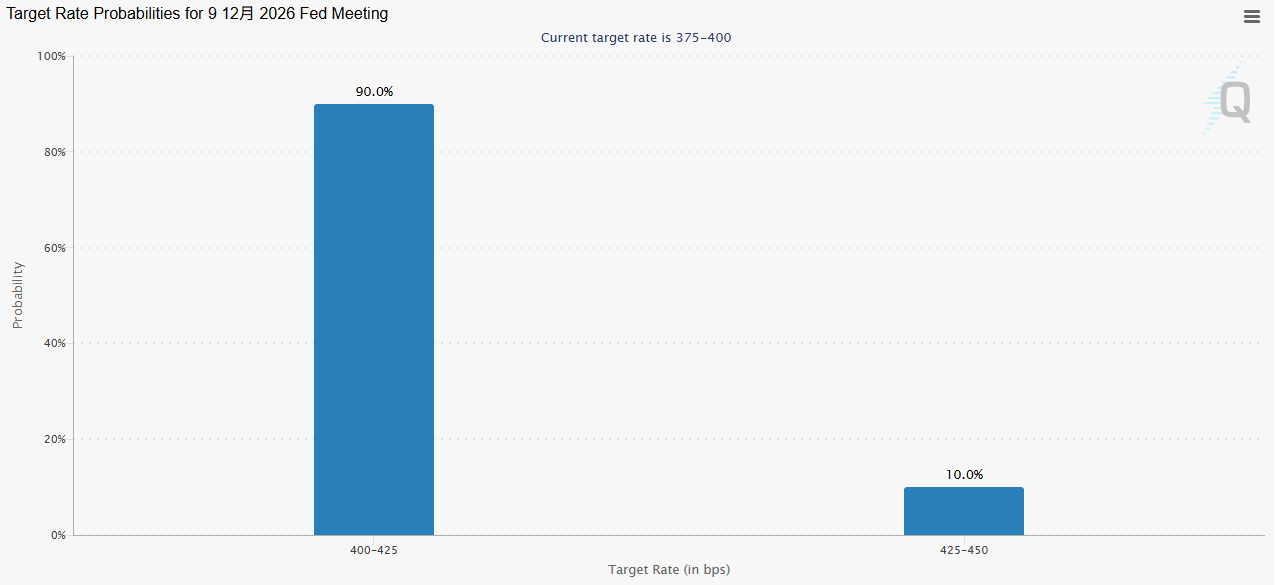
CME probabilities cited in the November 19 report put a December increase of 25 basis points at 90%, versus 10% for 50 basis points. The probability of a cumulative 50-basis-point increase by January was 75.5%. Those figures described market pricing at the time, not an announced Fed path. BMO Capital Markets economist Scott Anderson said the October minutes strengthened expectations of increases at two consecutive meetings. LPL Financial economist Jeffrey Roach instead expected improving inflation readings to make a 25-basis-point December increase sufficient.
Why the $62,000 retest mattered
The first move toward $62,000, over the preceding weekend, had prompted attention to liquidation and oversold signals. In a November 17 report, Bitwise chief investment officer Matt Hougan attributed part of that decline to roughly $2 billion in leveraged positions being liquidated during a thinly traded weekend, alongside inflation-driven changes in rate expectations. K33 research head Vetle Lunde pointed to negative perpetual-futures funding rates, increased options-hedging demand and more than half of circulating bitcoin being held at a loss. Those indicators described stressed positioning; they did not establish a price floor.
By the second test, the question was whether spot demand could support a rebound. Wintermute OTC trader Jasper de Maere said clear buying support was lacking across ETFs, crypto treasury companies, retail traders and institutions. Talos data cited in the report showed that the total value of orders within 1% of bitcoin’s mid-price had fallen nearly 38% from a year-to-date high recorded before the Binance theft. That is an order-book liquidity comparison, not a measure of on-chain accumulation. With less depth, a trade of a given size can move the quoted price more readily.
Views on downside risk remained divided. Sygnum Bank’s Fabian Dori said persistent dollar and long-term Treasury-yield strength could pressure bitcoin, depending on the strength of institutional allocation and currency-debasement hedging demand. Bitget analyst Lewis Huang identified a break below roughly $62,000, alongside further dollar and yield gains, as a risk for continued selling. Fidelity’s Jurrien Timmer saw the price near support in his long-term model, while Wellington-Altus strategist James Thorne identified $57,000 as the level that would invalidate his bullish weekly-chart reading. Trader Peter Brandt warned of a possible head-and-shoulders pattern, conditional on its confirmation.
The evidence available on November 19 therefore showed thinner quoted liquidity and competing interpretations of market positioning—not confirmation that $62,000 was a bottom. Subsequent core inflation readings, particularly services prices, remained important to expectations for a January rate increase.