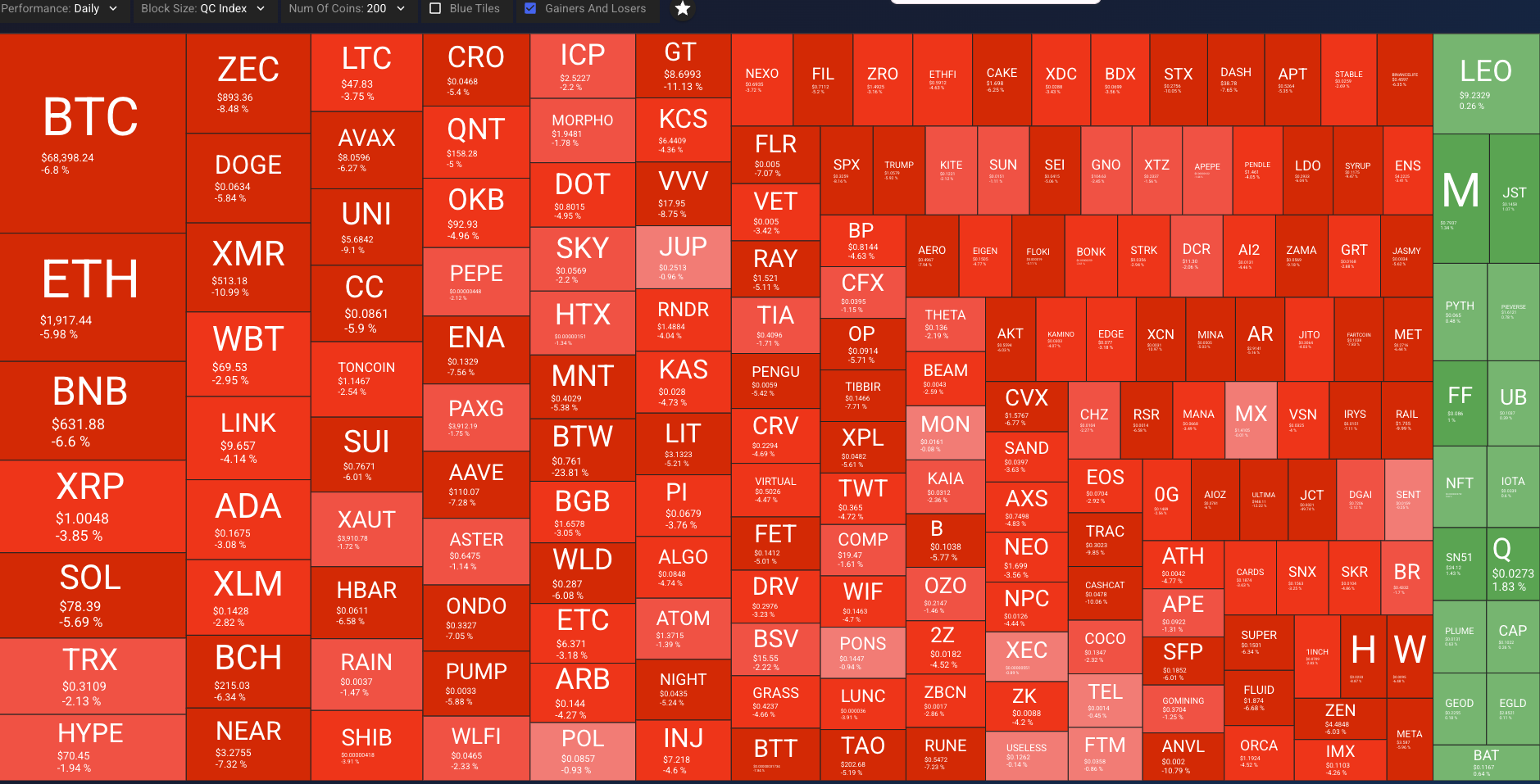
Bitcoin fell below $70,000 in the 24 hours covered by Odaily’s November 13, 2026, 15:02 UTC+8 report. The article put Bitcoin’s decline at more than 7% and said Ether fell below $2,000, down more than 6%. Citing Quantify Crypto, it reported that only 16 of the 200 largest tokens by market capitalization rose over that period.
The research question is whether the reported decline reflects a temporary shock or a broader withdrawal of demand. The figures in the article point to several possible pressures, but they do not establish how much each contributed to Bitcoin’s move.
Macro expectations and fund flows
The report cited an October US consumer price index increase of 0.4% month over month, against a 0.3% expectation, and a 0.3% increase in core CPI, against a 0.2% forecast. It described concern about a larger December Federal Reserve rate increase as one possible source of pressure on risk assets. Those expectations were not a policy decision.
On crypto-specific flows, the article attributed to SoSoValue five consecutive trading days of net outflows from US spot Bitcoin ETFs, totaling more than $1.4 billion. It put the November 11 outflow at $300 million and said BlackRock’s IBIT accounted for most of that day’s figure. It also reported a $14.2 billion contraction in total stablecoin supply over the preceding 30 days, but did not identify the dataset or measurement cutoff for that estimate. A supply decline alone cannot establish why holders moved funds or where they went.
The article also said MSCI would remove Strategy, Metaplanet and Upexi from specified indexes under its classification rules. It cited a JPMorgan estimate of $1.8 billion–$2.8 billion in potential forced equity sales, rising to about $8.8 billion if other major index providers followed. Those are estimates concerning shares, not reported Bitcoin sales; any effect on treasury companies’ future Bitcoin purchases remains an inference.
What remains uncertain
The report cited Glassnode as saying the Coinbase Premium Index had stayed negative throughout Bitcoin’s pullback from its September high, with its 30-day average at its lowest level since February 2026. That is a measure of relative pricing, not proof that a price floor has formed.
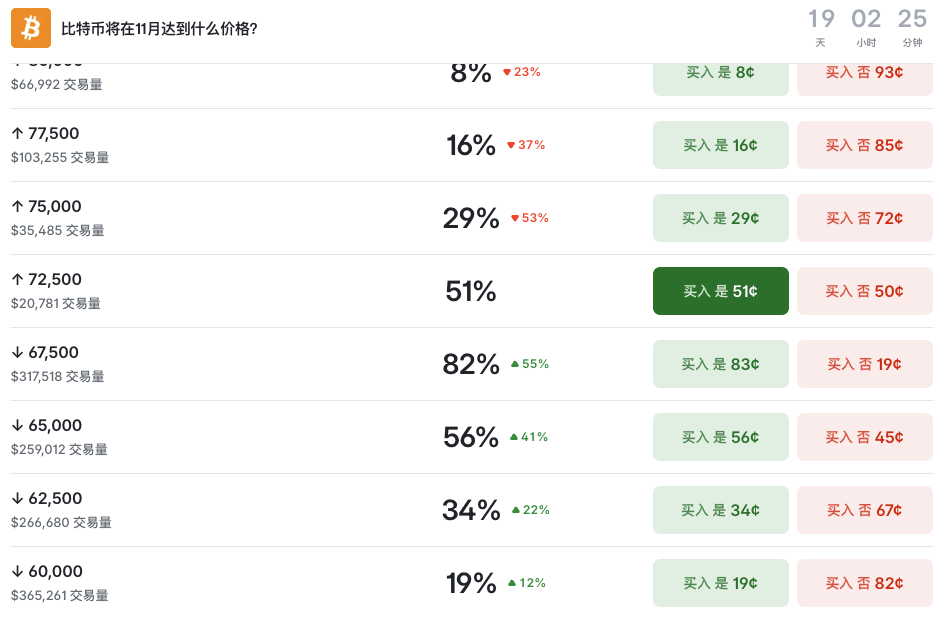
Polymarket probabilities quoted in the article—56% for Bitcoin reaching $65,000 in November, 29% for a move back above $75,000 and 19% for a fall below $60,000—reflect the cited markets at the time of reporting, not measured odds of future outcomes. Taken together, the reported ETF flows, stablecoin-supply change and pricing indicator describe weak demand at that point in time. They do not establish when, or whether, Bitcoin would rebound.