Historical-source note: This article is based on Spencer Applebaum’s analysis, translated and published by Deep Tide TechFlow on November 11, 2026, at 11:22 a.m. UTC+8. Figures and time references below reflect that reporting context, not current measurements.
AI-assisted development may make it easier to build a trading or lending application. Applebaum’s argument, however, is that cheaper code does not make the scarce inputs to a financial business easier to acquire. His proposed framework for DeFi value capture has three parts: distribution, capital and proprietary data. A fourth factor—willingness to enter markets incumbents avoid—can give a newcomer an opening, but is not necessarily a lasting moat.
This is a framework for assessing potential pricing power, not a finding that every protocol named possesses all three advantages. The source argues that on-chain finance will expand substantially; that outcome remains a forecast.
Distribution: who controls the customer relationship?
Applebaum defines distribution as the ability to direct customer orders or balances. The distinction matters because an interface, an exchange and a stablecoin issuer can each contribute to a transaction without having equal leverage over its economics.
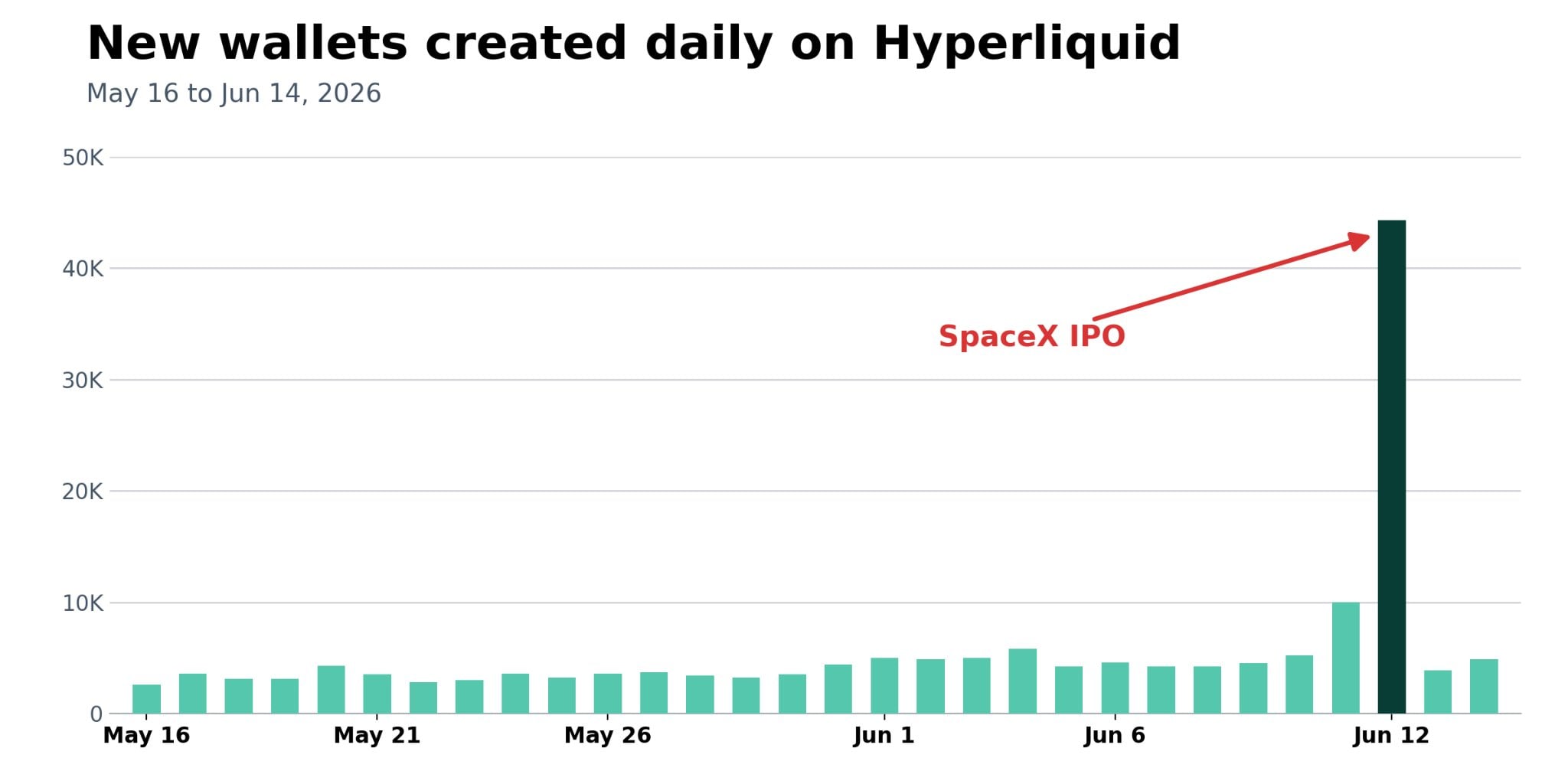
His central example is Hyperliquid’s USDC balances. The source says the platform held more than $6 billion in USDC used as derivatives collateral and, under an arrangement involving Coinbase’s aligned quote asset framework, roughly 90% of the reserve yield associated with eligible balances flows to Hyperliquid’s Assistance Fund for HYPE buybacks rather than to Circle or Coinbase. Using $5.5 billion of USDC subject to that share, the article estimates approximately $185 million in annual revenue at the rate assumed at publication. That is an estimate, not a fixed contractual return.
Wallets illustrate both the power and the limits of distribution. The source compares MetaMask’s swap fee of up to 0.875% with Uniswap’s average trading fee of 0.13% over the preceding 12 months; it notes that much of the latter goes to liquidity providers rather than the protocol. It also says Phantom adds five basis points to Hyperliquid perpetual trades above Hyperliquid’s native 4.5-basis-point fee. But a wallet user can import a key into another interface, and the source reports fee competition among Hyperliquid front ends. An interface’s pricing power therefore depends on how hard its users are to move, not merely on whether it routes orders today.
Robinhood serves a narrower purpose in this analysis: its reported 28 million funded accounts illustrate an established customer relationship. Applebaum speculates that it could build and direct traffic to its own DEX; he explicitly does not claim it will. The example does not establish that Robinhood owns the capital and proprietary-data moats as well.
Capital: liquidity is not the same as a balance sheet
A protocol can attract liquidity without controlling it. Users may withdraw deposits or move trading activity when incentives change. Applebaum instead points to financing capacity and capital available to absorb losses as harder-to-copy advantages.
One proposed opportunity is DeFi prime brokerage: financing positions across venues so traders need not maintain separate margin everywhere. The source cites traditional prime-brokerage industry revenue rising from approximately $15 billion in 2020 to $27 billion in 2024. It argues that software could broaden access to unified margin, while funding costs, risk management and an adequate balance sheet would remain difficult constraints. That is a proposed market opportunity, not evidence that a particular DeFi provider has already solved cross-venue margin.
Risk backstops present a related distinction. Hyperliquid’s HLP vault provides liquidity through market-making and taking over liquidated positions; its depositors share gains and bear losses. The source reports an approximately $4 million HLP loss during an ETH-position liquidation in March 2025. Such capital cannot be copied by forking vault code, although third-party depositors can leave. Applebaum argues that a protocol-owned balance sheet built from retained earnings would be more durable than deposits attracted chiefly by short-term yield.
Proprietary data: a qualification to on-chain transparency
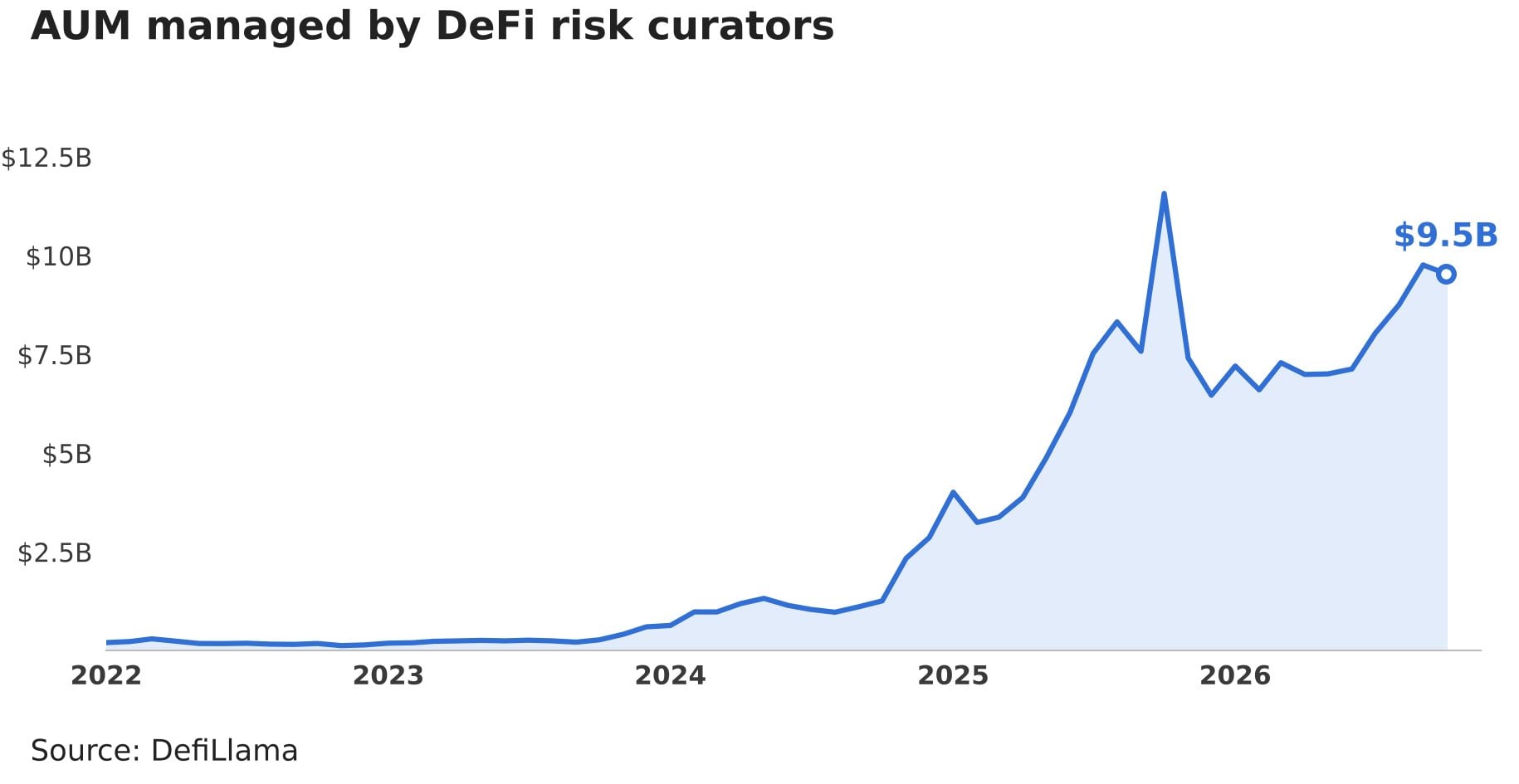
Publicly visible collateral, prices and liquidation rules give competing lending-risk managers access to much the same inputs. Citing DefiLlama, the source says risk curators on platforms including Morpho, Kamino and Euler managed $9.5 billion at the time of reporting. It gives an industry-average curator fee of 19 basis points and a 22-basis-point blended fee for Steakhouse Financial. No separate measurement date for those curator figures is supplied.
The proposed contrast is underwriting that requires nonpublic records. Applebaum uses on-chain reinsurer OnRe, whose work requires insurance-contract terms and historical claims information unavailable from a block explorer. The source says OnRe charges a 75-basis-point management fee plus 20% of excess returns, and estimates an approximately 3% annualized fee at the then-current return level. It also cautions that reinsurance and DeFi lending carry different risks: the fee difference alone cannot isolate the value of proprietary data from compensation for illiquidity or potential principal loss.
What the framework does—and does not—establish
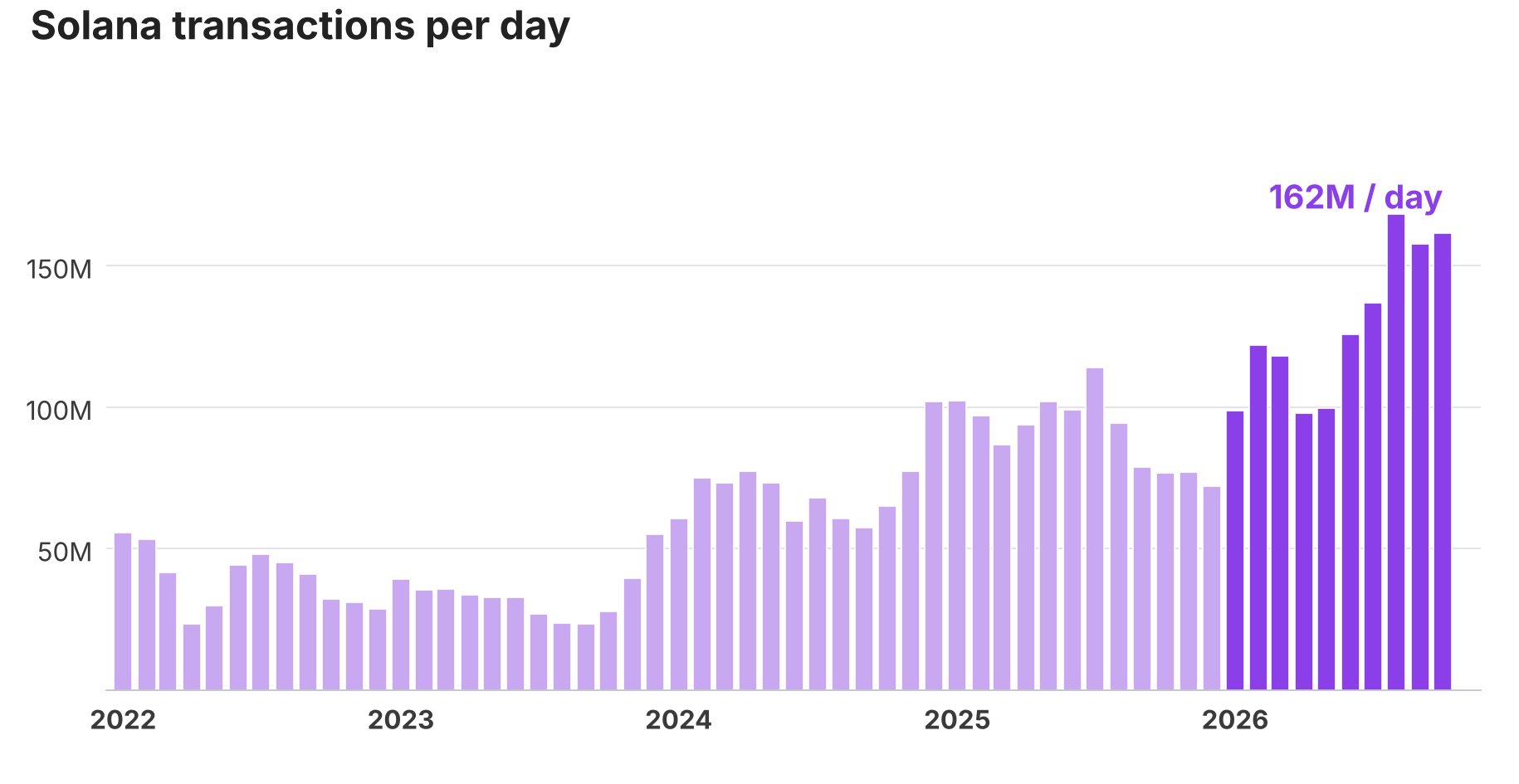
Applebaum argues that general-purpose chains may retain less of the distribution and capital advantage they once gave applications as access becomes less chain-specific. That does not imply their fees or tokens must have no value. His example of a chain processing one billion payments a day at one cent each—$3.65 billion in annual fees—is explicitly hypothetical. A Blockworks Research chart cited in the source places Solana daily transactions at 162 million in 2026; the article does not supply a more precise measurement date for that figure.
Nor does accepting greater risk automatically produce a durable business. The source cites Ethena, Hyperliquid and other entrants as examples of pursuing markets established firms may avoid, while acknowledging that incumbents can enter once a market develops. The research question is whether an initial opening becomes a defensible customer relationship, loss-absorbing capital base or underwriting capability. Code alone does not answer it.
Source: techflowpost.com (originally published 2026-11-11 11:22 UTC+8)