Historical context: This analysis draws on an imToken article published by PANews on November 11, 2026, at 21:36 UTC+8. Project decisions and network plans below are described as reported at that time.
For a protocol choosing where to run, the question is no longer simply whether an L2 offers cheaper transactions than Ethereum mainnet. The decision also involves the cost of operating a separate network, access to shared liquidity and the trust assumptions introduced when assets and execution move apart. The examples collected by imToken point to a reassessment of that trade-off—not a wholesale departure from L2s.
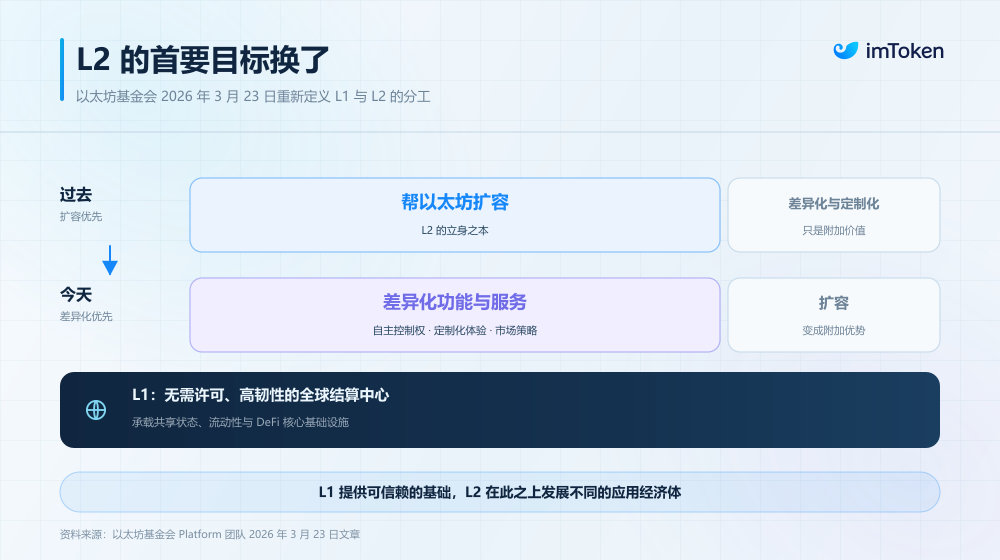
What changed in the deployment decisions?
ENS Labs planned a dedicated ZK rollup, Namechain, for ENSv2 in 2024. In February 2026, ENS co-founder Nick Johnson said development would stop and ENSv2 would instead deploy on Ethereum L1, citing faster-than-expected mainnet scaling. According to figures disclosed by ENS Labs and cited by imToken, the average gas cost of an ENS name registration had fallen about 99% over the preceding year, from nearly $5 to less than $0.05. At that price, an independent L2 would still bring infrastructure, bridging, cross-chain resolution, audit and operating work.
Other decisions had different motivations. Synthetix criticized liquidity fragmentation and infrastructure instability in a June 2025 statement about L2s; its new perpetuals exchange launched on Ethereum mainnet that December. ShapeShift moved its rFOX staking program from Arbitrum to mainnet on October 1, 2026, because most FOX tokens were already held there, according to the article. ImToken also reported plans or moves involving Trueo, Superseed and Nillion. These cases should not be treated as evidence that every application has the same requirements.
Operating an L2 presents a separate economic question. ImToken reported that Blast announced on October 2, 2026, that it would cease operations because network maintenance costs exceeded L2 revenue and it saw no reliable path to sustainability. It also reported that Abstract planned to close its network on December 15; that was a future plan as of the article’s publication, not a completed shutdown.
Keeping assets on L1, outsourcing execution
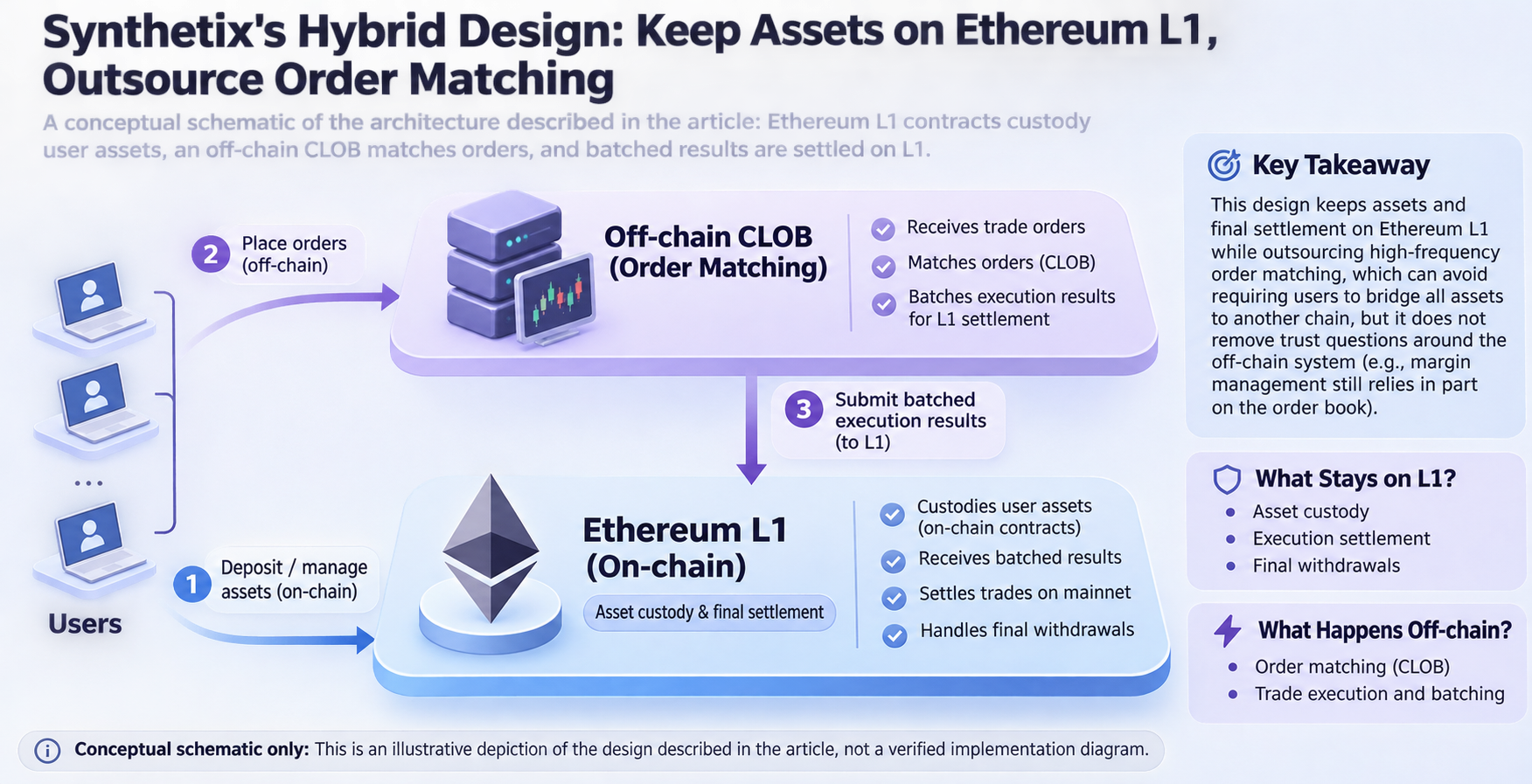
The distinction is illustrated by Synthetix’s reported design. Ethereum L1 contracts custody user assets, while an off-chain central limit order book matches orders and batches results for mainnet settlement. That arrangement can avoid requiring users to bridge all their assets to another chain, but it does not remove trust questions around the off-chain system. ImToken notes that some margin management still depends on the order book. The relevant architectural test is therefore which guarantees remain enforceable on L1, not whether every computation takes place there.
The article also cites ETHBEAT data as of November 2026: among the many L2s it tracked, only a single-digit number had reached Stage 2, while Base, Arbitrum One and OP Mainnet remained at Stage 1. These maturity labels matter when assessing whether an L2 offers the same security assumptions as mainnet. Native Rollup verification and closer cross-rollup interaction were discussed as research directions, not deployed solutions to fragmentation.
What does this imply for ETH valuation?
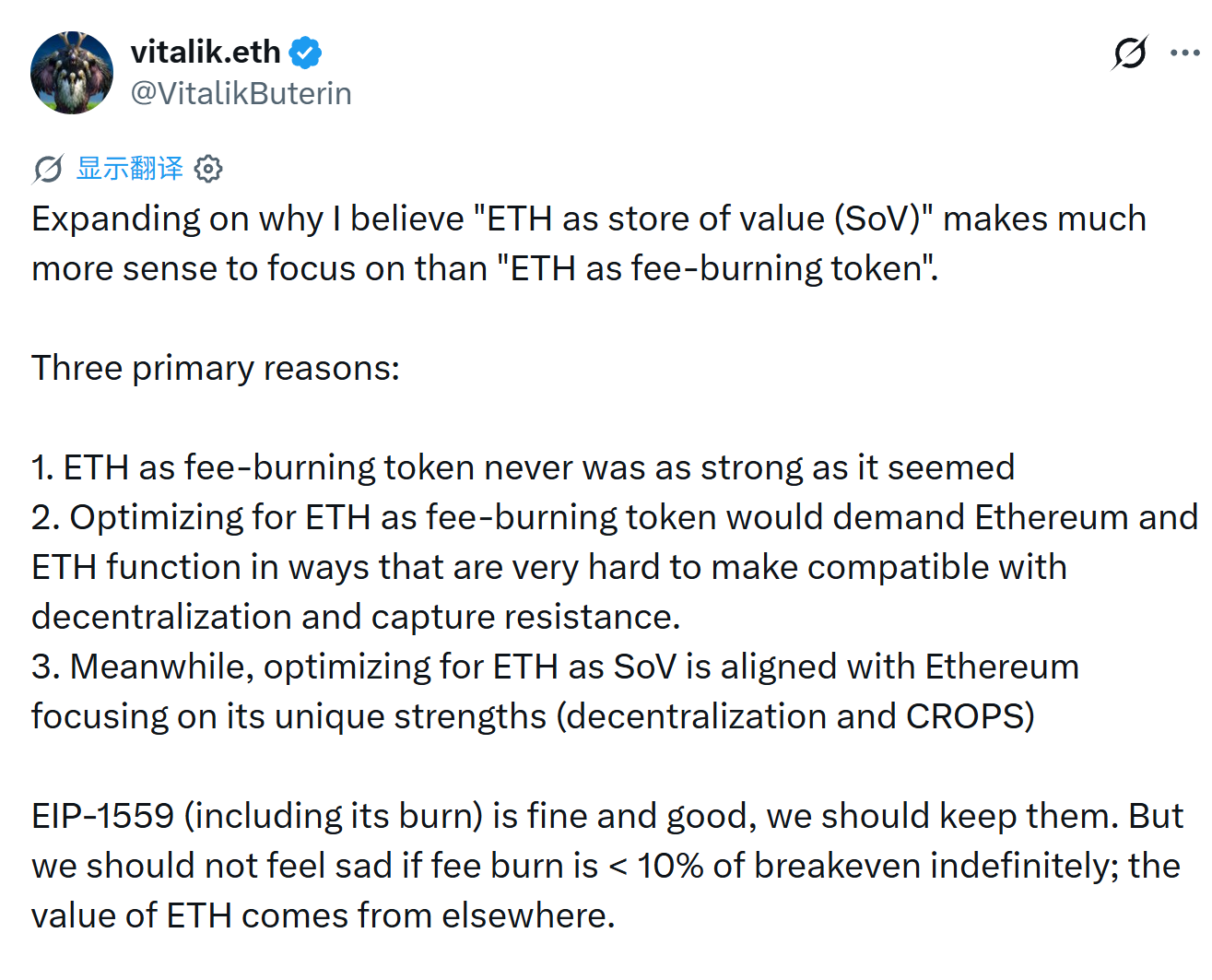
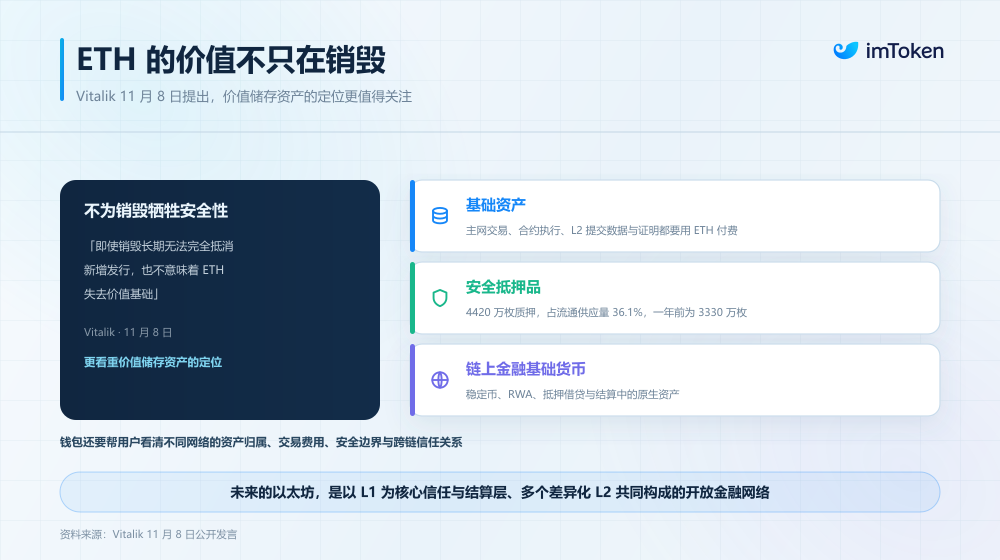
EIP-1559 burns the base fee and pays the priority fee to validators. Greater capacity and cheaper L2 data publication can reduce fees per transaction, so rising ecosystem activity need not produce proportionally greater ETH burns. ImToken recounts Vitalik Buterin’s argument that ETH’s long-term case should not rest chiefly on high fees: he favors its role as a store-of-value asset supported by a network designed for decentralization, resistance to censorship and capture, openness, privacy and security. He did not propose removing fee burning.
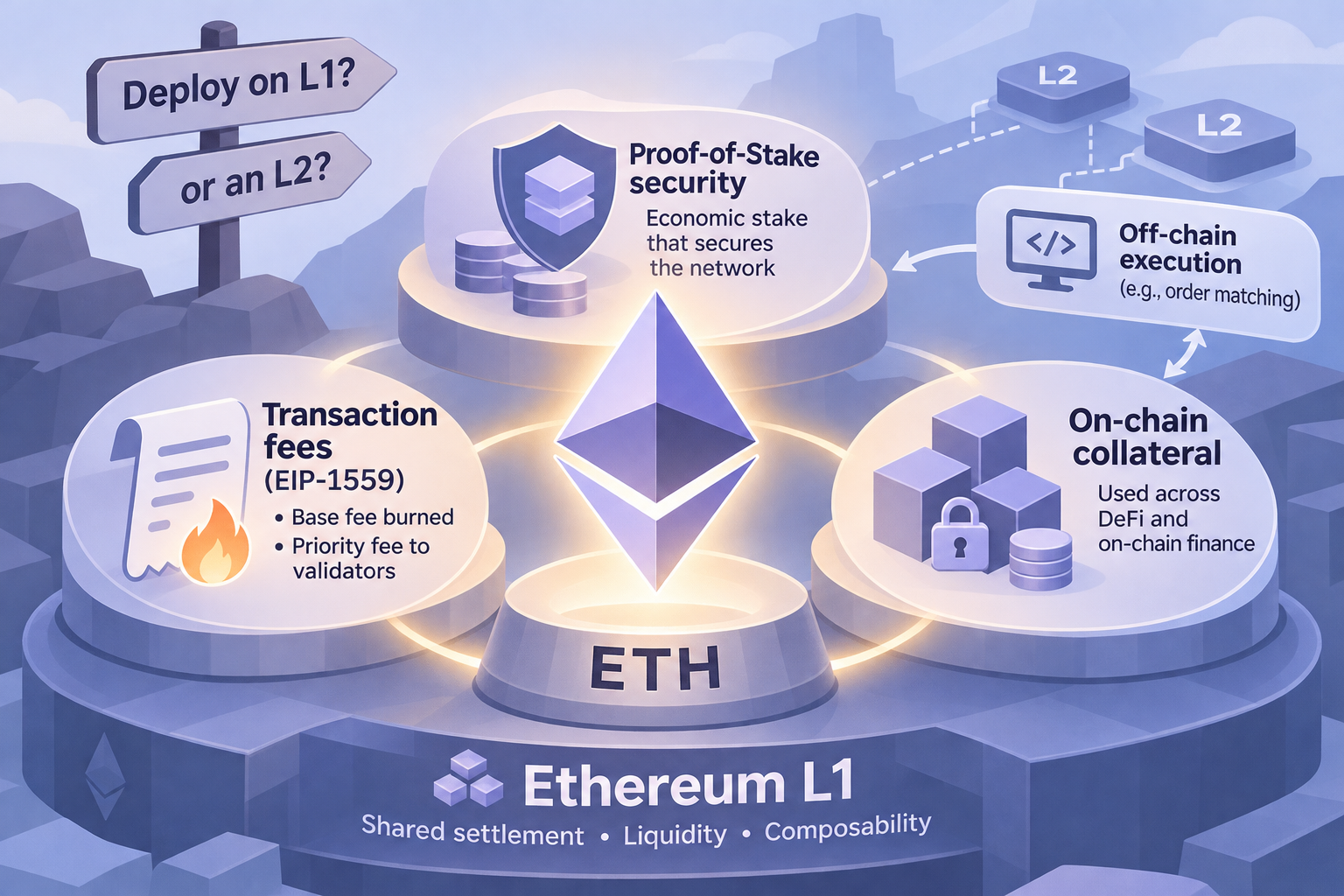
That is a framework for evaluating ETH’s role, not a measured valuation. The source provides no dataset showing that mainnet migrations have increased ETH demand or that lower fees will be offset by other sources of value. It does show why protocols may now weigh shared settlement and liquidity against the benefits—and continuing costs—of a separate execution environment. L2s remain relevant where an application needs their particular performance or control; the choice depends on the application’s requirements and security assumptions.