Pump.fun’s launch activity remained near its previous peak in 2026, but far fewer tokens reached a $10 million market capitalization. In research reported on November 12, 2026, on-chain research team Sparsity examined whether the platform’s fees help explain the gap. Its central argument is about incentives, not proof that fees alone caused weaker token performance: Pump.fun and token creators can earn from early trading even when a token fails to last.
Sparsity’s figures are approximate and reflect data through November 9, 2026. The research cautioned that the underlying data should be checked before use.
Where the fees accrue
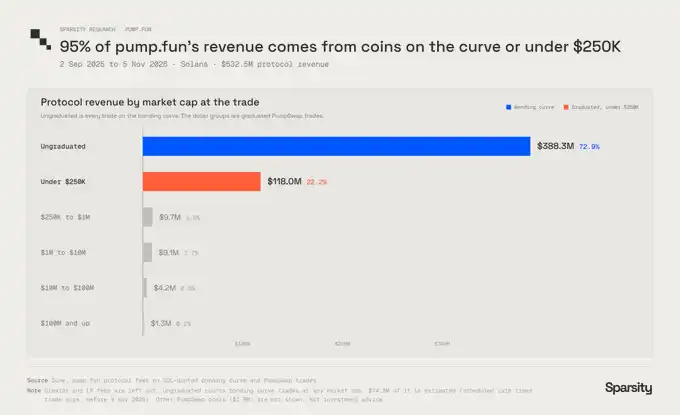
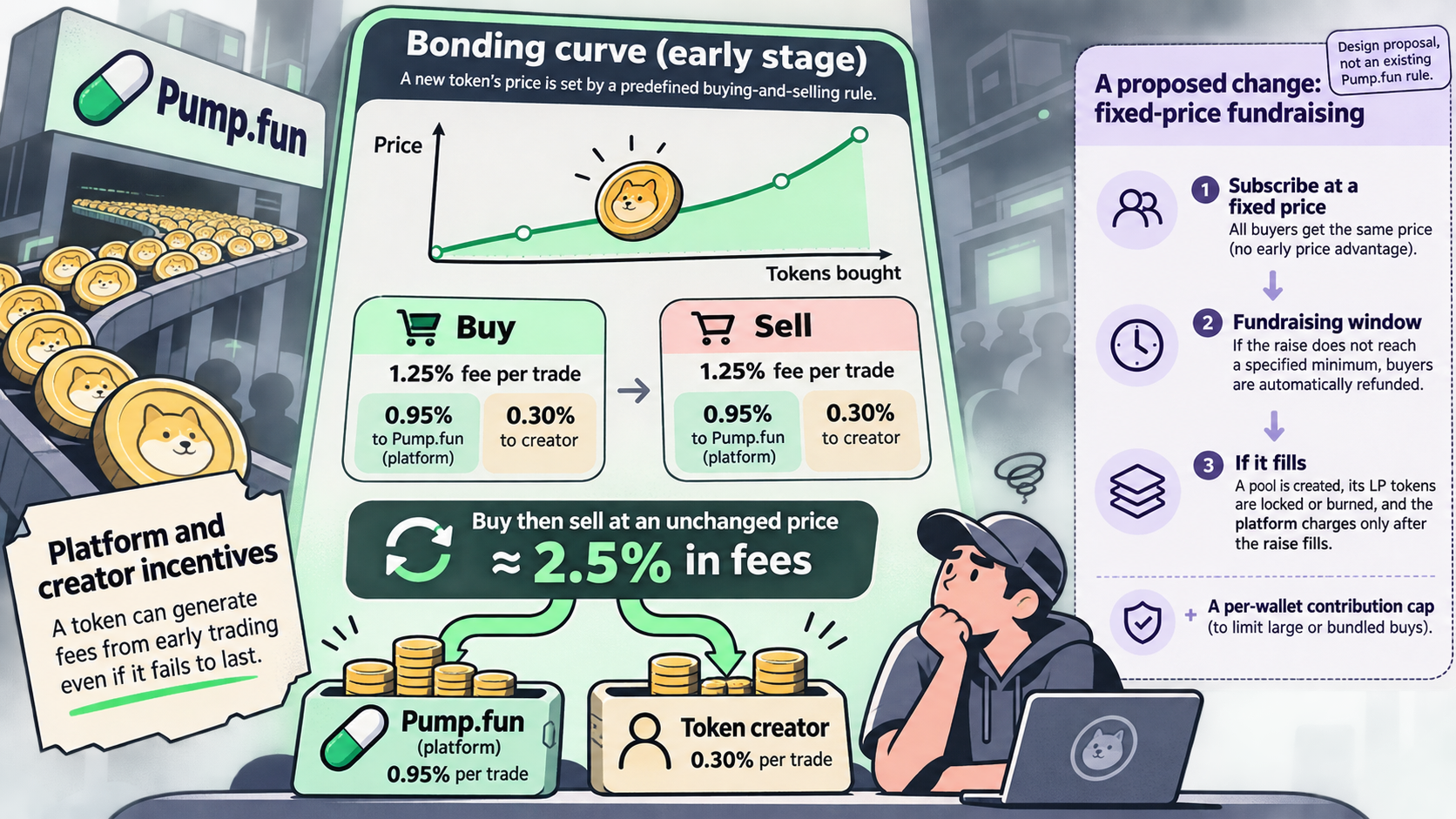
Sparsity estimated that 95% of Pump.fun’s protocol revenue came from tokens still on their bonding curves or valued below $250,000. A bonding curve sets an early token price according to a predefined buying-and-selling rule. At that stage, the reported fee was 1.25% per trade: 0.95% to Pump.fun and 0.30% to the creator. Buying and then selling at an unchanged price would therefore incur about 2.5% in fees, before any other change in execution price.
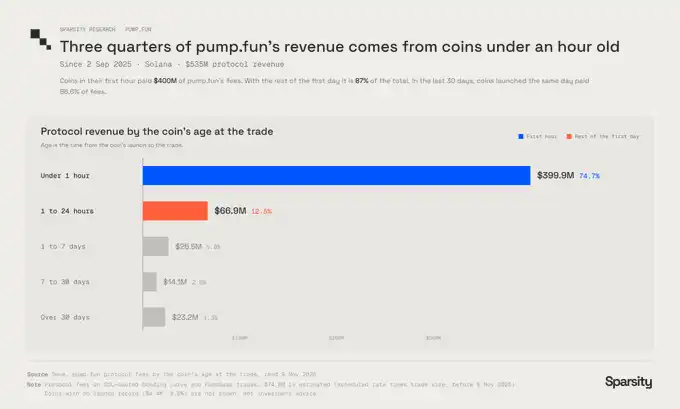
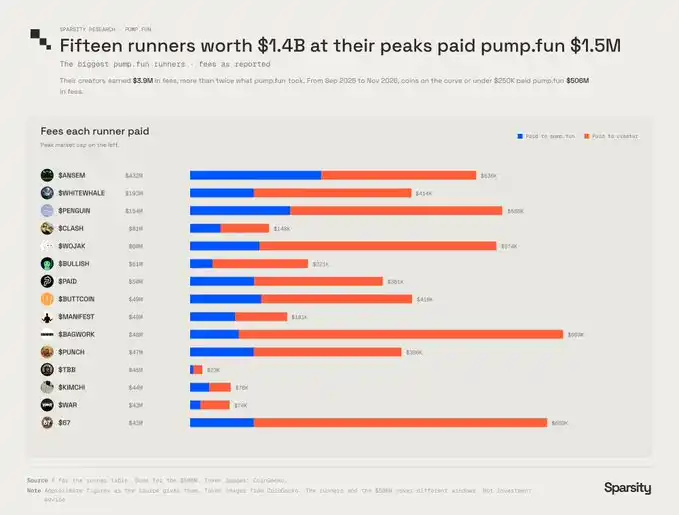
The revenue was concentrated early in a token’s life. In Sparsity’s breakdown of this revenue, roughly three-quarters came from tokens less than an hour old, and 87% from tokens less than a day old. It estimated that tokens still on bonding curves or below $250,000 in market value had generated about $506 million for Pump.fun. By comparison, a group of 15 tokens whose combined peak market capitalizations reached $1.4 billion generated about $1.5 million in platform revenue.
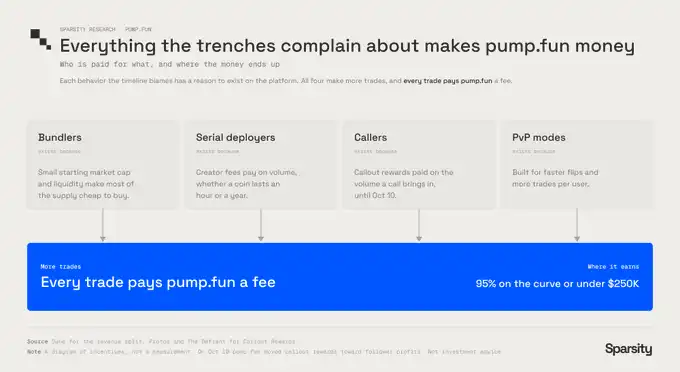
These are revenue comparisons, not a measure of what buyers made or lost. They do show why transaction activity in many small launches can matter more to the platform’s fees than the subsequent success of a few large tokens.
Issuance, promotion and outcomes
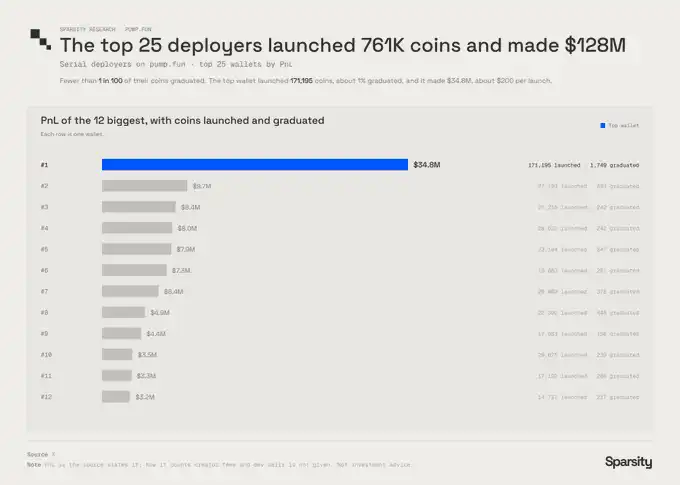
Creator fees present a similar incentive. According to Sparsity, the 25 highest-volume issuing wallets launched a combined 761,000 tokens and earned $128 million, although fewer than 1% of their tokens graduated from the bonding-curve stage. The figures describe those wallets’ aggregate activity; they do not establish the motives behind any individual launch.
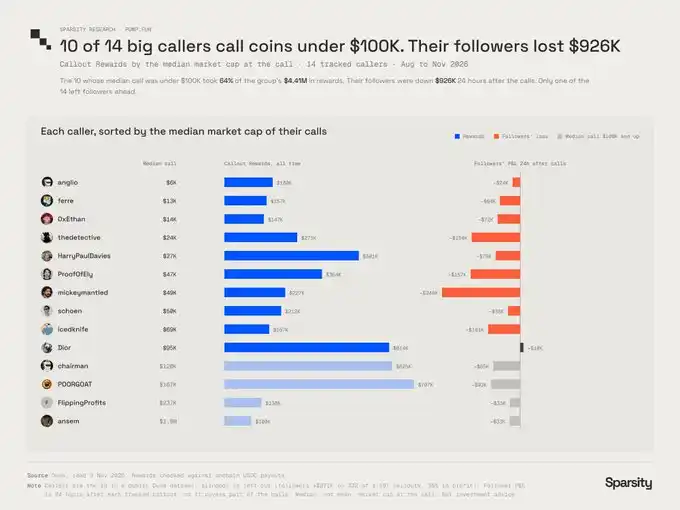
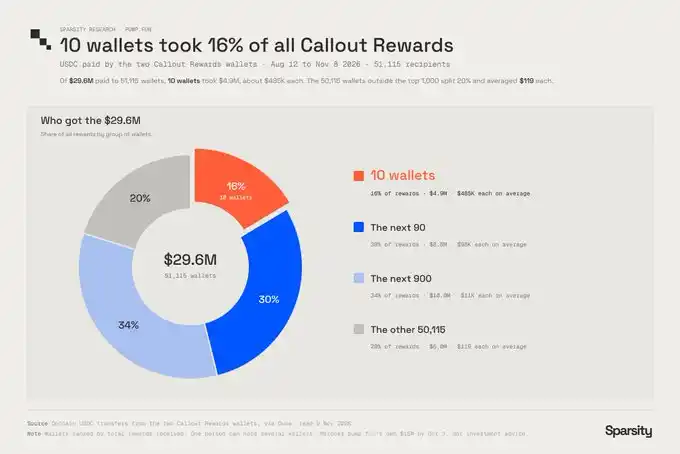
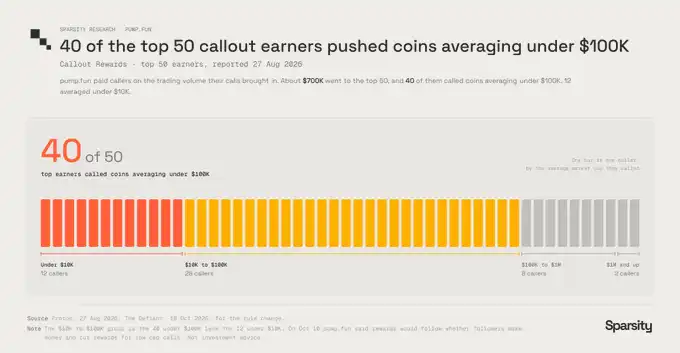
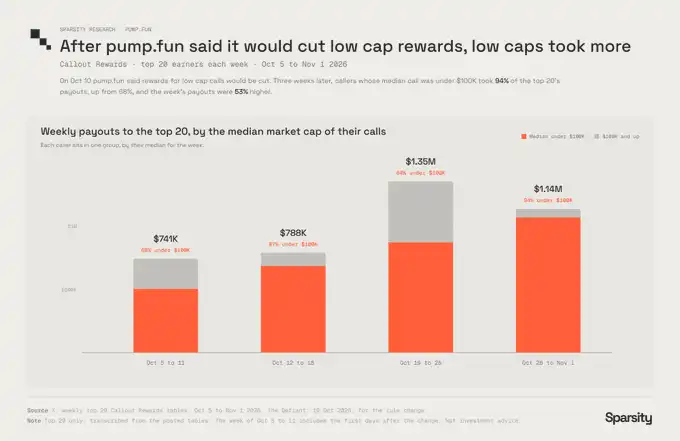
Sparsity also examined rewards for people promoting tokens. It reported that, since August 2026, Pump.fun had distributed $29.6 million in promotion rewards to 51,115 wallets. Ten wallets received 16% of the total, while the median recipient received $13. Pump.fun said on October 10, 2026, that future rewards would take followers’ profitability into account and reduce rewards for promoting low-market-cap tokens. Sparsity found that, over the following three weeks, promoters whose featured tokens had a median market capitalization below $100,000 received 94% of the rewards paid to the top 20 recipients, up from 68% before the change. That observation does not, by itself, establish whether or how the announced criteria were applied.
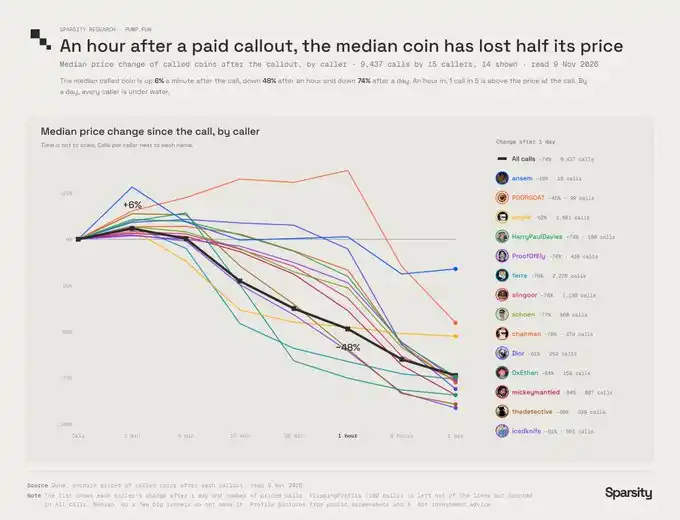
In a separate sample of 14 promoters, Sparsity reported that followers collectively lost $926,000 one day after the featured posts. The median price change for featured tokens was up 6% after one minute, down 48% after one hour and down 74% after one day. The sample is evidence about the tracked promotions, not a measured outcome for every Pump.fun promoter or buyer.
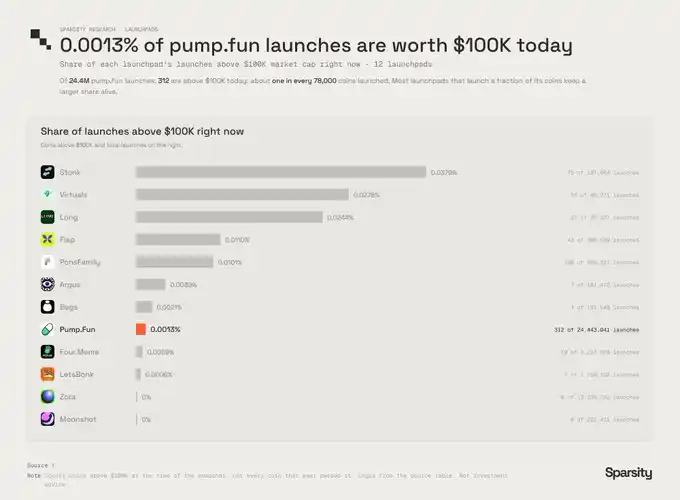
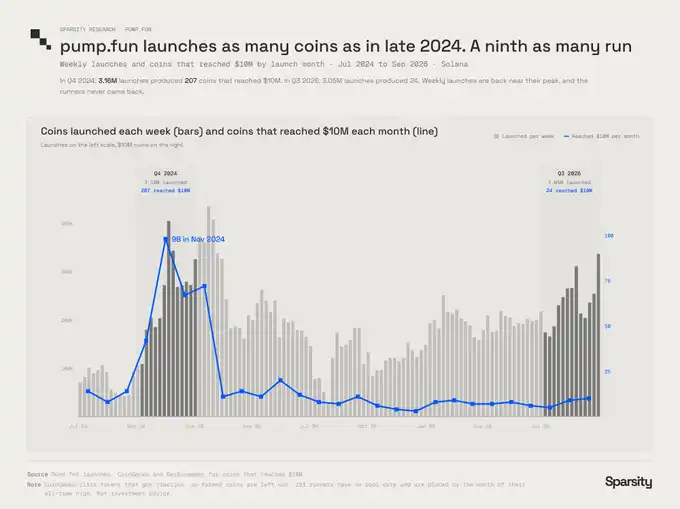
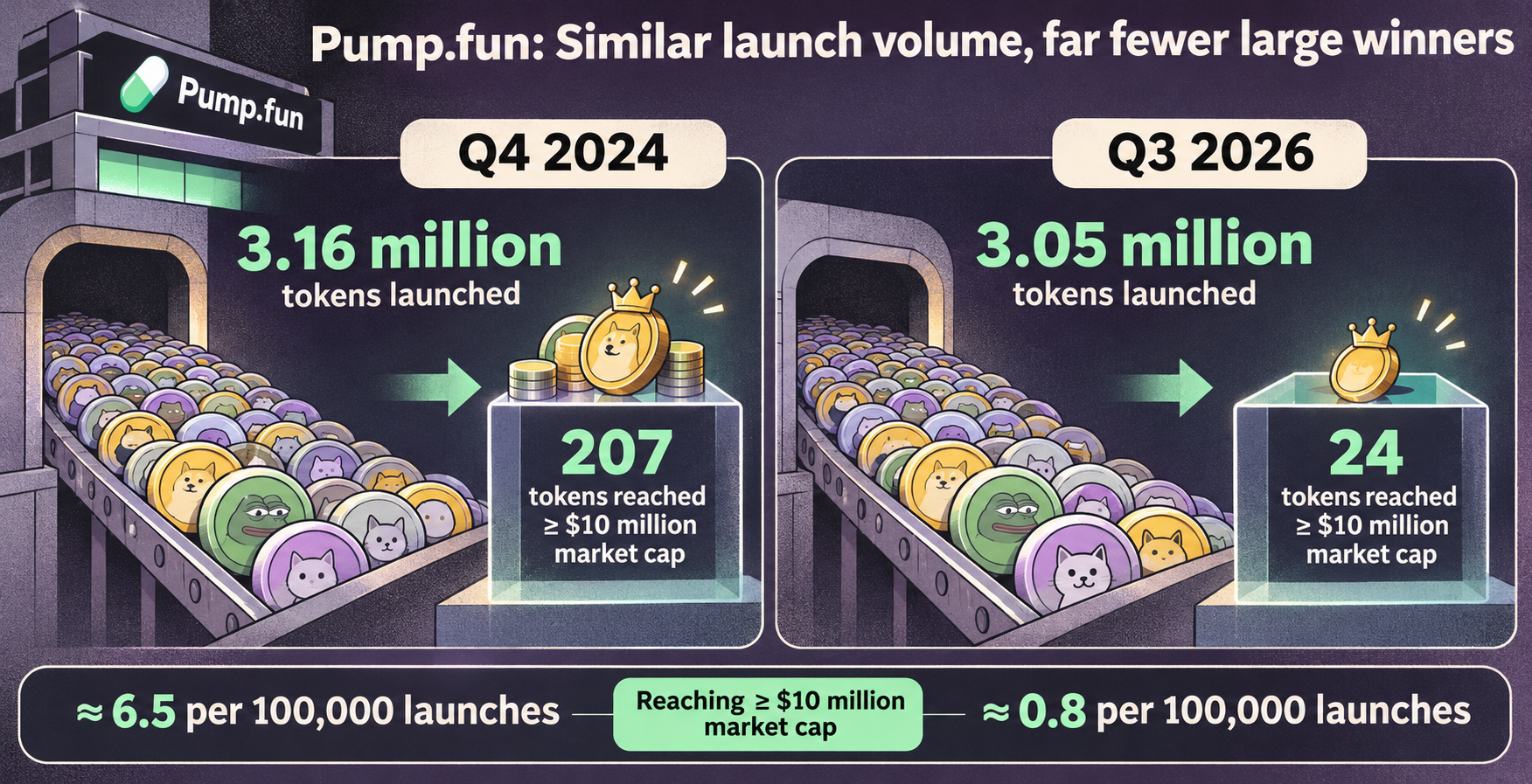
The broader launch figures point to a widening gap between issuance and large winners. Sparsity counted 3.16 million Pump.fun tokens launched in the fourth quarter of 2024, of which 207 reached a $10 million market capitalization at some point. In the third quarter of 2026, it counted 3.05 million launches, of which 24 reached that threshold—approximately 6.5 versus 0.8 per 100,000 launches. Sparsity also reported that combined monthly bonding-curve and PumpSwap volume fell from roughly $25 billion–$30 billion in the first quarter of 2026 to about $13.8 billion in October 2026. These comparisons describe different periods and measures; they do not isolate the fee model as the cause of the decline.
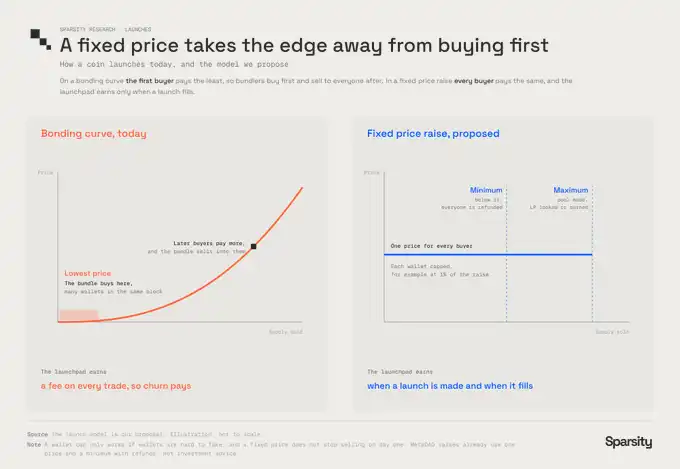
A proposed change to the launch mechanism
Sparsity proposed replacing the bonding curve with a fixed-price fundraising process. Buyers would subscribe at the same price. If a launch failed to reach a specified minimum within its fundraising window, a contract would refund them. If it filled, the contract would create a liquidity pool; under the proposal, its LP tokens would be locked or burned, and the platform would charge only after the raise filled. Sparsity also suggested a per-wallet contribution cap.
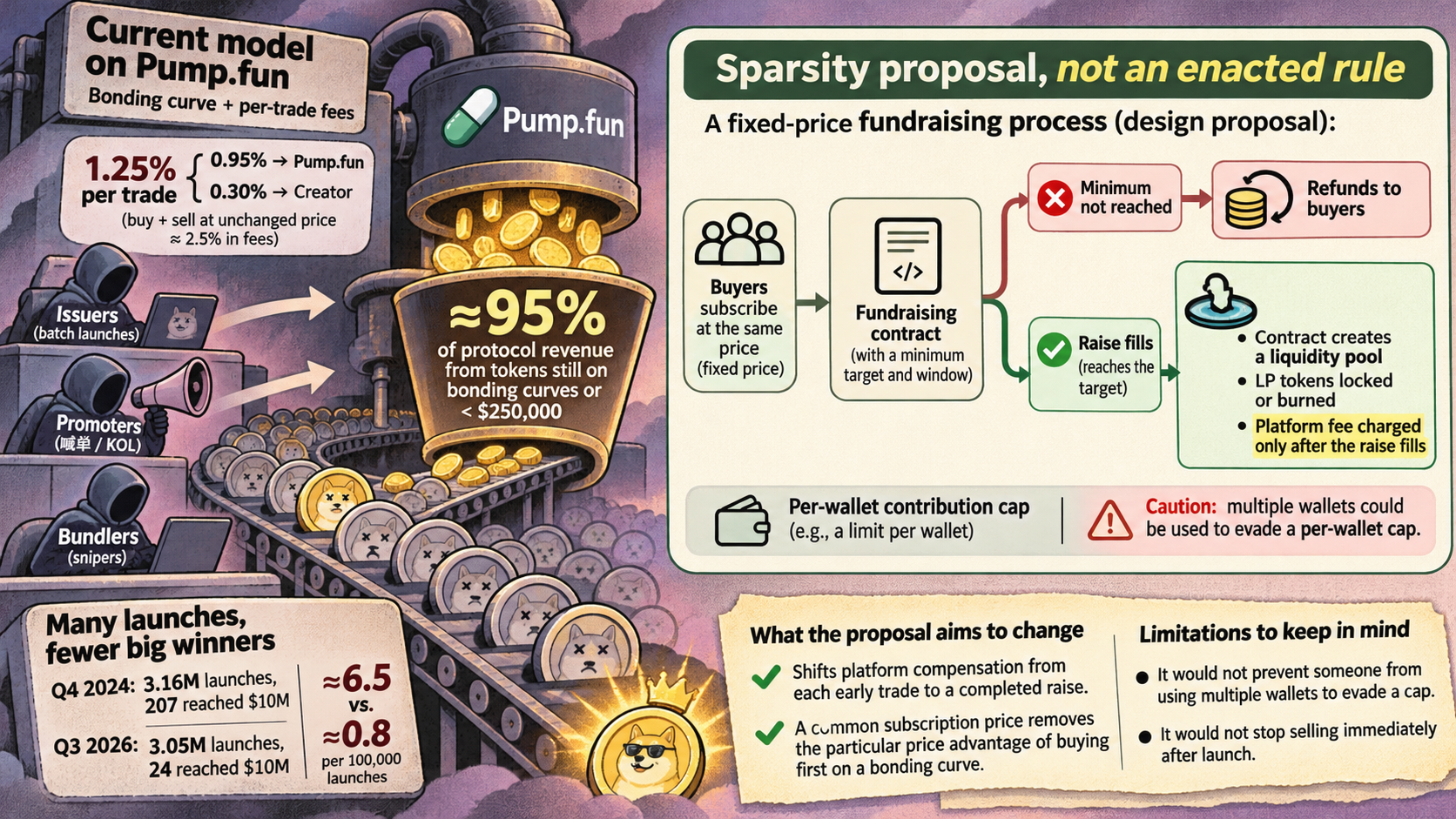
This is a design proposal, not an existing Pump.fun rule. Moving platform compensation from each early trade to a completed raise would remove one route to earning fees from unsuccessful launches. A common subscription price could also remove the particular price advantage of buying first on a bonding curve. It would not prevent someone from using multiple wallets to evade a cap or from selling immediately after launch. Those limitations matter when assessing whether the proposed mechanism would change outcomes, rather than merely the point at which fees are collected.