As reported on November 10, 2026, Hyperliquid’s expansion was no longer limited to traders using its exchange. External teams were drawing on different parts of its trading system: Papertrade used its prices, Trade[XYZ] deployed markets on its matching engine, and Kinetiq’s Elysium aimed to give applications faster access to order-book data. The research question is whether those uses bring fees and liquidity back to Hyperliquid—or leave much of the value with the teams building around it.
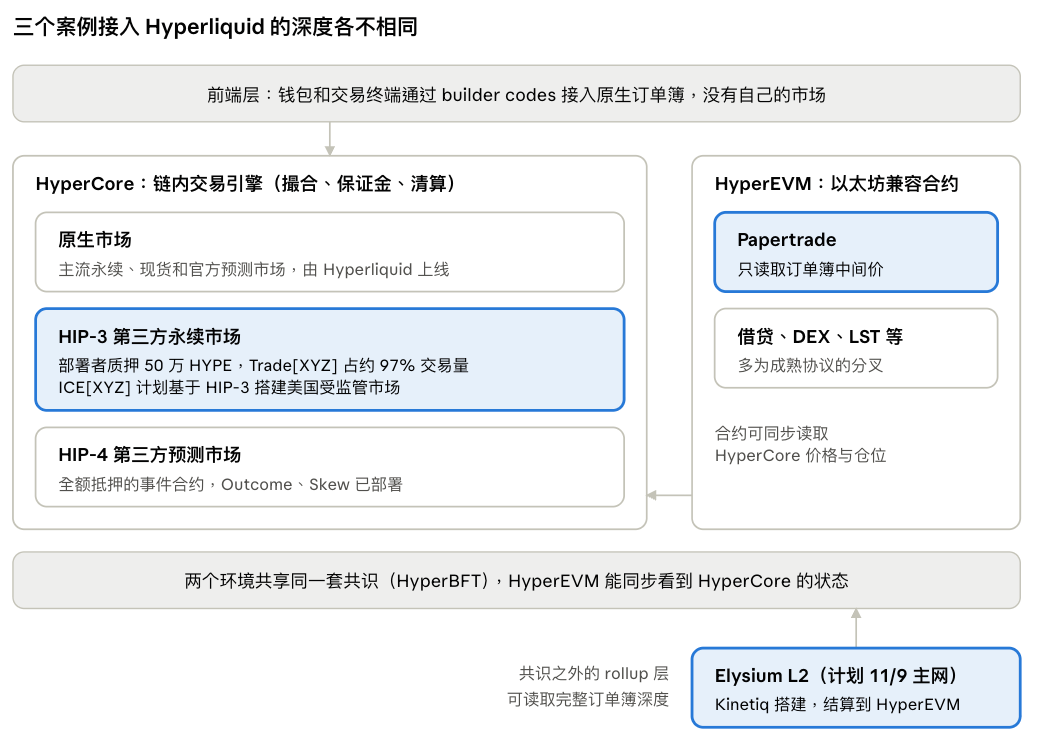
Three ways to use the trading system
Hyperliquid separates its trading system, HyperCore, from HyperEVM, where external teams can deploy contracts. That arrangement lets applications use trading data without necessarily executing their own trades on HyperCore.
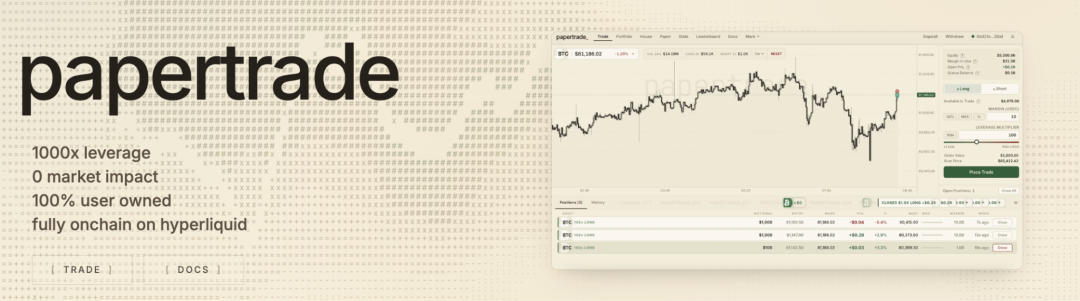
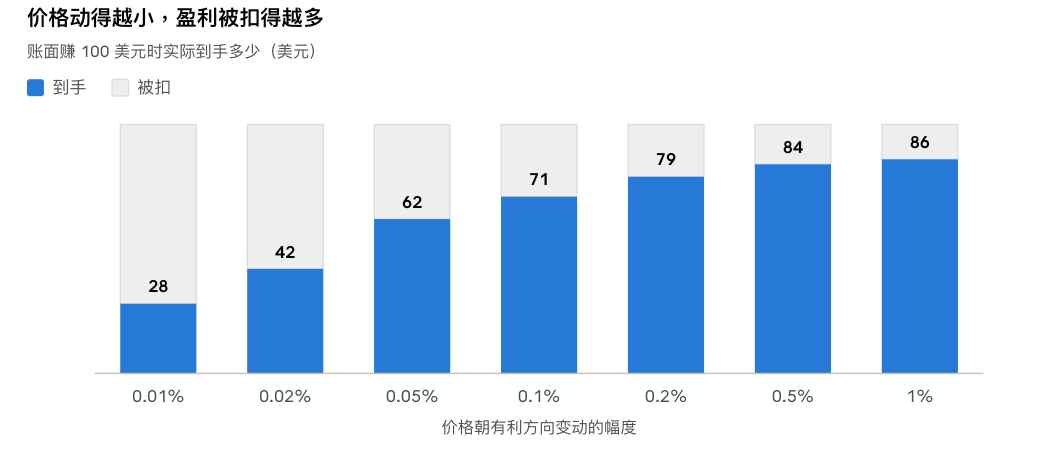
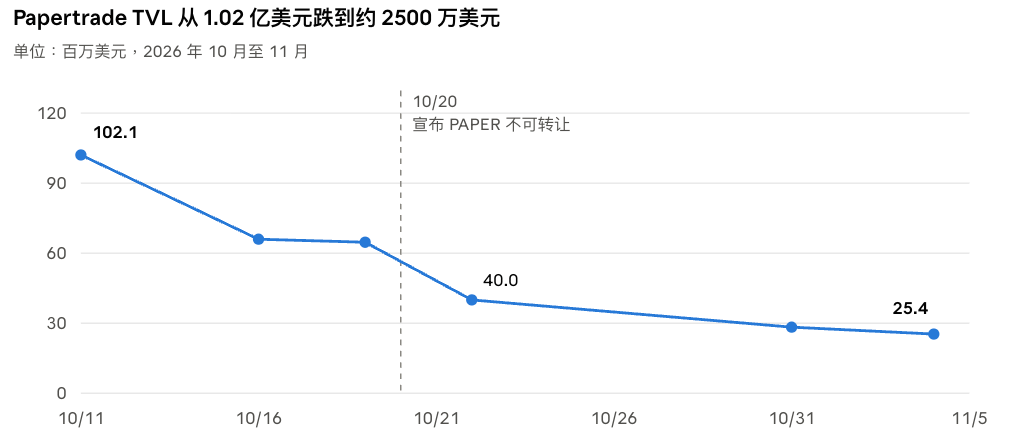
Papertrade illustrates the distinction. Launched on October 10, 2026, it read Hyperliquid’s mid-price when users opened and closed BTC or ETH positions, but settled their gains and losses against its own USDC pool. The source reports more than $1 trillion in notional volume in its first week. That figure describes activity on Papertrade, not trading routed through HyperCore. The source also describes apparent attempts to move Hyperliquid’s ETH price while profiting from positions on Papertrade; it does not establish their full extent or outcome. The case shows a potential risk when an external product relies on an order-book price it does not pay to use.
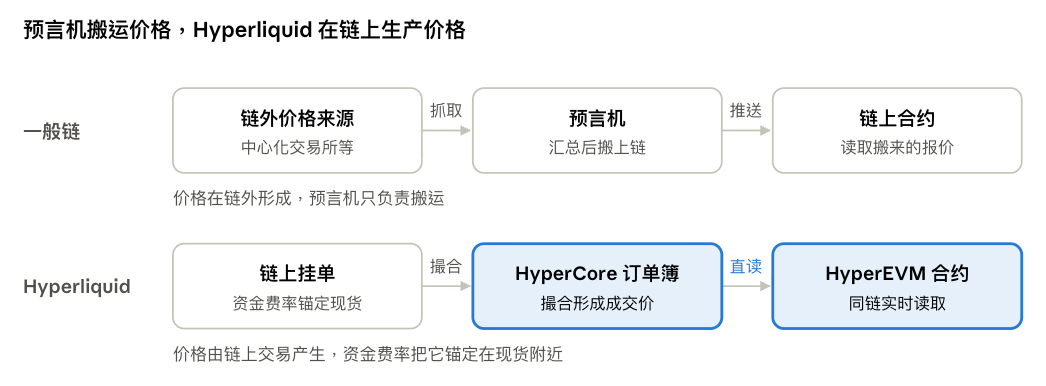
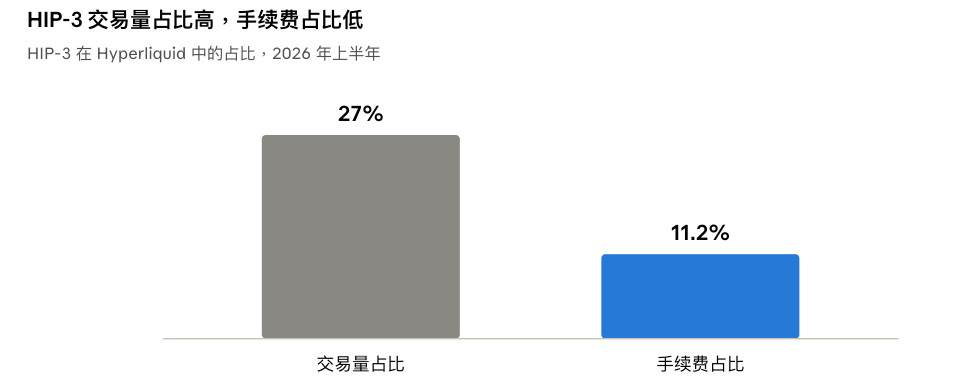
Trade[XYZ] uses a deeper integration. Through HIP-3, it deploys perpetual markets directly on HyperCore, using Hyperliquid’s matching and margin systems while sourcing prices for assets such as equities and commodities externally. The source estimates that Trade[XYZ] accounted for about 97% of HIP-3 volume in October 2026. Its market share also underscores a limitation: access to the matching engine does not give every deployer an equally deep order book. Deployers must attract their own market makers.
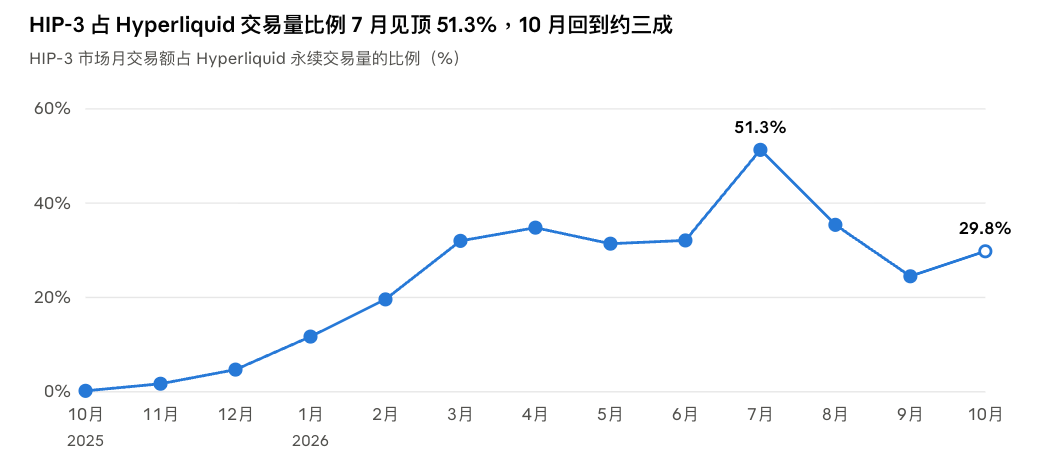
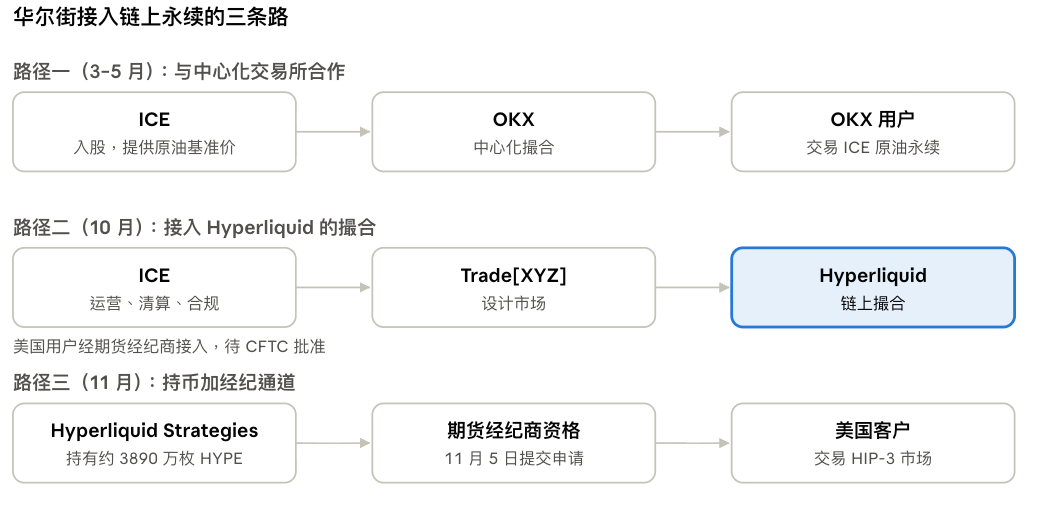
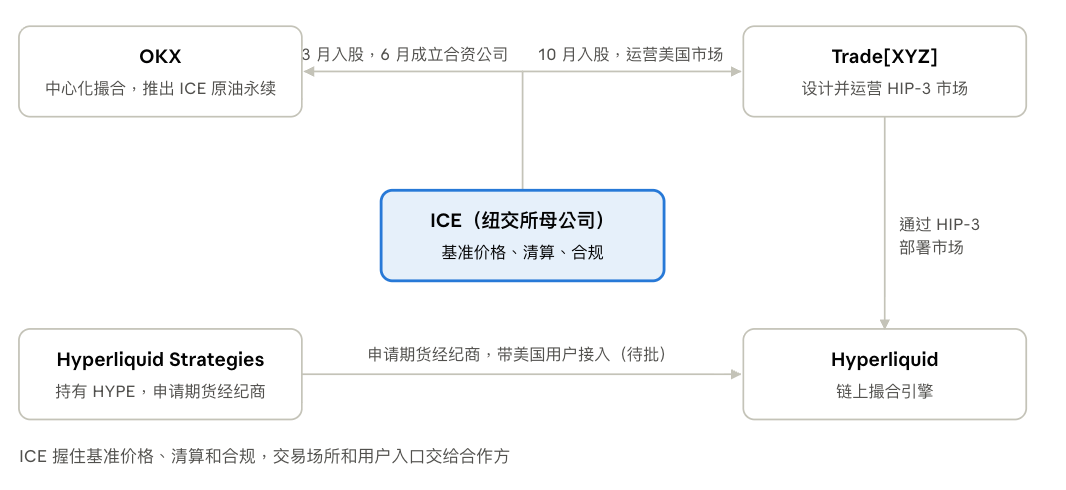
On October 29, 2026, New York Stock Exchange parent ICE announced an investment in Trade[XYZ] and a plan for a US perpetuals market using Hyperliquid technology. Under the reported proposal, ICE would operate the exchange and handle clearing, while Trade[XYZ] would design the markets. The proposed market still required CFTC approval; the investment did not make it an operating US venue. The source also reports that Payward, Kraken’s parent, planned a regulated HIP-3 deployment through Bitnomial. These plans test whether on-chain matching can be combined with licensed clearing and customer access.
Elysium’s different trade-off
Kinetiq’s Elysium takes a third route: a layer 2 settling to HyperEVM. The November 10 report describes a November 9 mainnet launch and a throughput target of roughly 100 times HyperEVM’s. Its proposed fuller order-book access depends on Elysium-operated nodes; subsequent upgrades were expected to support reading the entire book and placing orders. Those capabilities and the throughput target should not be treated as demonstrated mainnet performance.
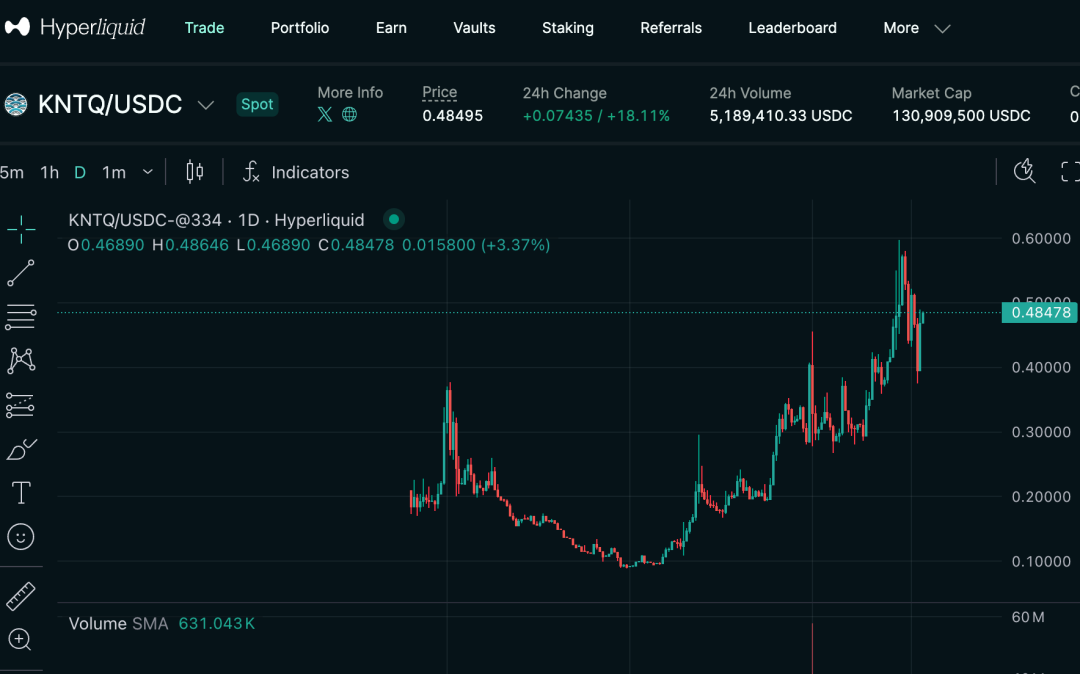
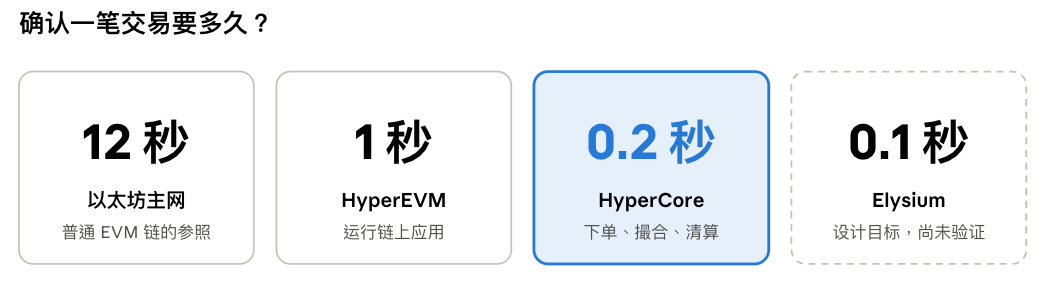
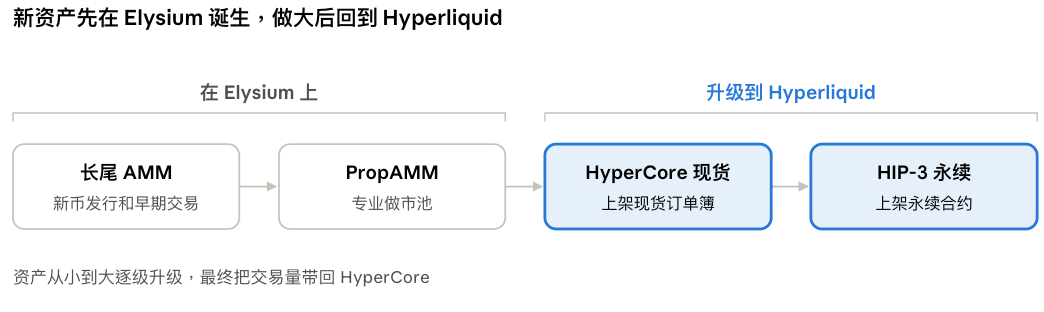
The architecture changes the trust assumption. According to the source, HyperEVM’s access to HyperCore data is synchronized through Hyperliquid consensus, whereas Elysium’s fuller book data would be supplied by its own nodes and backed by its sequencer. Kinetiq’s proposed path—launching assets on Elysium, building liquidity there, then moving established markets to HyperCore—therefore remains a plan whose liquidity and security properties need to be tested in practice.
The unanswered value-capture question
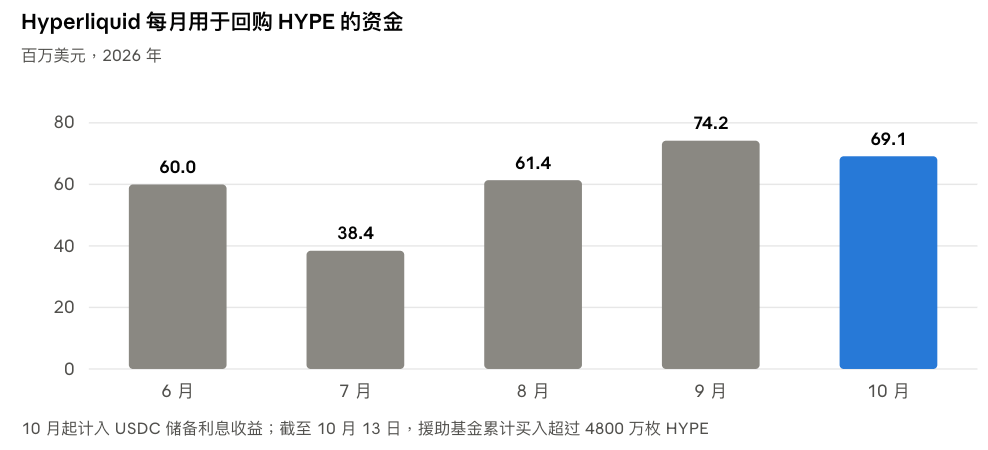
The source says roughly 97%–99% of Hyperliquid’s net trading fees flow to its Assistance Fund for HYPE purchases. But external activity does not automatically increase those fees. Papertrade settles in its own pool; Elysium’s stated fee plan allocates half its revenue to buying and burning KNTQ; and HIP-3 fees are shared with market deployers. The proposed ICE market’s fee split had not been disclosed.
The strongest conclusion supported by these cases is architectural, not a valuation forecast: Hyperliquid’s order book can serve as a price source, a matching venue and a target for applications seeking richer market data. Two questions remained open in the November 10 reporting. Can Hyperliquid capture revenue when outside products use its prices and order-book data? And can regulated, access-controlled markets retain the liquidity advantages of its existing markets? Adoption of the technology alone does not answer either one.