In a report published on November 13, 2026, RootData Research examined stock and ETF perpetual contracts alongside tokenized-stock spot products. Its derivatives sample covered Binance, OKX, Bitget, Bybit, Gate, MEXC, KuCoin and HTX from August 1 through October 31, 2026. The contracts were denominated or settled in stablecoins such as USDT and USDC.
Volume recovered; open interest kept growing
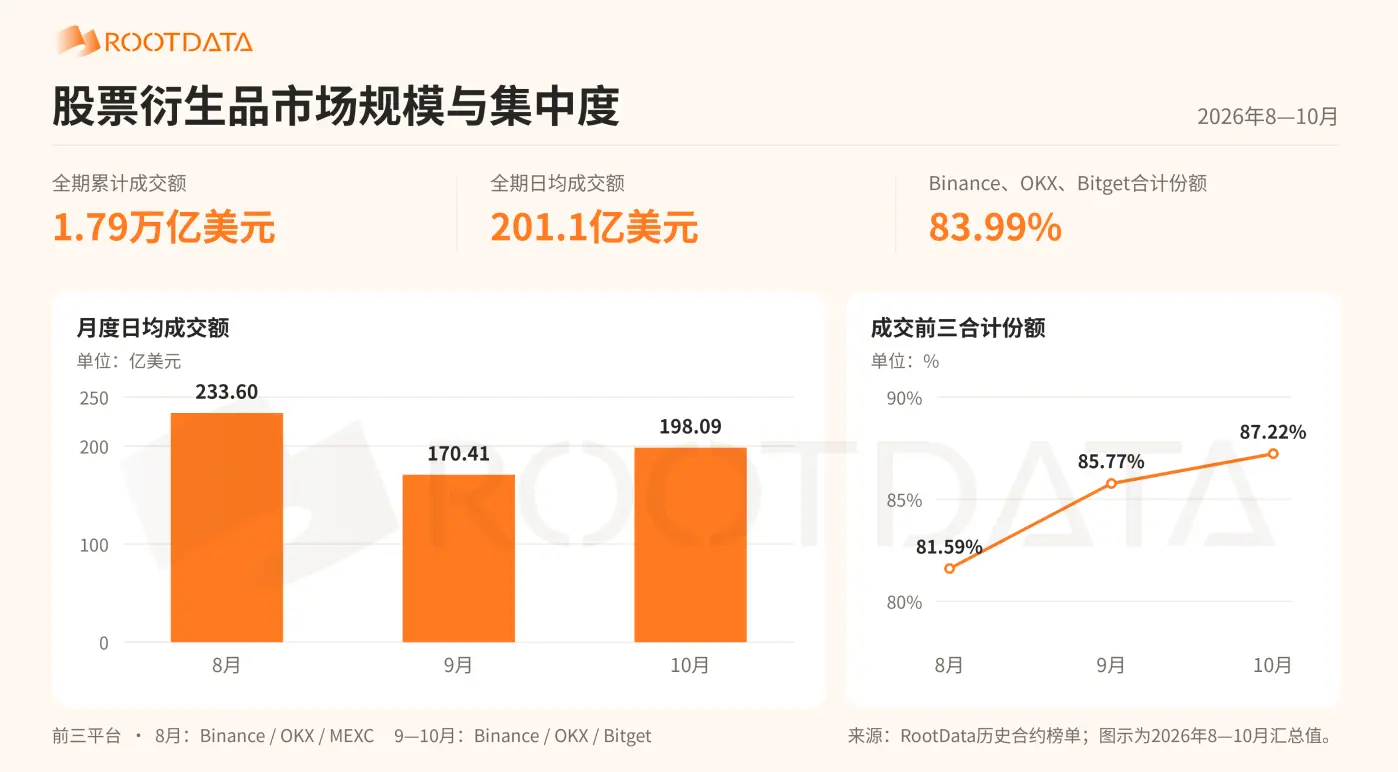
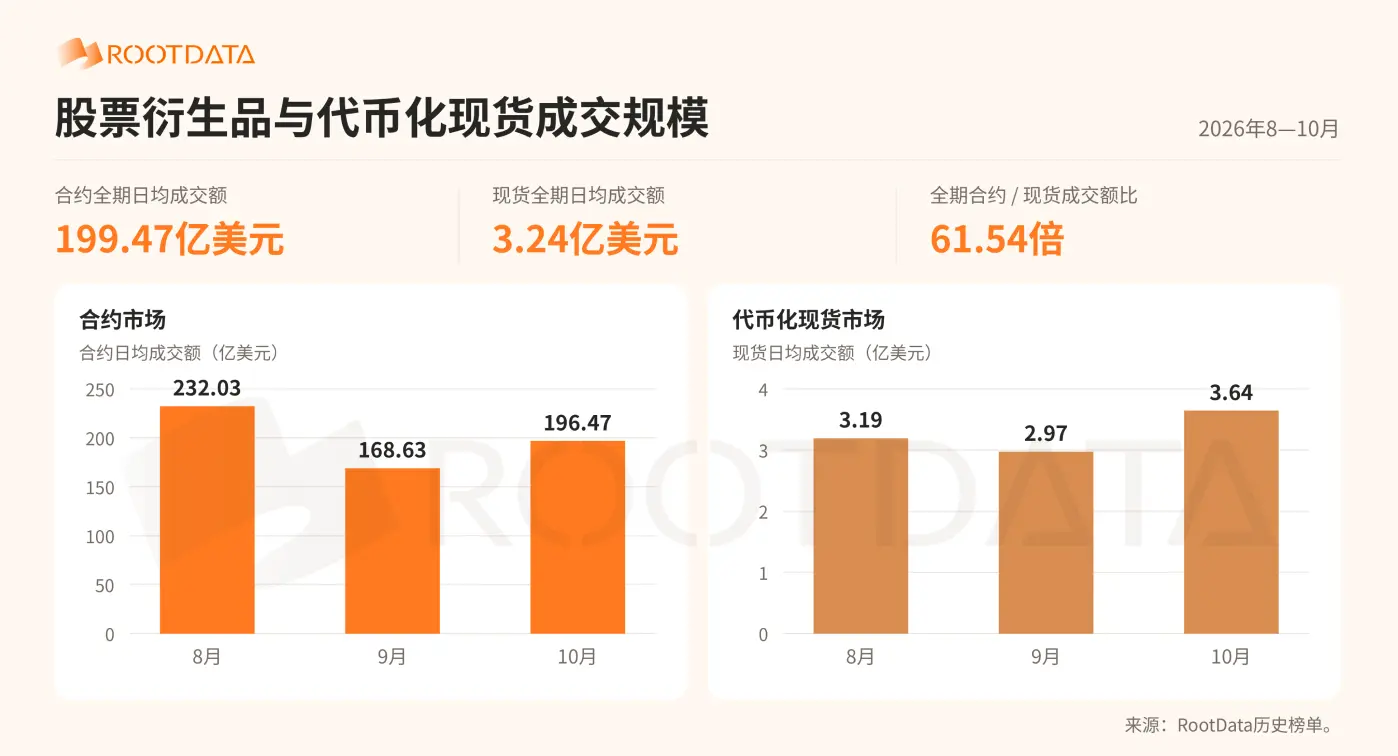
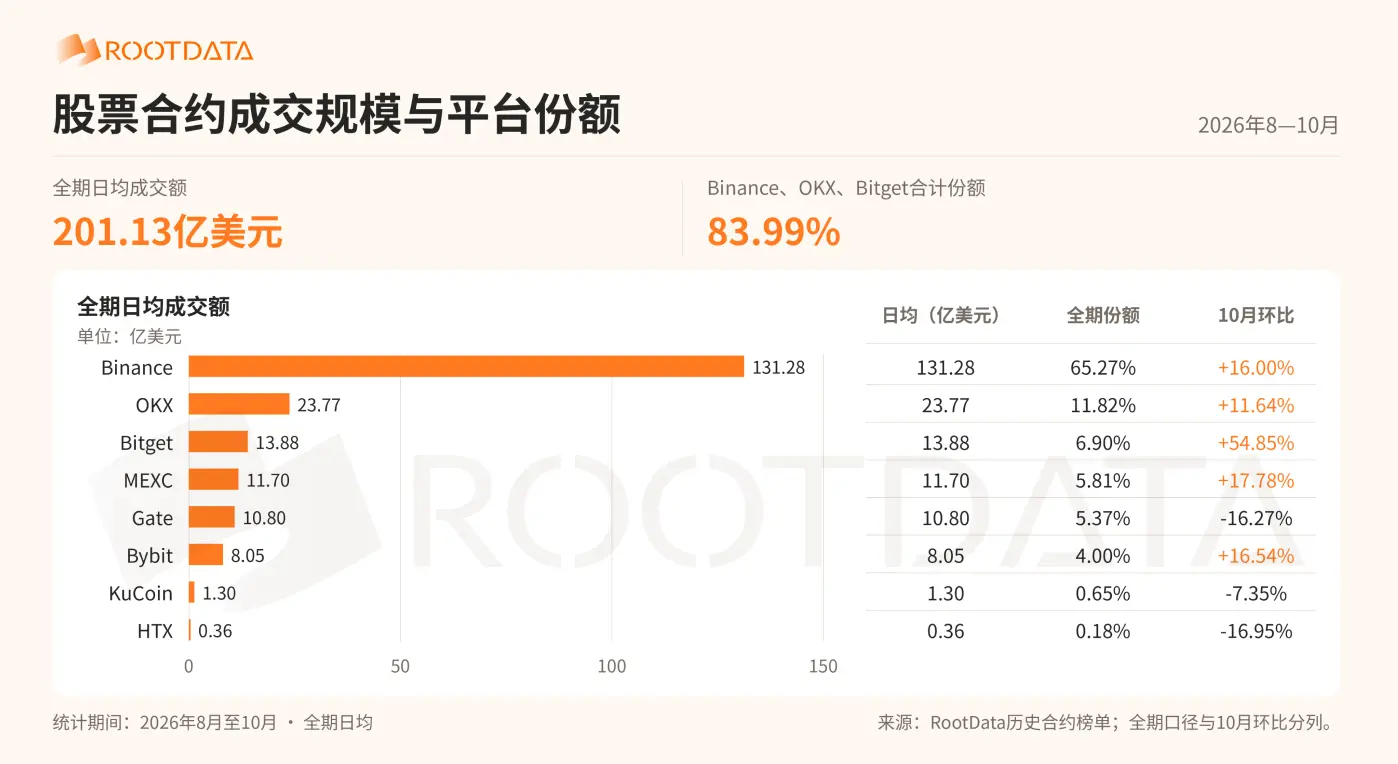
Across the eight exchanges, RootData reported approximately $1.79 trillion in derivatives trading volume over the period, with an average of $20.113 billion per day. Daily average volume fell from $23.360 billion in August to $17.041 billion in September, then recovered to $19.809 billion in October—still below August’s level. Binance, OKX and Bitget accounted for a combined 83.99% of volume.
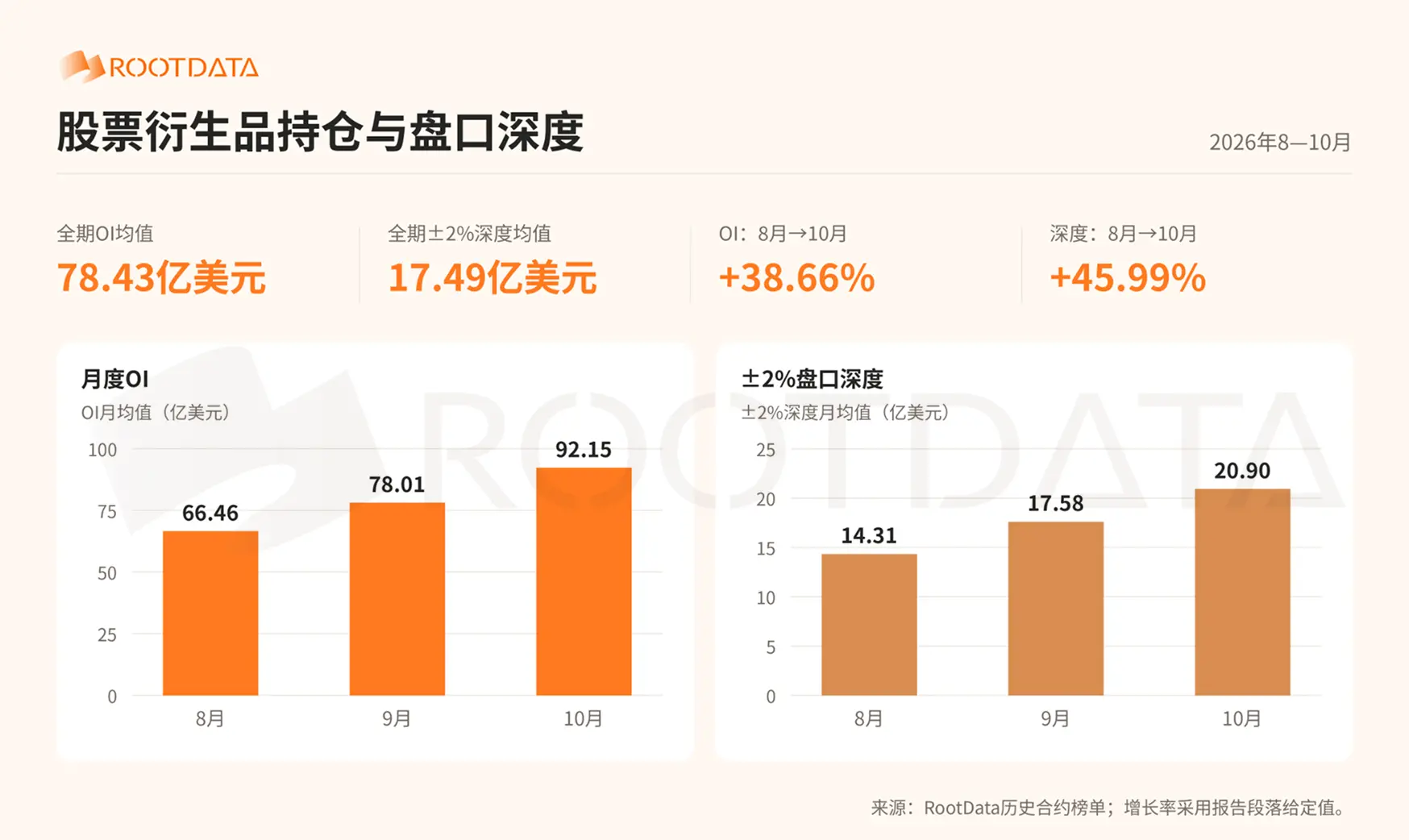
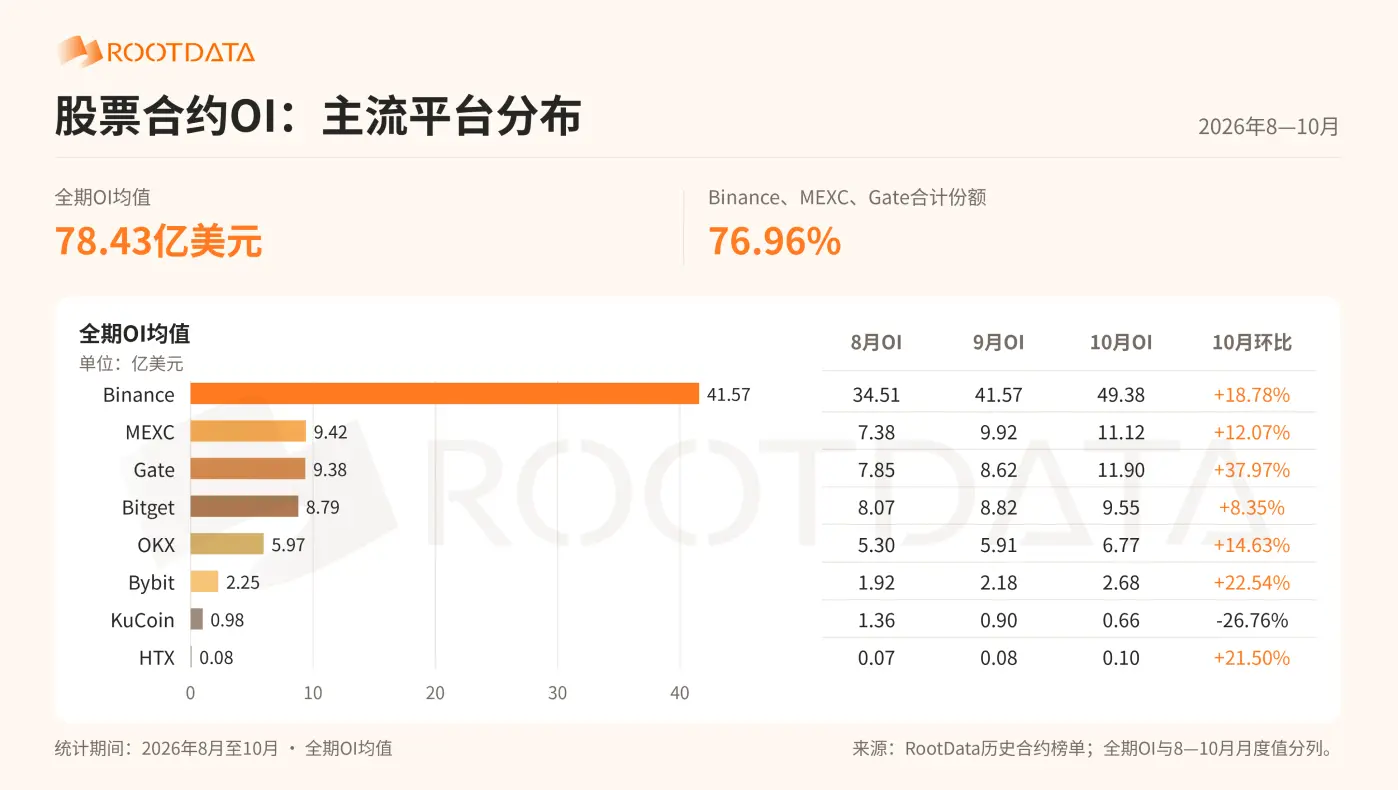
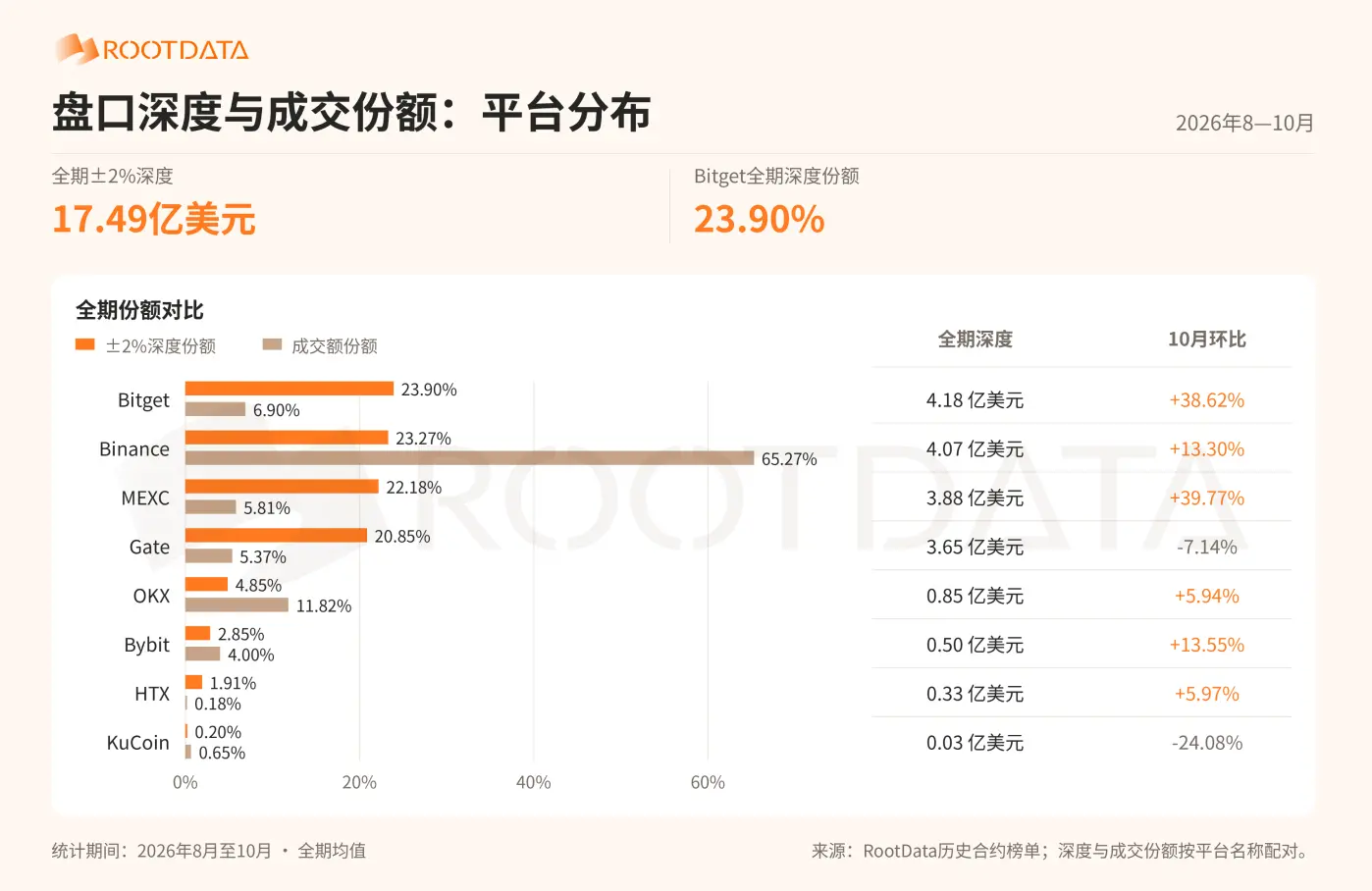
Open interest and visible order-book liquidity followed a different path. Average daily open interest across the sample was $7.843 billion, while combined average daily depth within ±2% of the quoted price was $1.749 billion. In October, those measures reached $9.215 billion and $2.090 billion, respectively—up 38.66% and 45.99% from August. RootData interprets their growth during September’s volume decline as evidence that positions and displayed liquidity remained in the market. The figures alone do not establish why traders held positions or whether quoted liquidity would persist during a volatile event.
Scale was not the same as trading quality
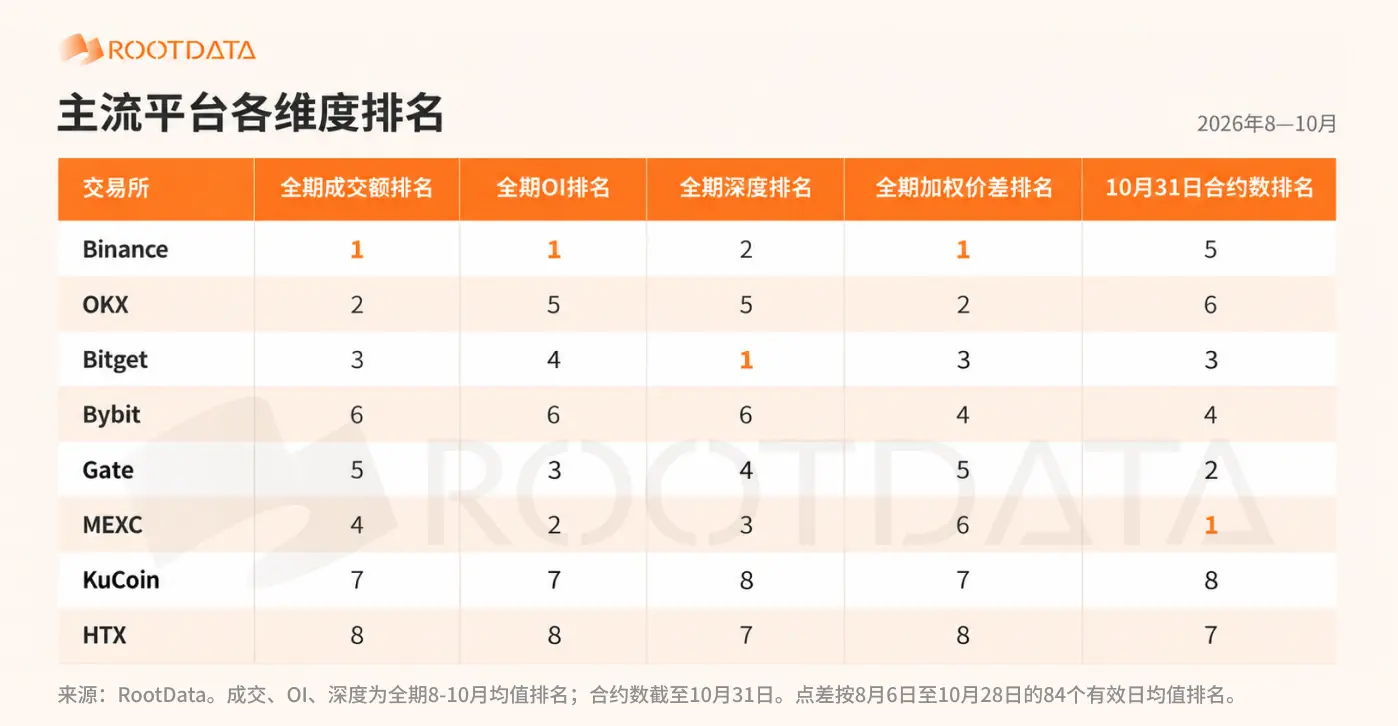
Binance led in volume and open interest: its average daily volume was $13.128 billion, or 65.27% of the sampled market, and its average open interest was $4.157 billion. OKX ranked second by volume at $2.377 billion per day; Bitget followed at $1.388 billion.
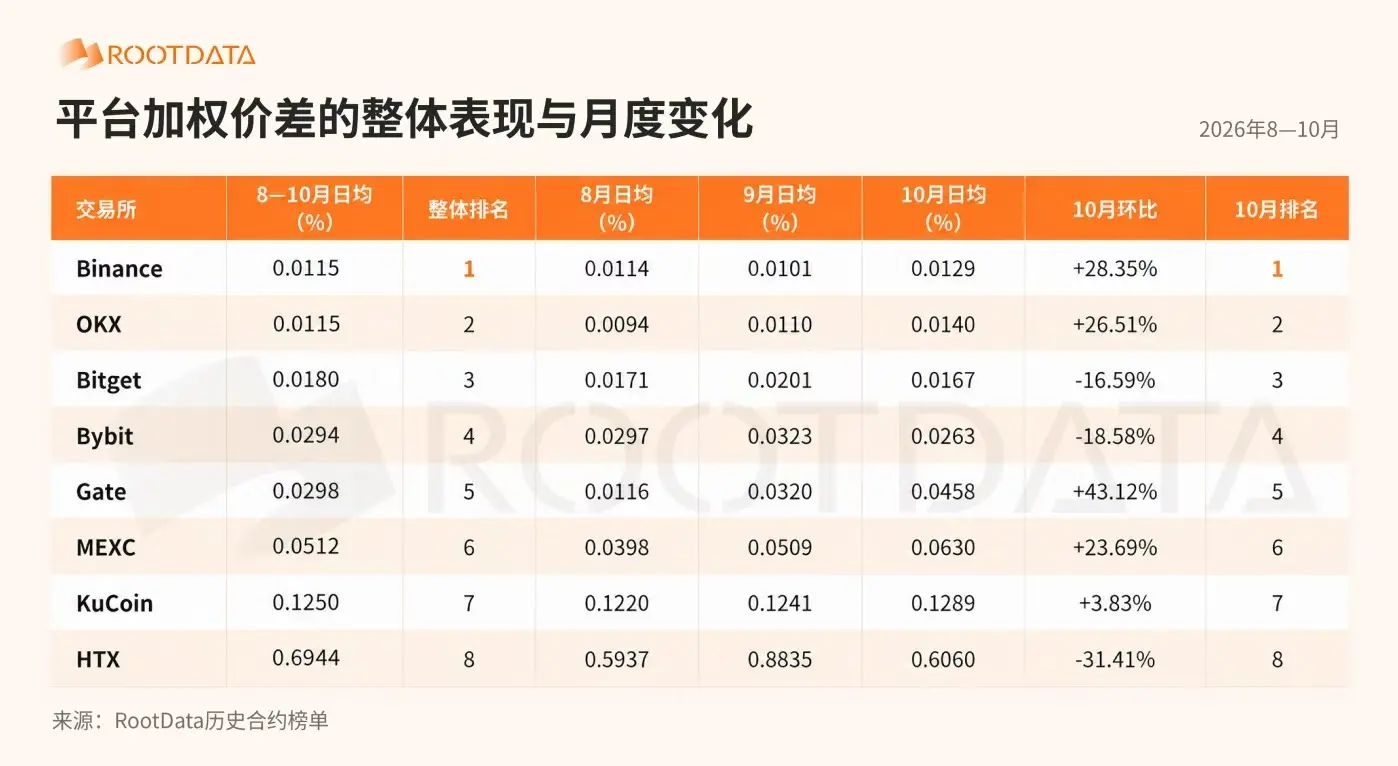
Bitget instead led the report’s ±2% depth measure, averaging $418 million, compared with $407 million for Binance. Binance and OKX shared the lowest reported daily weighted spread, 0.0115%; Bitget’s was 0.018%. These are separate measures: a larger displayed order book does not, by itself, demonstrate better execution under every market condition.
Tokenized spot products remained much smaller
For its comparison of five tokenized-stock issuers—Ondo, xStocks, bStocks, Reality and Robinhood Stock Tokens—RootData reported average daily spot volume of about $324 million from August through October. It put stock-derivatives volume on the compared platforms at $19.947 billion per day, approximately 61.5 times the spot figure. Spot volume averaged $364 million per day in October, up 22.72% month over month.
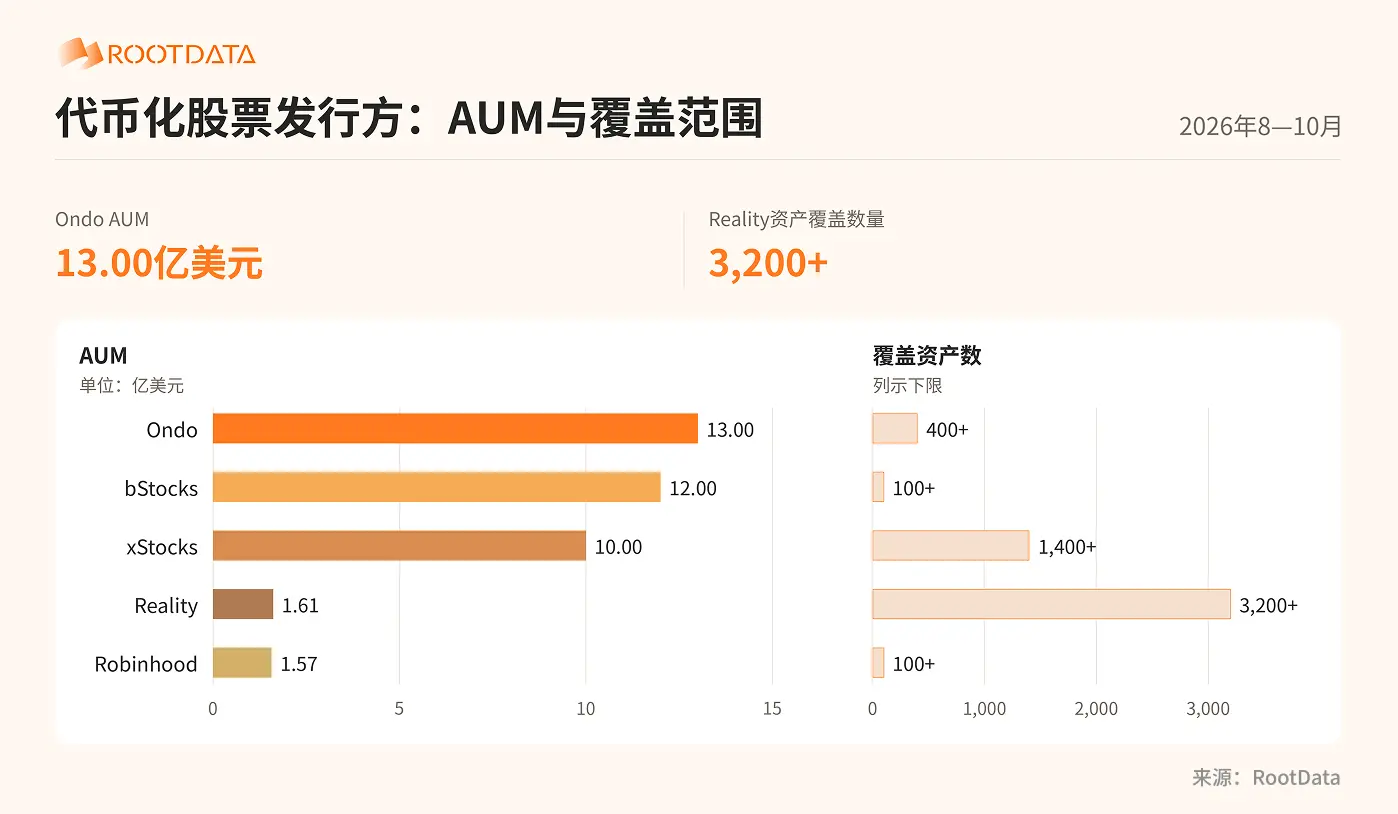
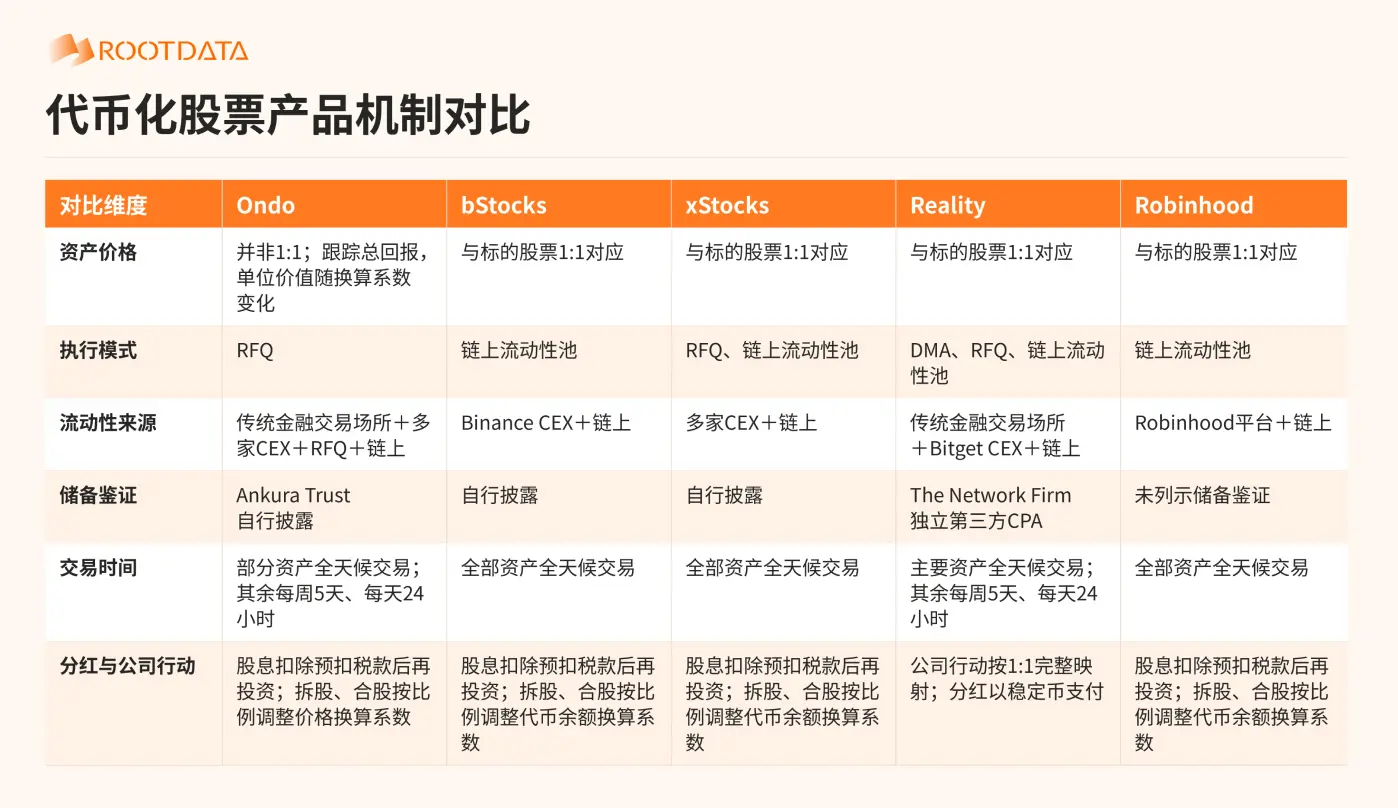
The report’s product comparison lists assets under management of $1.3 billion for Ondo, $1.2 billion for bStocks, $1.0 billion for xStocks, $161 million for Reality and $157 million for Robinhood. These are figures listed in the report, not a separately dated asset snapshot. RootData says Reality covered more than 3,200 assets and described three execution routes: direct market access, requests for quotes and on-chain liquidity pools. It also describes differences in dividend treatment, trading hours and reserve disclosures across the five products. Product breadth and stated mechanisms do not establish sustained trading demand; that would require subsequent volume and holdings data.
RootData says its figures came from its derivatives and spot rankings and historical snapshots. Monthly and full-period averages use days with valid observations rather than treating missing days as zero; daily volume is a rolling 24-hour measure. Those methodological choices matter when comparing its averages with figures calculated from calendar-day totals.