In an article published on November 16, 2026, Vitalik Buterin argues that Ethereum cannot safely raise its gas limit by treating every resource as equally scalable. His focus is EIP-8037, a proposal to increase the cost of creating persistent state while letting transactions pay that cost through a separate state-gas reservoir. The mechanism is intended to give execution more room to grow without allowing state size to rise at the same rate.
Why separate state creation from execution?
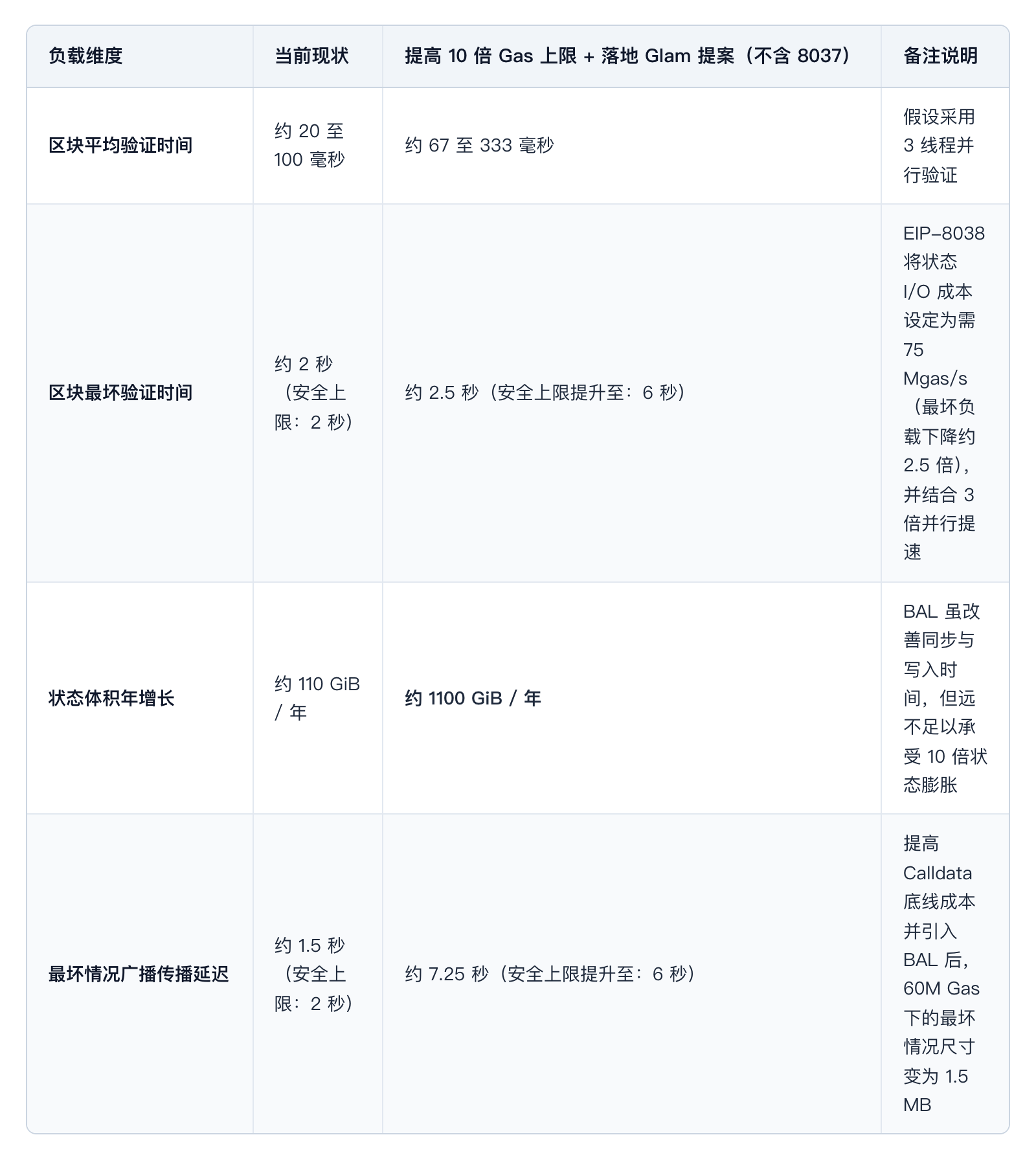
Buterin distinguishes computation, calldata transmission and state growth. He argues that a simple tenfold gas-limit increase would increase pressure across all three, but that a larger persistent state poses a particularly stubborn problem: it raises storage and initial-sync demands on nodes and adds to ongoing state I/O work.

The article describes other proposals associated with Glamsterdam as ways to ease different constraints. EIP-7976 would raise the calldata floor to 64 gas per byte; EIP-7928 would introduce block-level access lists to support parallel validation; EIP-8038 would increase state-I/O charges; and EIP-7732, or ePBS, would extend the block-validation window from roughly two seconds to about six seconds. Buterin’s conclusion—that these changes could make much higher execution limits feasible while leaving state size as the principal bottleneck—is an argument about the proposed package, not a measurement of an enacted tenfold increase.
How the proposed reservoir works
EIP-8037 would reprice new storage slots, contract code and accounts. In Buterin’s description, its initial CPSB parameter is 1,530 and could rise with the gas limit. Creating a new account would incur 183,600 state gas regardless of the route used, including an ordinary ETH transfer.
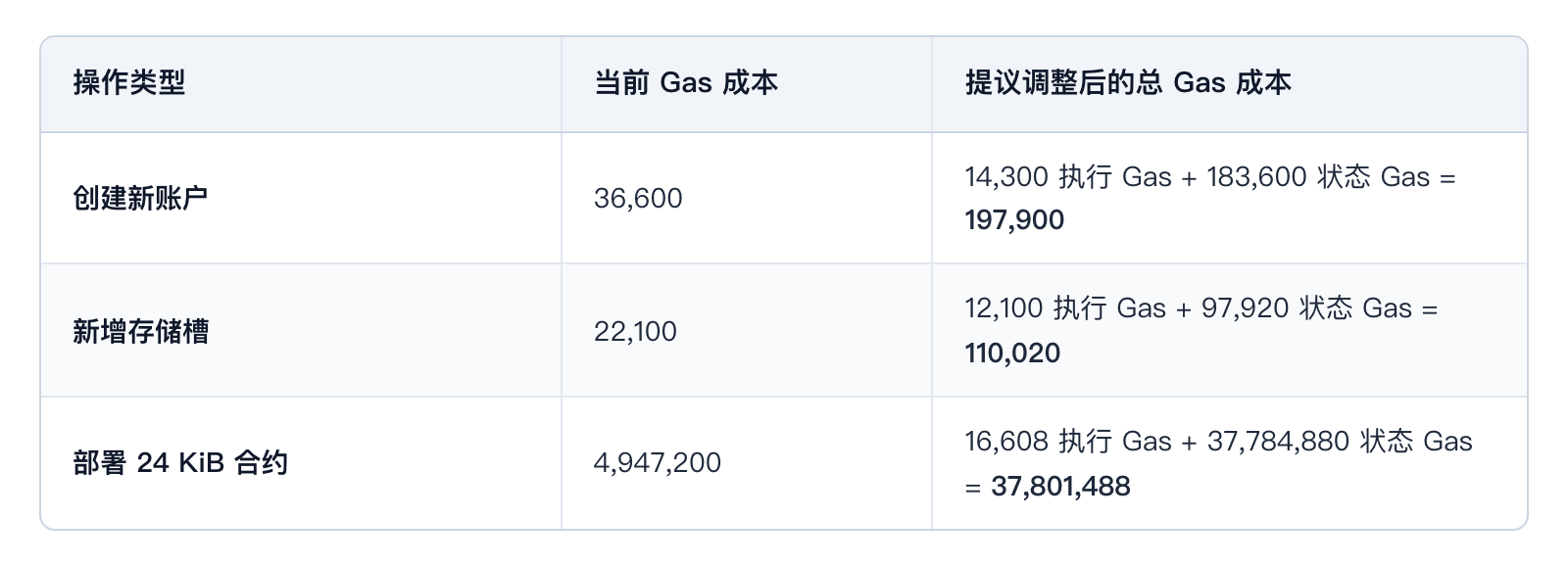
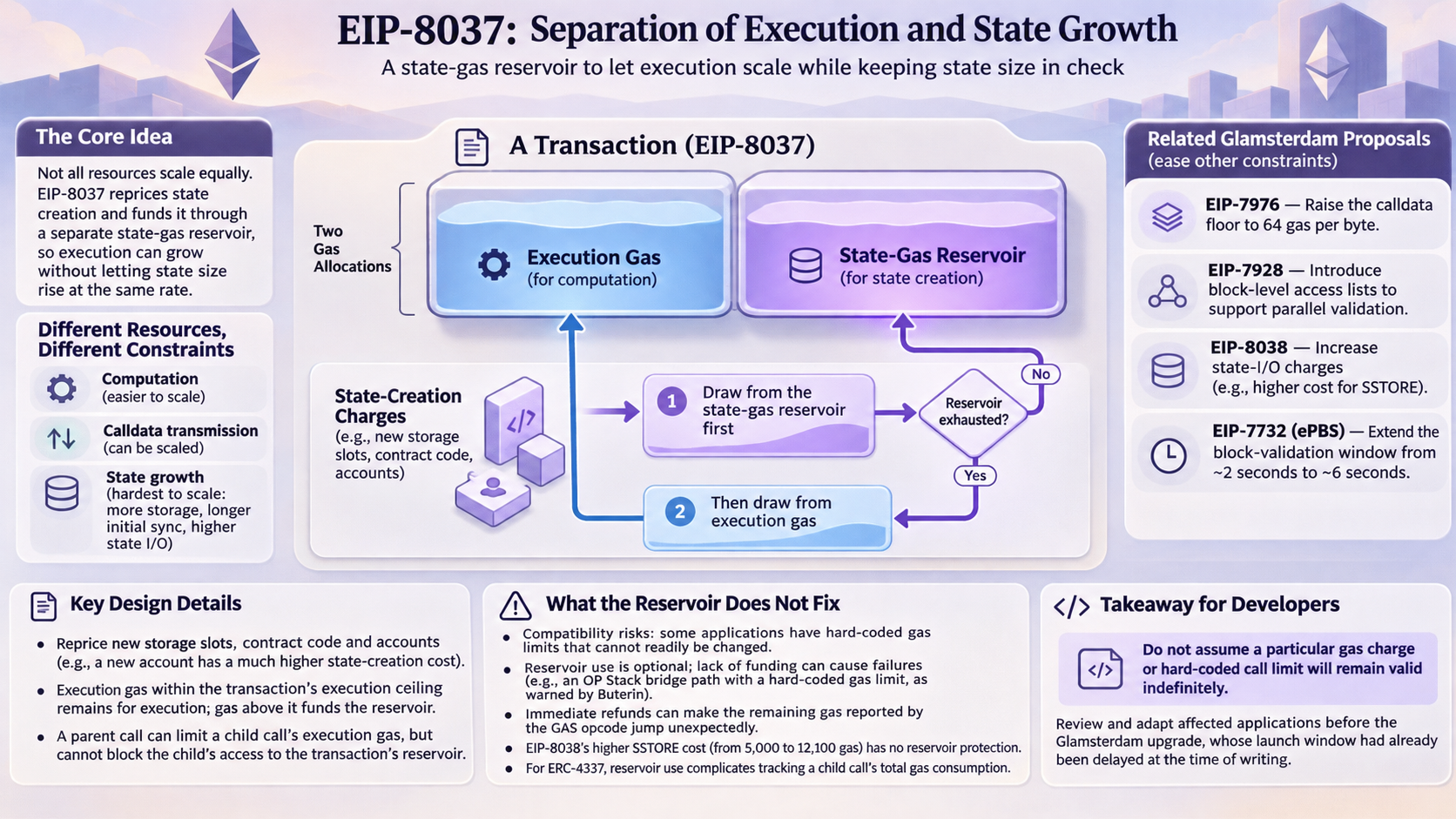
Under the proposed default, gas within a transaction’s 16.7 million execution-gas ceiling remains available for execution; gas above that ceiling funds a state-gas reservoir. State-creation charges draw from the reservoir first, then from execution gas if it is exhausted. A parent call could limit a child call’s execution gas but could not block its access to the transaction’s reservoir. Buterin says this would allow a full-size 24 KiB contract deployment despite the execution ceiling. He also points to EIP-8141 as a possible future way to specify the two allocations more explicitly.
What the reservoir does not fix
Buterin identifies compatibility risks that transaction-level funding cannot remove. Applications may have hard-coded gas limits that cannot readily be changed; supplying a reservoir is optional; and the proposal’s immediate-refund behavior could make the remaining gas reported by the GAS opcode jump unexpectedly. He also says EIP-8038’s proposed increase in the cost of SSTORE from 5,000 to 12,100 gas has no reservoir protection. For ERC-4337 account abstraction, reservoir use would complicate tracking a child call’s total gas consumption.
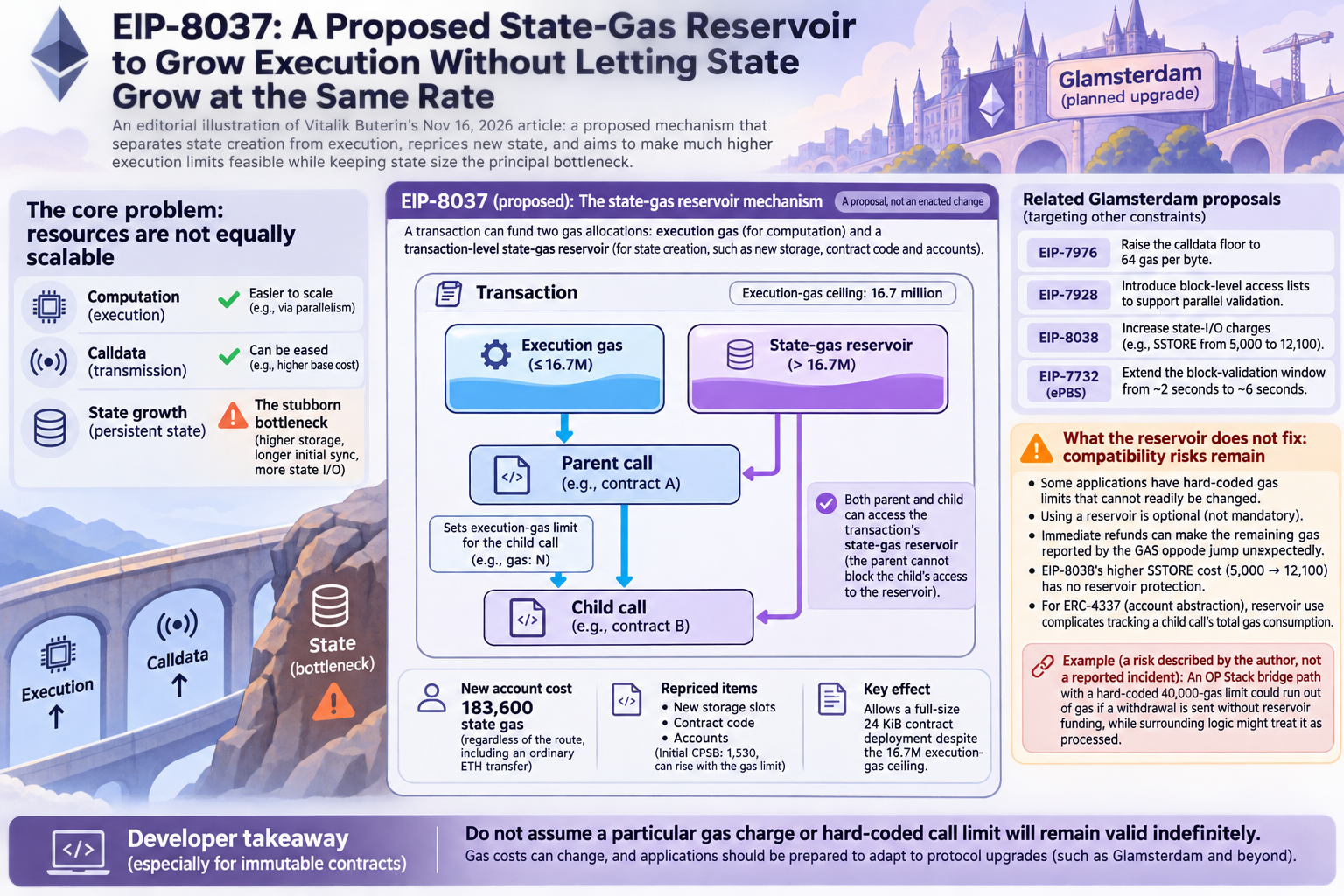
His example of a potentially consequential failure is an OP Stack bridge path with a hard-coded 40,000-gas limit: he argues that a withdrawal sent without reservoir funding could run out of gas while surrounding logic might treat it as processed. That is a risk described by the author, not a reported incident. He says protocol-level remedies have been discussed, but each involves trade-offs or further changes; his preferred near-term emphasis is identifying and adapting affected applications before the upgrade. The article says Glamsterdam’s launch window had already been delayed at the time of writing, without giving a new launch date.
For developers of immutable contracts, the central design warning is narrower than a claim that EVM bytecode semantics will disappear: do not assume a particular gas charge or hard-coded call limit will remain valid indefinitely. Buterin also lists other possible future changes—including state and transaction formats, blob structure and consensus-layer mechanisms—but presents that list as a preliminary assessment, not an adopted roadmap.