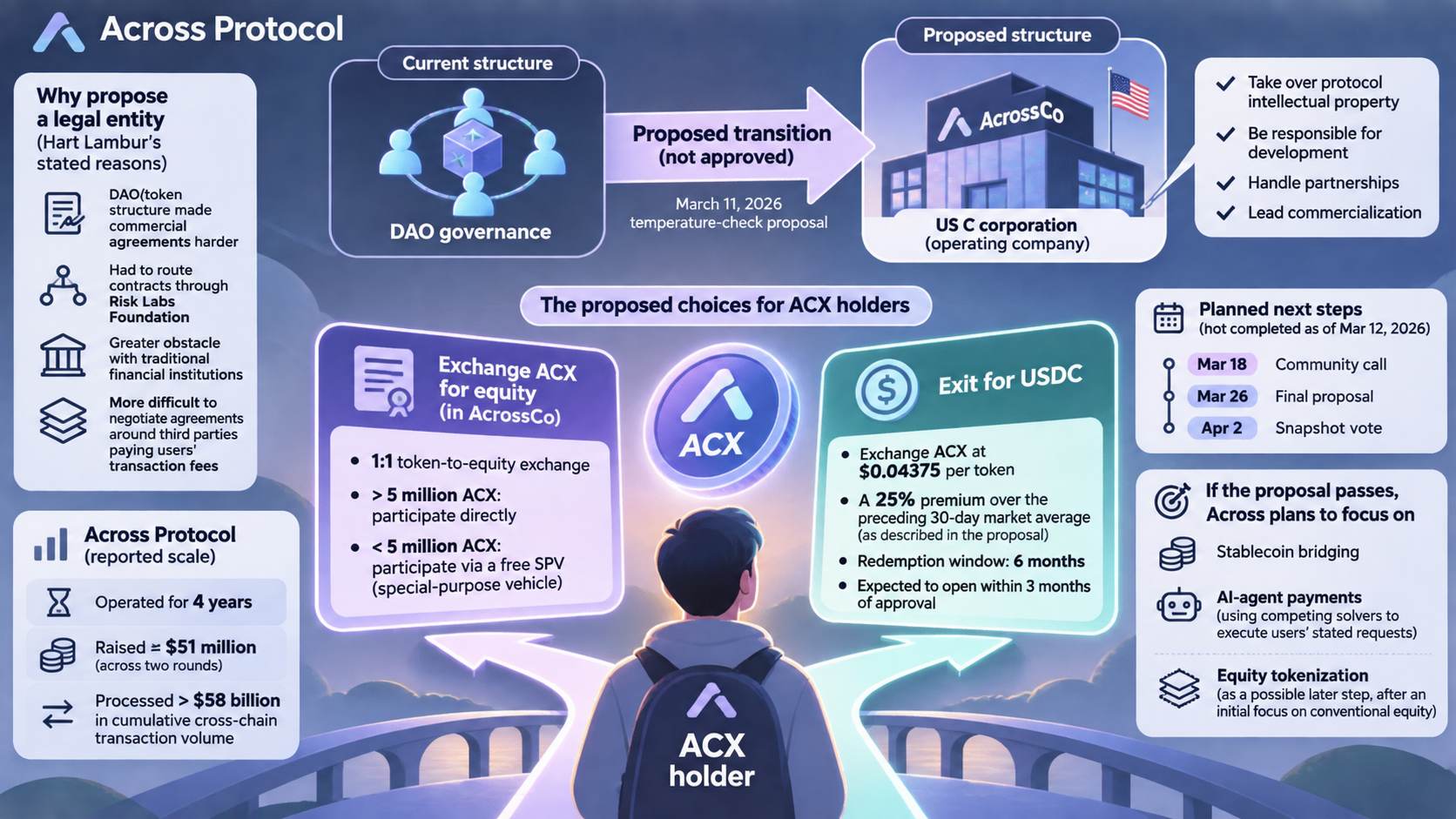
Across Protocol proposed a shift from DAO governance to a US C corporation in a March 11, 2026 temperature-check proposal. The change had not been approved when PANews reported it on March 12, 2026. The proposal would create AcrossCo as the protocol’s operating company, transfer protocol intellectual property to it, and put development, partnerships and commercialization under its responsibility.
The proposed choices for ACX holders
The plan offers holders two routes:
- Exchange ACX for equity: The proposal describes a 1:1 token-to-equity exchange. Holders with more than 5 million ACX could participate directly; those with fewer than 5 million would use a free special-purpose vehicle (SPV). The account does not specify how a holding of exactly 5 million ACX would be treated.
- Exit for USDC: Holders could exchange ACX at $0.04375 per token, a price the proposal describes as 25% above the preceding 30-day market average. The proposed redemption window would last six months and was expected to open within three months of approval.
A community call was planned for March 18, a final proposal for March 26 and a Snapshot vote for April 2. Those were planned steps, not completed approvals, as of the March 12 report.
Why Across wants a legal entity
Across co-founder Hart Lambur said the DAO and token structure had made commercial agreements harder. Although Across had signed contracts with crypto projects, he said it had to route them through Risk Labs Foundation because the protocol lacked a legal entity able to sign directly. In his account, that arrangement became a greater obstacle when dealing with traditional financial institutions and negotiating agreements around third parties paying users’ transaction fees. Those are Lambur’s stated reasons for the proposed structure, not evidence that incorporation would secure new partnerships.
PANews reported that Across had operated for four years, raised approximately $51 million across two rounds and processed more than $58 billion in cumulative cross-chain transaction volume. These figures describe the protocol’s reported scale; they do not establish a valuation for AcrossCo or the equity offered to holders.
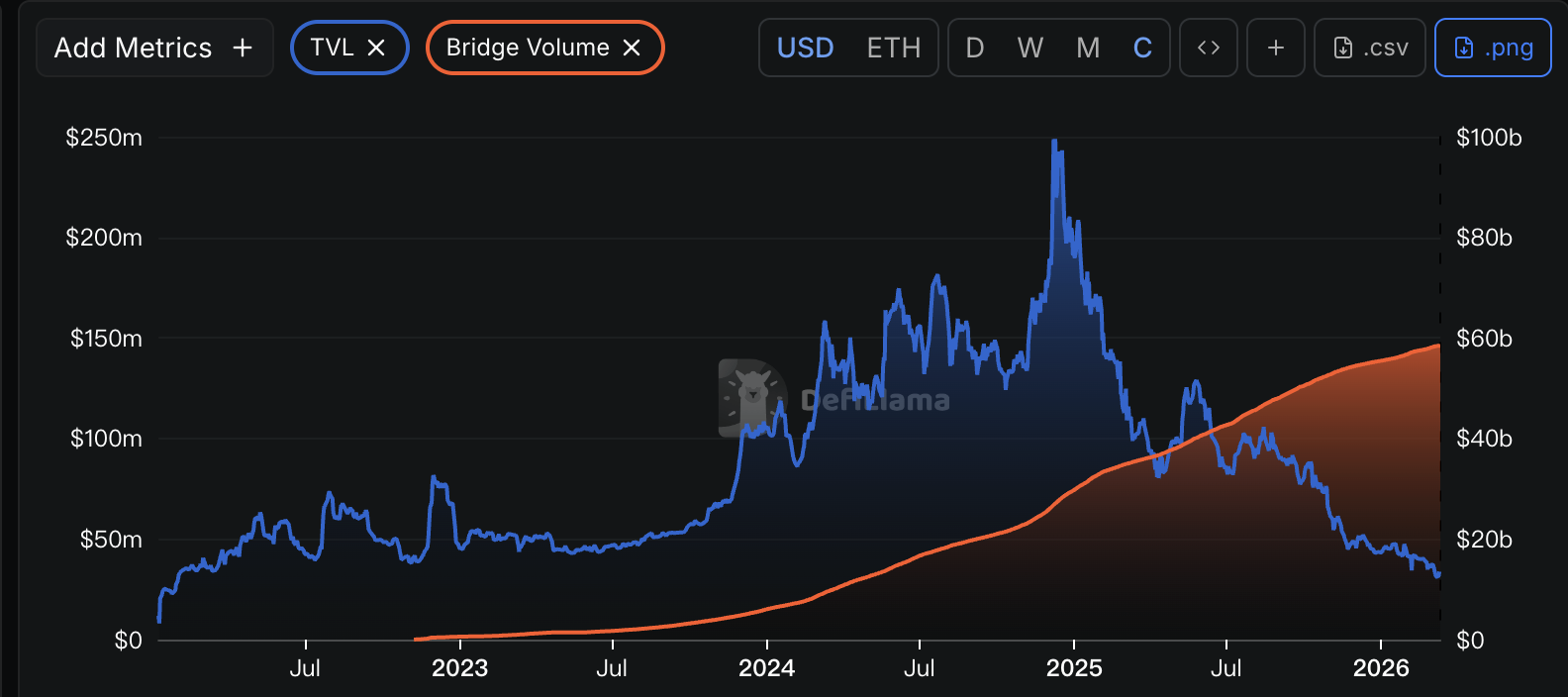
The token-market response also needs a timestamp. In PANews’s March 12 report, CoinGecko data showed ACX up 94.9% over the preceding 24 hours while still about 96.2% below its all-time high. On-chain analyst Ai Yi estimated that the largest ACX holding address would need a further 5.66-fold rise to break even. The report suggested that interest in the proposed USDC exit may have contributed to the short-term price rise; it did not establish the cause.
If the proposal passes, Lambur said Across would focus on stablecoin bridging and AI-agent payments using competing solvers to execute users’ stated requests. He also raised equity tokenization as a possible later step, after an initial focus on conventional equity. Neither the business plans nor tokenized equity were presented as already implemented.