As reported on November 12, 2026 (UTC+8), Glassnode found that the supply of major stablecoins had fallen by $14.2 billion over the preceding 30 days—the largest such decline since the 2022 crypto bear market. Total stablecoin supply stood just below $280 billion, a level last seen in September 2025, according to The Block/DefiLlama data.
The comparison with 2022 describes the scale of the contraction, not a forecast. The 30-day supply decline approached $30 billion in June of that year, about five months before bitcoin reached its November bear-market low of $15,500.
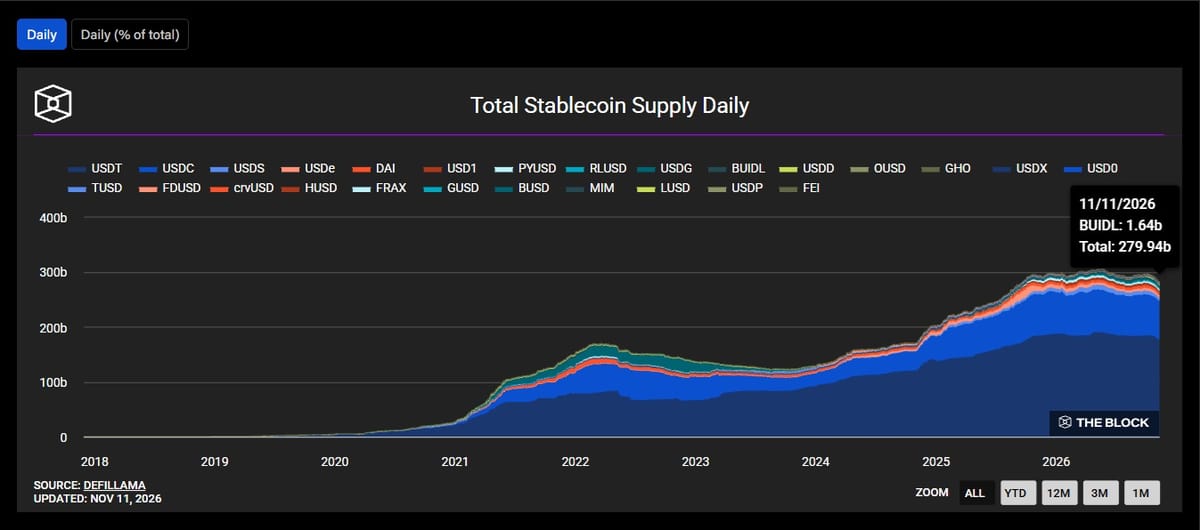
A separate CryptoQuant report said USDT’s market capitalization fell $6.6 billion over the 60 days through November 7, 2026. That was more than twice the $3.2 billion decline it recorded over a comparable period following FTX’s collapse in December 2022. The Block’s market-share data put USDT at roughly 62.8% of stablecoin supply and USDC at 25.1%.

Gold-backed tokens were comparatively steady at a combined $5.61 billion market capitalization, below their February peak of $6.31 billion, when gold was around $5,350 per troy ounce.
Glassnode interpreted shrinking stablecoin supply as a sign that holders were redeeming tokens for dollars and removing cash from the market. It said renewed supply growth would be the first sign of new money entering. CryptoQuant, however, said a local bitcoin bottom could form before USDT supply returns to growth. Neither claim makes stablecoin supply alone a definitive timing signal.