On November 24, 2026, a Solana wallet associated with Ansem sold ANSEM and other meme tokens. ANSEM fell about 60% in less than an hour, and roughly 2.57 million USDC reached a single Arbitrum address. By the time the incident was reported on November 25, 2026, at 17:47:10 UTC+8, trading app Bullpen had identified unauthorized transfers from several early test accounts, including Ansem’s. The transaction records showed where the funds went, but not who initiated the sales.
From Solana to Arbitrum
Bitquery traced the first transfer to about 2:46 p.m. Beijing time on November 24, when approximately 515,000 USDC left Ansem’s main wallet. The wallet then executed 877 sales across 124 tokens. ANSEM was the holding most affected, but the sales also covered smaller positions.
The SOL proceeds went through the Relay bridge. After the bridge transfer, the assets were converted to USDC and collected at an Arbitrum address beginning 0xAC33. About 2.57 million USDC accumulated there before the funds moved through Bridgers toward Bitcoin.
Why an earlier transfer drew scrutiny
About an hour before the selling began, a dormant Solana wallet funded the address that would later receive the proceeds, according to on-chain analyst MLM. MLM had labeled that wallet as Ansem’s a year earlier and argued that the sequence did not look like a hack. Analyst Specter questioned a different feature: the tokens were sold directly from the original wallet. In Specter’s view, an attacker would typically move the assets first and sell them afterward.
Ansem denied making the trades, asked MLM to stop spreading what he called misinformation and said a security audit was underway. He said his Pump wallet had been compromised and suspected unauthorized access to his Bullpen account, into which he had imported the wallet’s Solana private key. Such access, he argued, could expose other wallets in the same account. He also said his EVM wallet positions remained open and its funds had not moved.
ZachXBT, who had previously criticized Ansem for promoting low-cap tokens, disputed the deliberate-exit theory. He argued that someone trying to sell discreetly could have used smaller wallets or a one-sided liquidity pool rather than selling so visibly.

Evidence beyond Ansem’s wallet
Bullpen’s preliminary count put the number of affected accounts at 18 to 19, including Ansem’s. The accounts had been opened between April and June 2024. Bullpen said it had taken the affected test service offline.
Bitquery also identified six other Hyperliquid accounts from which about $659 in total moved along the same receiving route. The dormant Solana wallet cited by MLM was itself emptied on November 24. Those records support the possibility that several wallets were compromised together. They do not establish how access was obtained, just as MLM’s earlier wallet label does not establish who controlled that wallet on November 24.
Why the ANSEM holding mattered
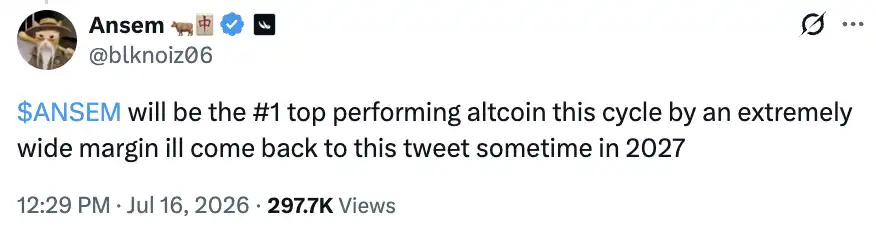
An anonymous developer launched The Black Bull, ticker ANSEM, through Pump.fun in June 2026 and allocated a substantial share of the supply to Ansem. In July, Ansem said he held about 58% of the total supply. On July 16, he predicted it would be the cycle’s best-performing altcoin by a wide margin and said he would revisit the prediction in 2027.
In The ANSEM Thesis, he presented the token as a way to back his personal brand and pledged to connect it to all his crypto businesses. He proposed staged airdrops tied to market capitalization, holder count and community contributions rather than distributing the tokens all at once. His disclosed stake helps explain why sales from a wallet associated with him drew scrutiny. It is not evidence that he authorized them.