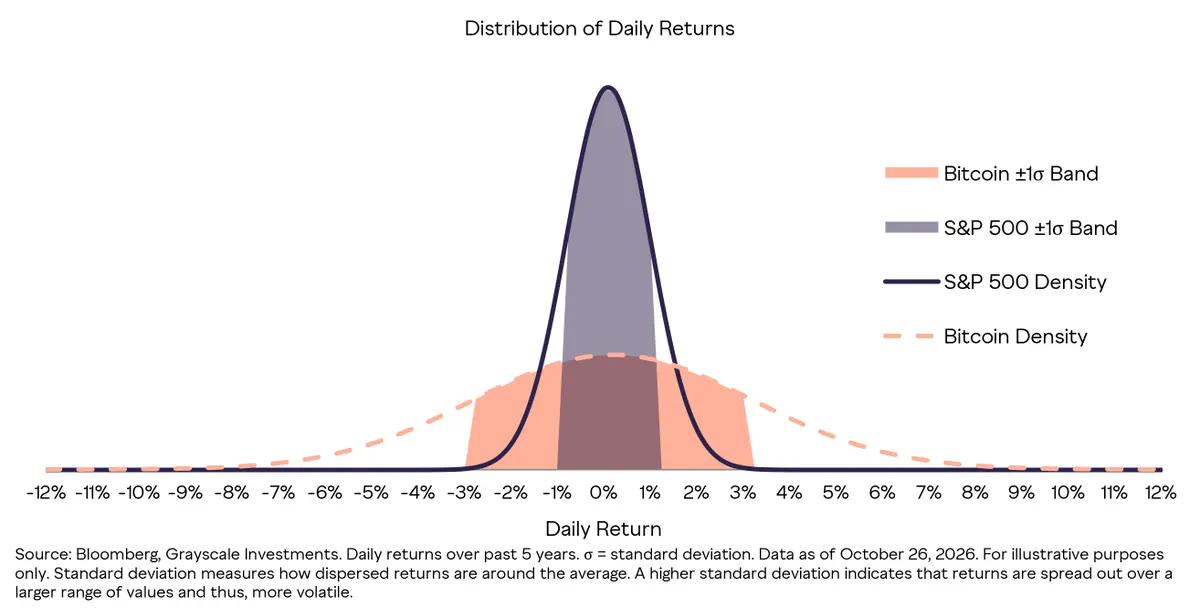
In reporting published on November 20, 2026, at 08:55 (UTC+8), Grayscale researchers Zach Pandl and Charlie Perkins argued that Bitcoin’s risk should be assessed in the context of a portfolio, not solely by its standalone volatility. Their analysis does not claim that Bitcoin is low-risk: it examines how its returns are distributed, how they interact with traditional assets, and whether other crypto sectors behave differently from Bitcoin.
Lower volatility, but concentrated outcomes
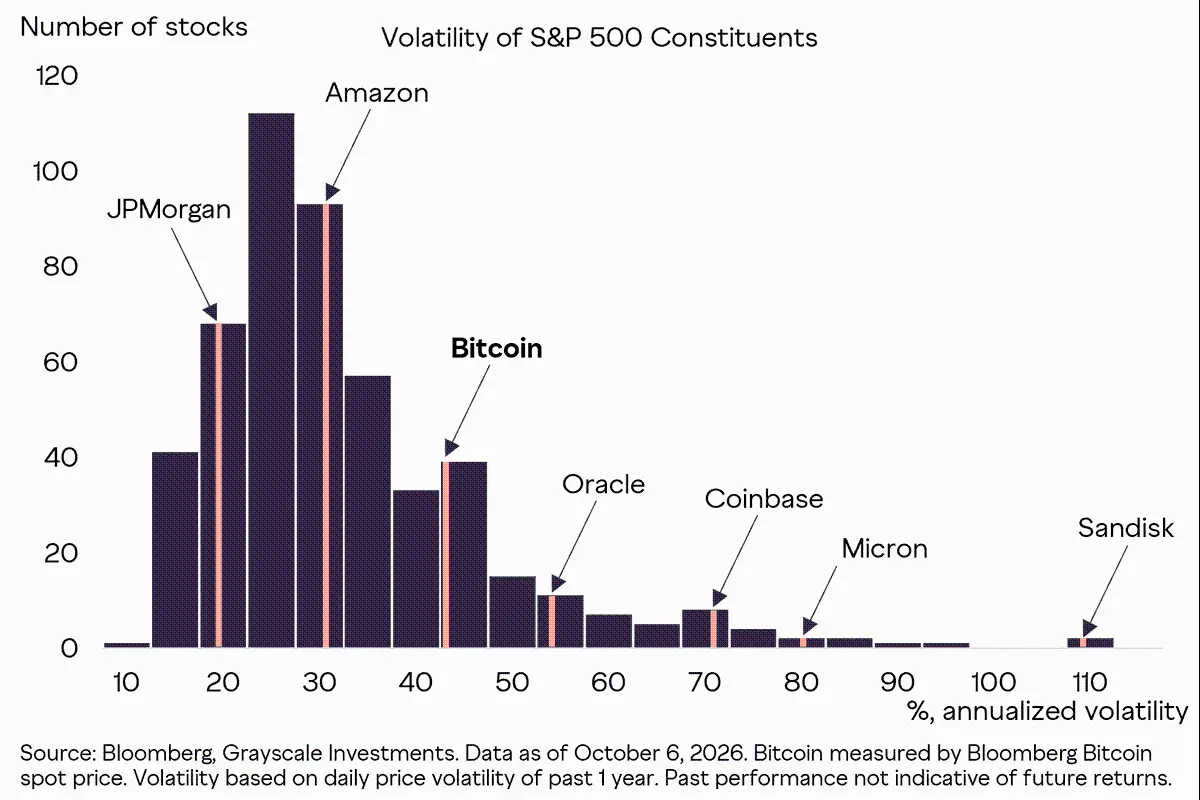
Bitcoin’s realized volatility has fallen substantially from its early years. Using Coin Metrics data through October 31, 2026, Grayscale describes a decline from periods above 100%—at times approaching 200%—to the mid-40% range. A separate comparison using Bloomberg data through October 6 puts Bitcoin’s volatility at about 43%, below that of roughly 19% of S&P 500 constituents. Comparing Bitcoin with individual stocks provides context; it does not make Bitcoin a low-risk asset.
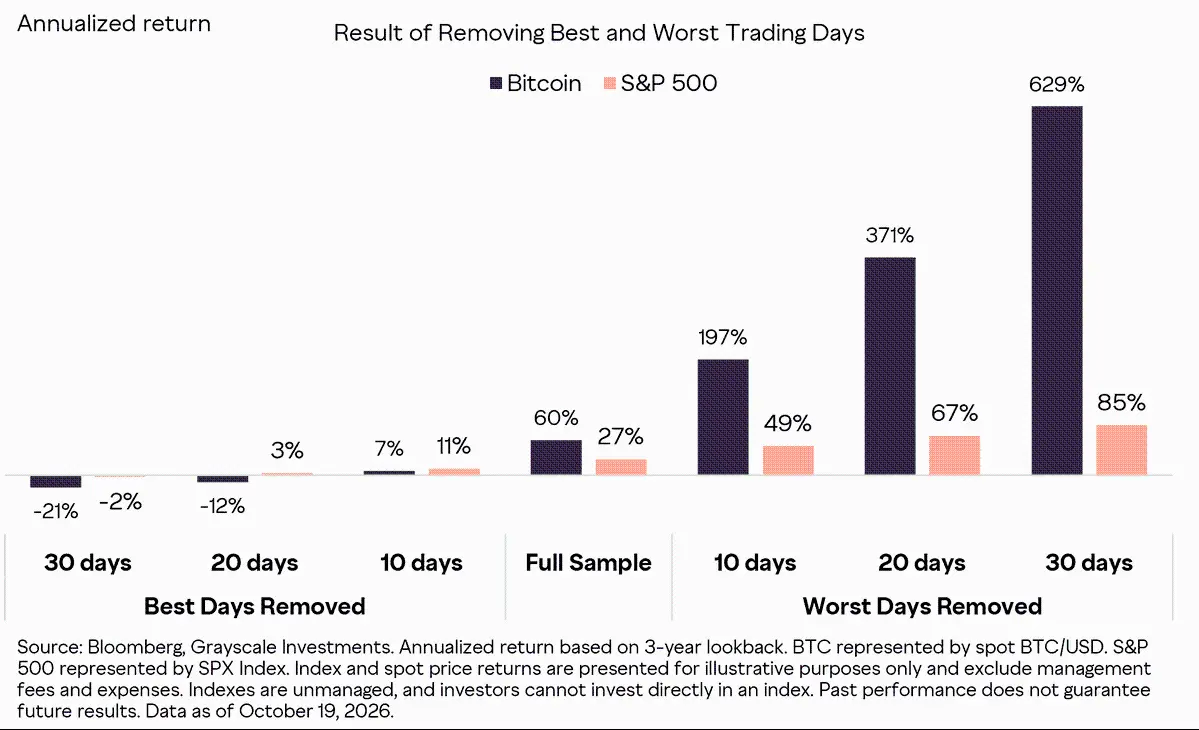
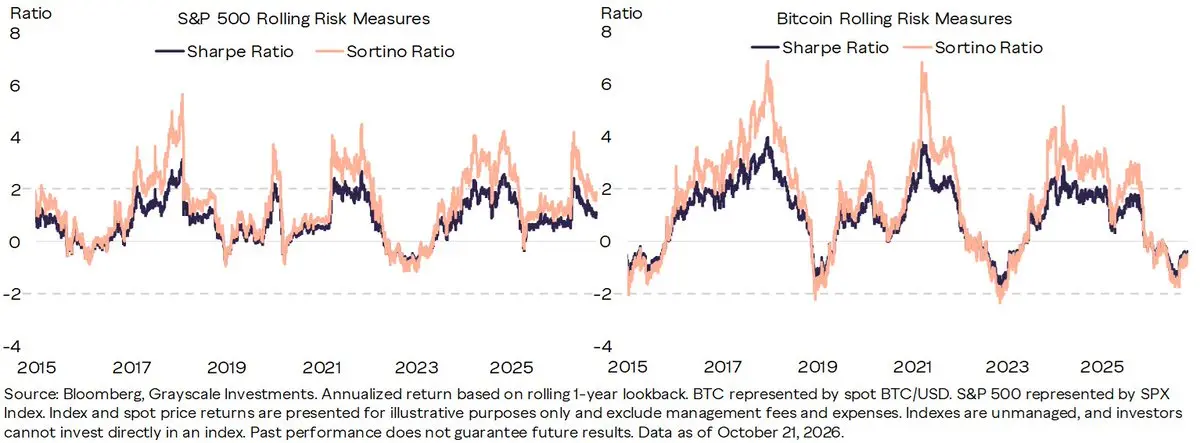
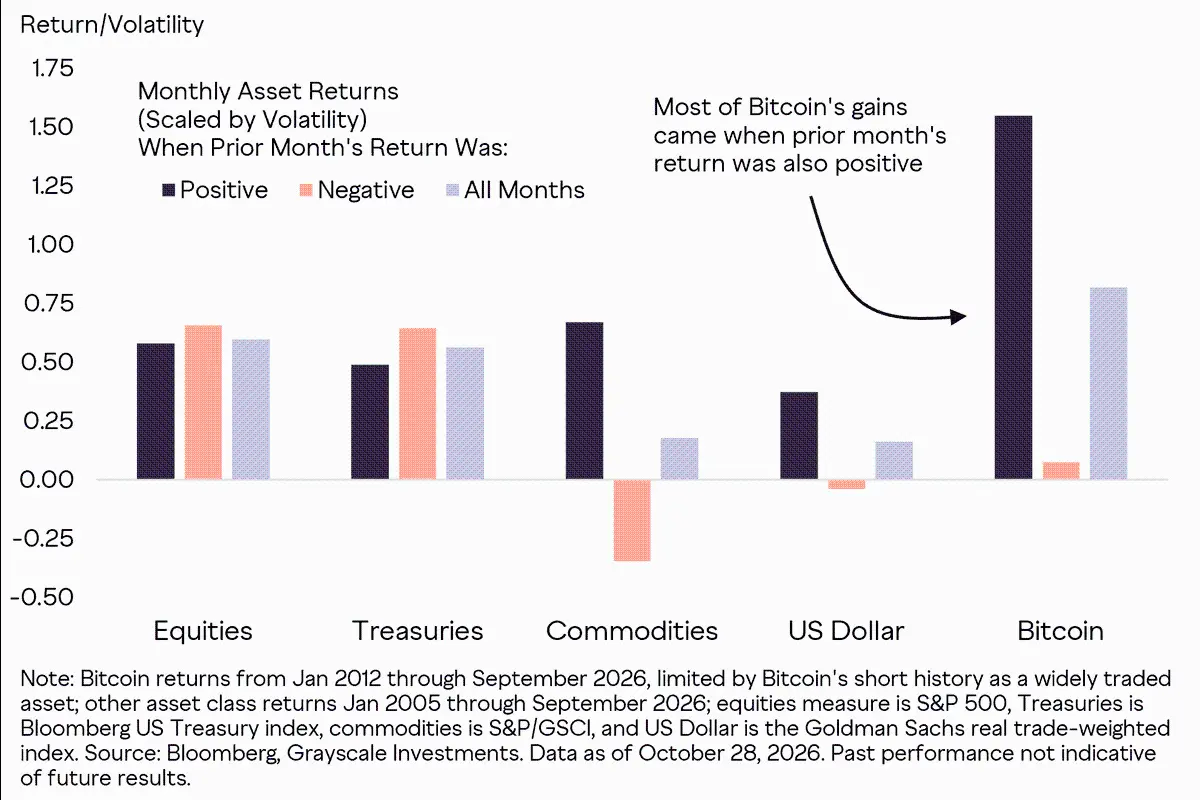
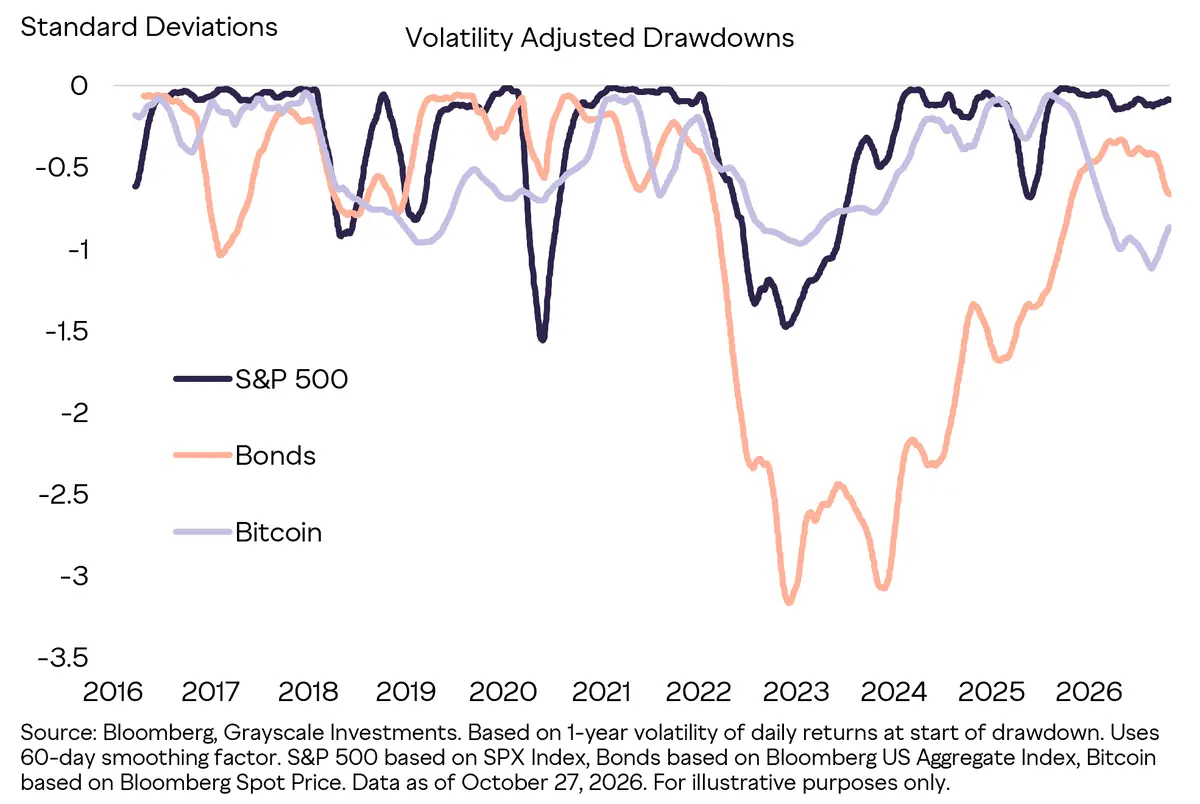
The return distribution remains unusually wide and heavy-tailed. In Grayscale’s three-year example, Bitcoin’s annualized return was 60%. Removing the 10 best days reduced it to 7%; removing the 10 worst raised it to 197%. These retrospective calculations show how much a few days affected the result, not that those days could have been identified in advance. Grayscale also notes that positive momentum has often persisted, while reversals can be abrupt. Coin Metrics data through November 3, 2026, show seven Bitcoin drawdowns of at least 50% since 2011.
What changes at the portfolio level?
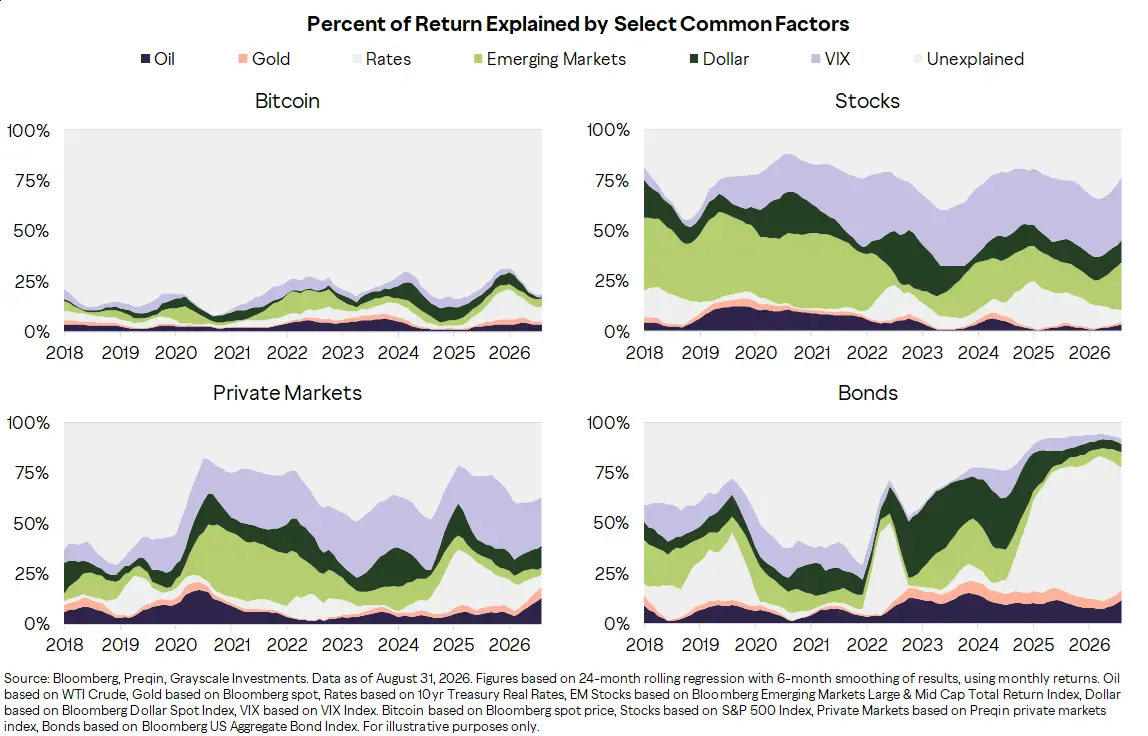
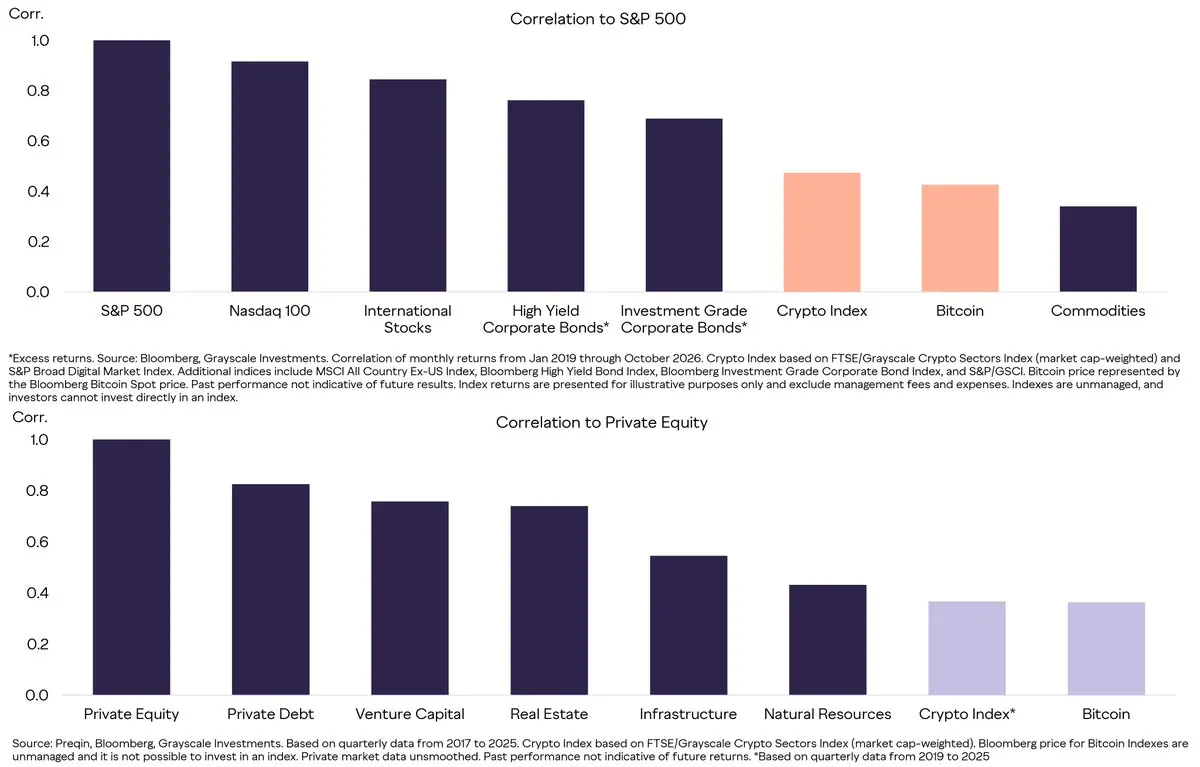
Grayscale regressed returns for Bitcoin and traditional assets against common macroeconomic and market variables. Those factors explained less of Bitcoin’s historical return variation than they did for stocks, bonds and private-market assets. The researchers also found lower historical correlations between crypto and major private-market benchmarks than among those traditional benchmarks themselves. Neither finding guarantees diversification: correlations can rise during market stress.
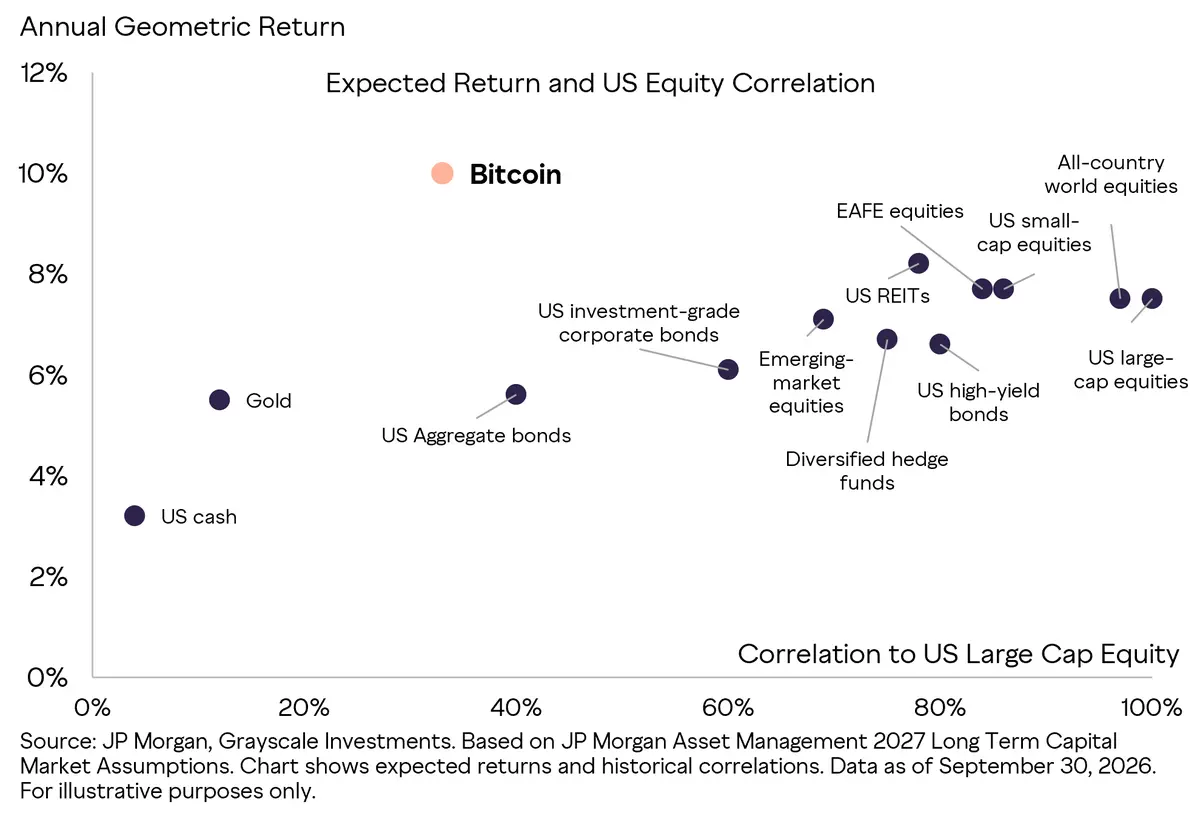
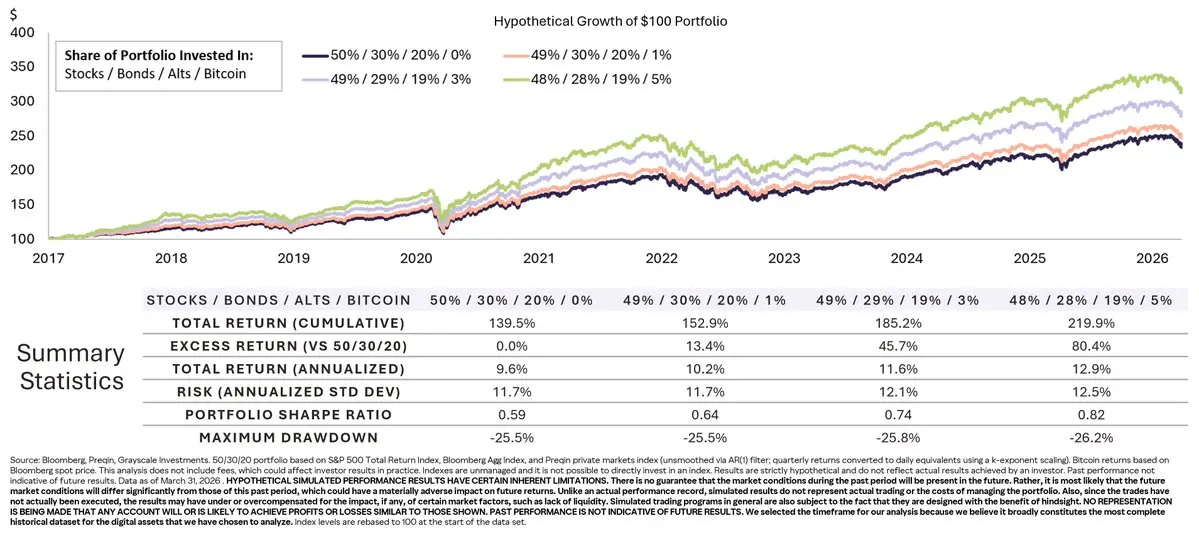
For a forward-looking comparison, Grayscale cites J.P. Morgan Asset Management’s 2027 Long-Term Capital Market Assumptions. They assign Bitcoin a 10% baseline annual compound return, 55% annualized volatility and 33% expected correlation with U.S. large-cap stocks. Those are forecasts, not observed returns. Grayscale’s separate historical portfolio tests found that modest Bitcoin allocations improved annualized returns and Sharpe ratios, with limited effects on portfolio volatility and maximum drawdown in the samples shown. The researchers caution that the backtests reflect Bitcoin’s strong performance during those periods and are not reliable predictions of future outcomes.
Is the rest of crypto one Bitcoin trade?
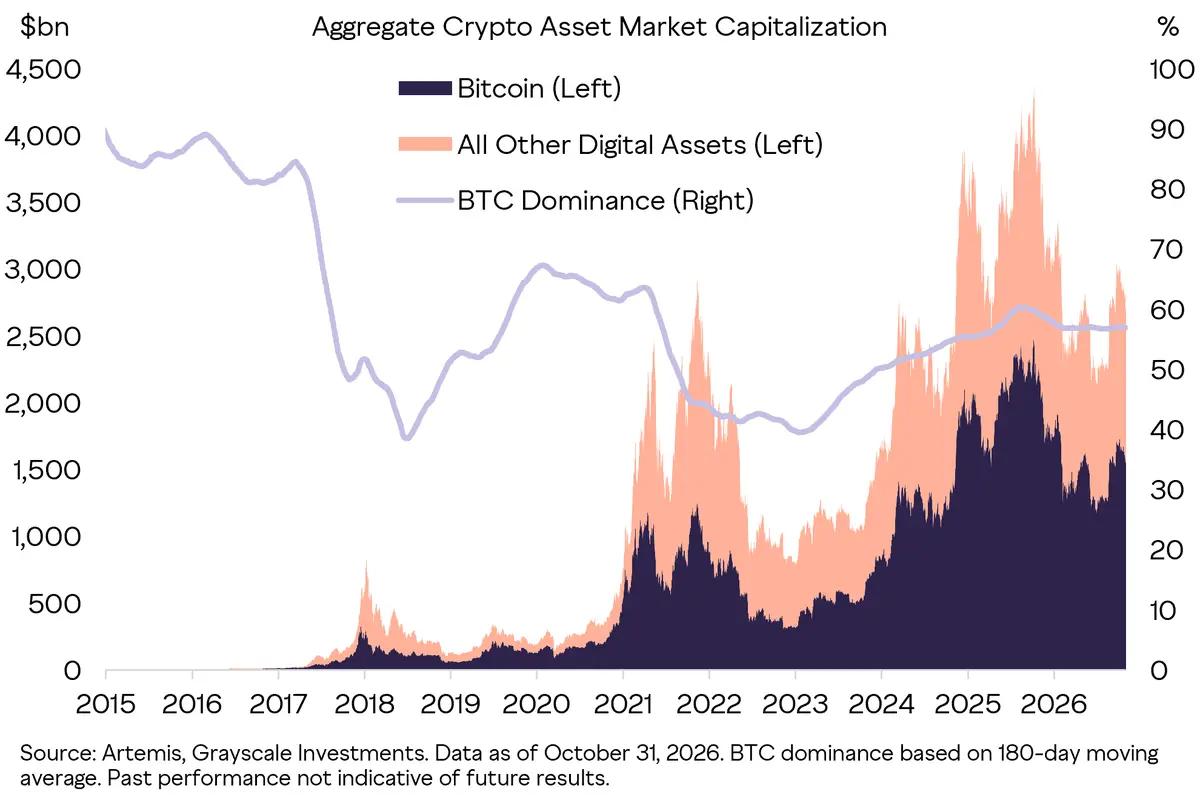
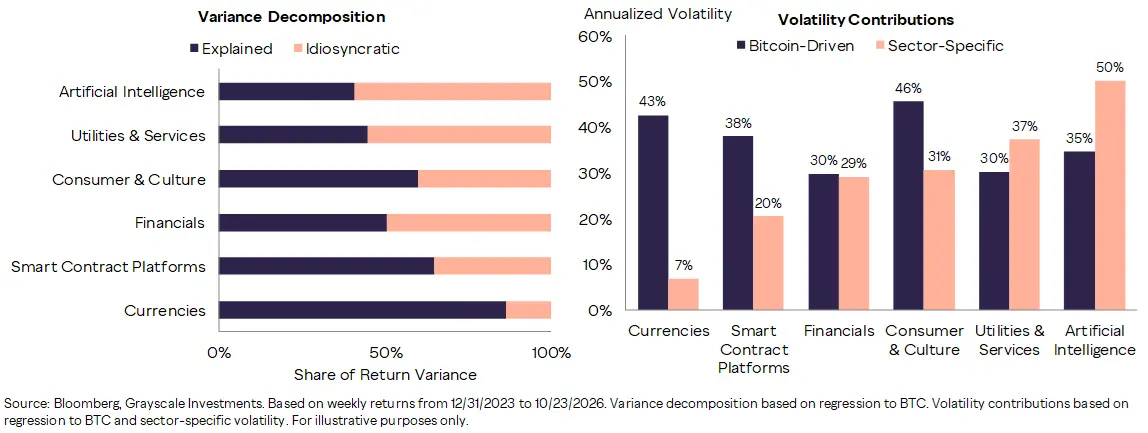
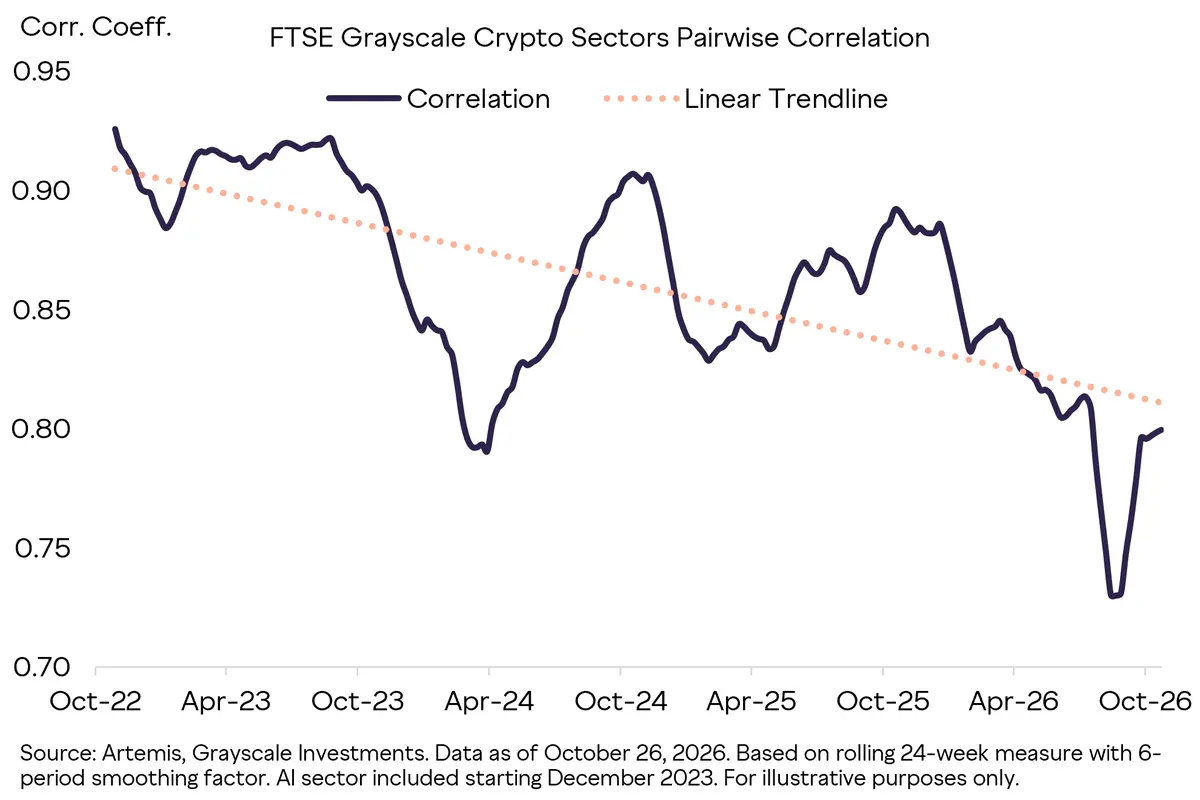
Grayscale’s analysis of FTSE Grayscale crypto-sector indexes found that Bitcoin explained about half of sector return variation over the preceding three years. It also reported that pairwise sector correlations had declined from earlier highs. For another measure of dispersion, Artemis and CoinMarketCap data through November 4, 2026, show that six different assets led quarterly performance among the 10 largest non-stablecoin crypto assets over the preceding two years; Bitcoin led none of those quarters.
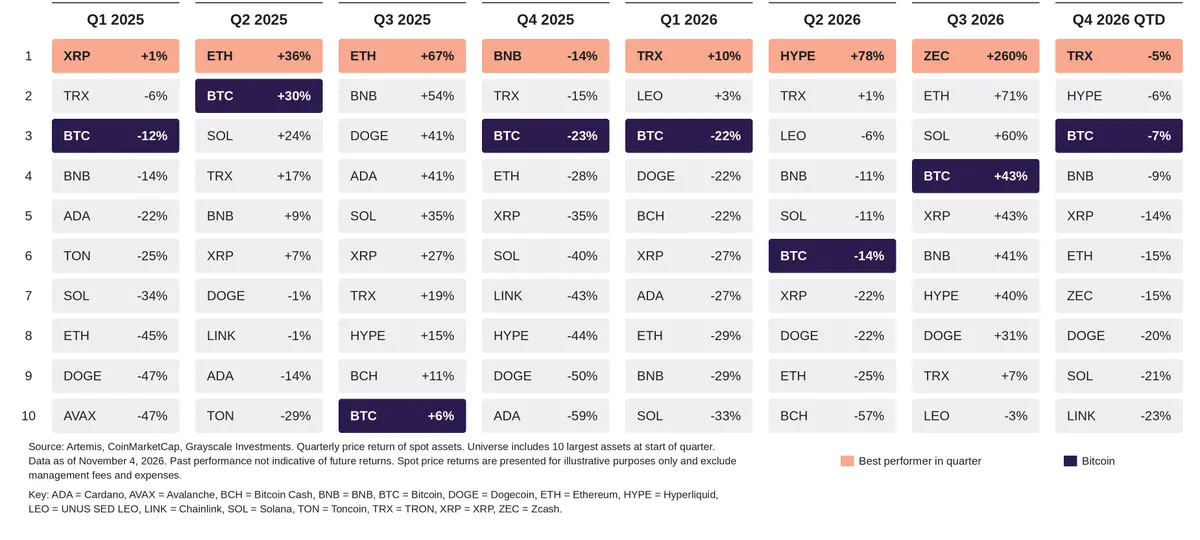
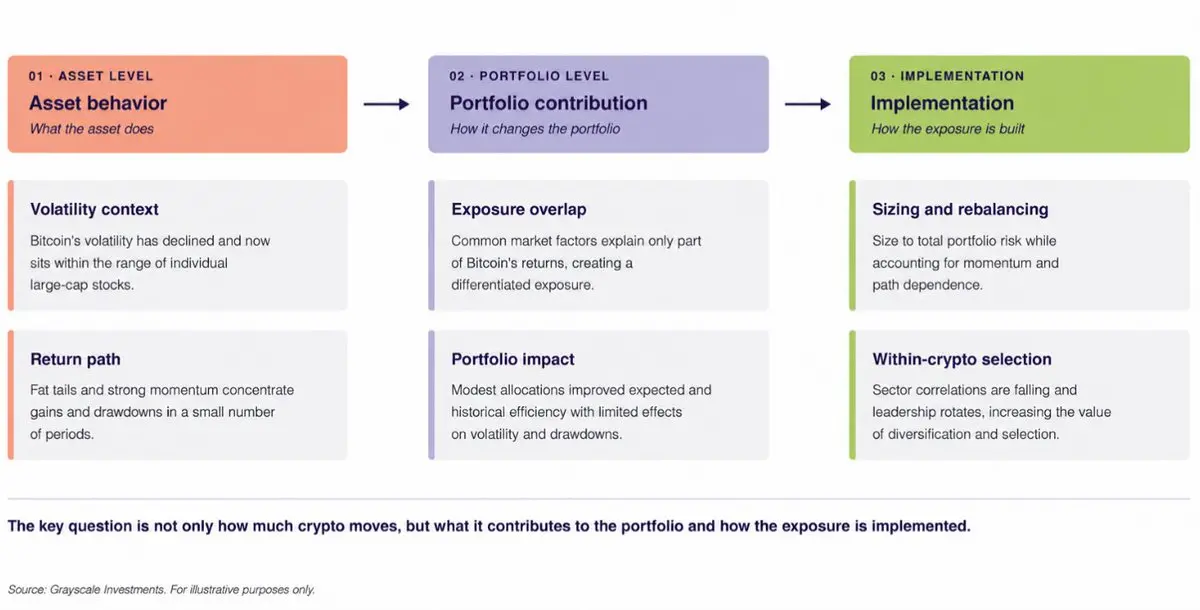
These findings support examining crypto exposures separately rather than assuming they all replicate Bitcoin. They do not establish that every sector offers durable diversification or that past portfolio gains will recur. The report’s narrower conclusion is that volatility, the timing and distribution of returns, correlation with existing holdings, and differences within crypto each answer a different part of the risk question.