This retrospective covers developments reported on November 6, 2026, for the October 30–November 6 weekly period. The market figures below are snapshots as of November 6, with changes measured against the same date in the previous month.
The data: more holders, little change in RWA value
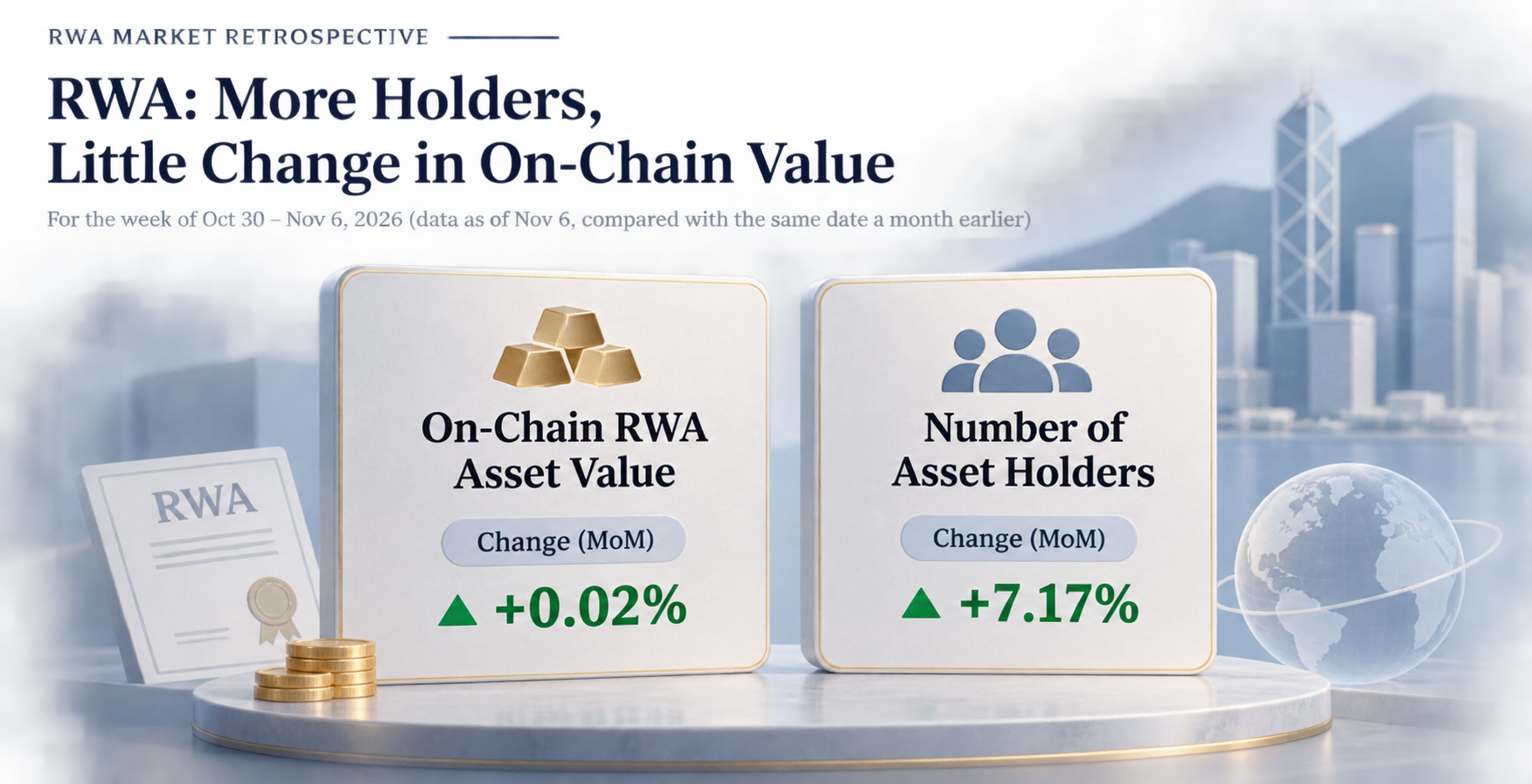
RWA.xyz put the on-chain value of real-world assets at $39.36 billion on November 6, up 0.02% from the same date a month earlier. The number of asset holders reached 5.6537 million, up 7.17%. Holder growth therefore substantially outpaced growth in the measured value of assets; those two figures alone do not establish why participation increased.
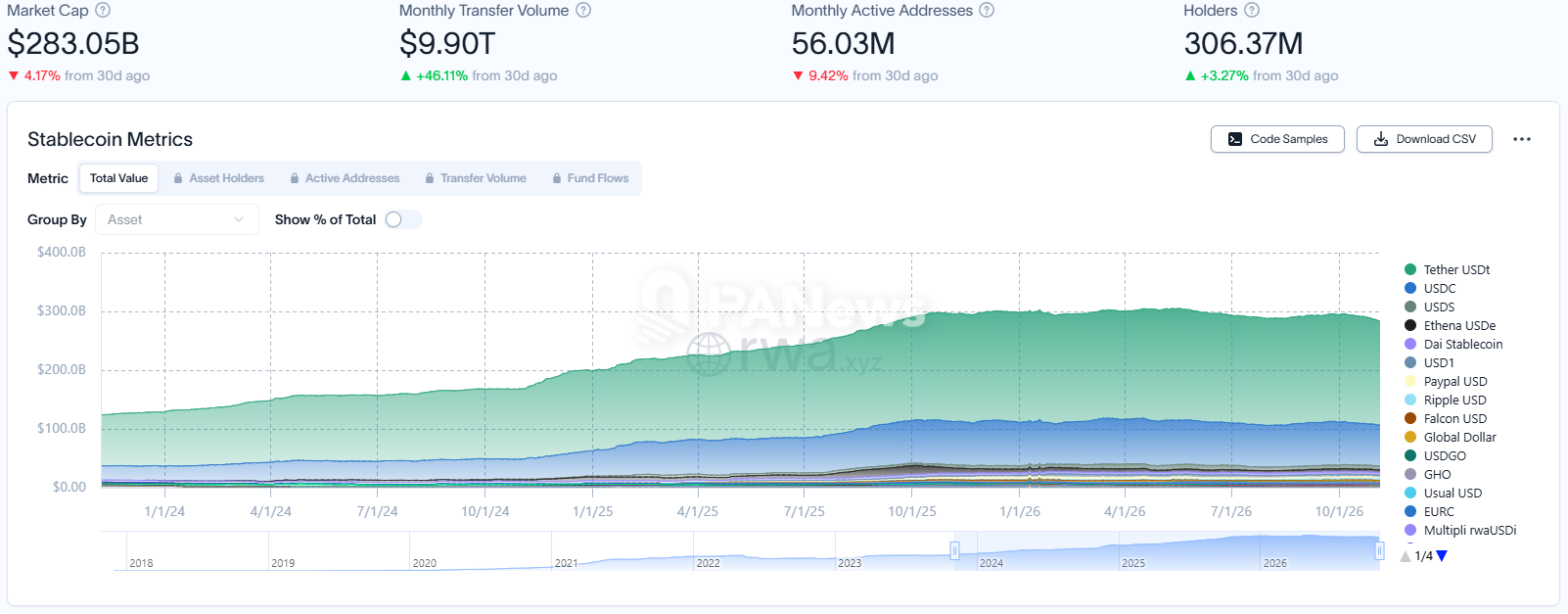
Stablecoin market capitalization stood at $283.05 billion, down 4.17% on the same comparison. Monthly transfer volume rose 46.11% to $9.9 trillion, while monthly active addresses fell 9.42% to 56.03 million. The holder count increased 3.27% to 306 million. These measures describe different aspects of activity: higher transfer volume did not coincide with growth in active addresses. Over the same period, USDT and USDC market capitalizations fell 3.53% and 4.31%, respectively, while USDS edged up 0.03%.
Hong Kong: settlement infrastructure and proposed products
Hong Kong’s Securities and Futures Commission said 17 tokenized retail products had been authorized, spanning money market funds, gold products and ETFs, with $1.3 billion in assets under management. Executive director Christina Choi said a tokenized gold ETF could be the next pilot; it was not described as an approved pilot. She also outlined an Innovation Pathway intended to connect tokenized funds with digital currencies.
The Hong Kong Monetary Authority said Ensemble TX had reached a stage supporting round-the-clock, real-value transactions in tokenized deposits. It plans to extend its trials to regulated stablecoins. Separately, Standard Chartered launched a tokenized-deposit service for corporate clients in Hong Kong, using its own blockchain system and Ensemble TX infrastructure. CoinDesk reported that the service supports real-time transfers between participating banks, with final settlement in central-bank money. Standard Chartered did not disclose completed transaction volumes or the number of institutions initially able to use it.
These are distinct developments: a regulator’s possible fund pilot, an HKMA settlement initiative and a bank’s corporate service. None, by itself, measures adoption at scale.
Tokenized securities: records, rights and objections
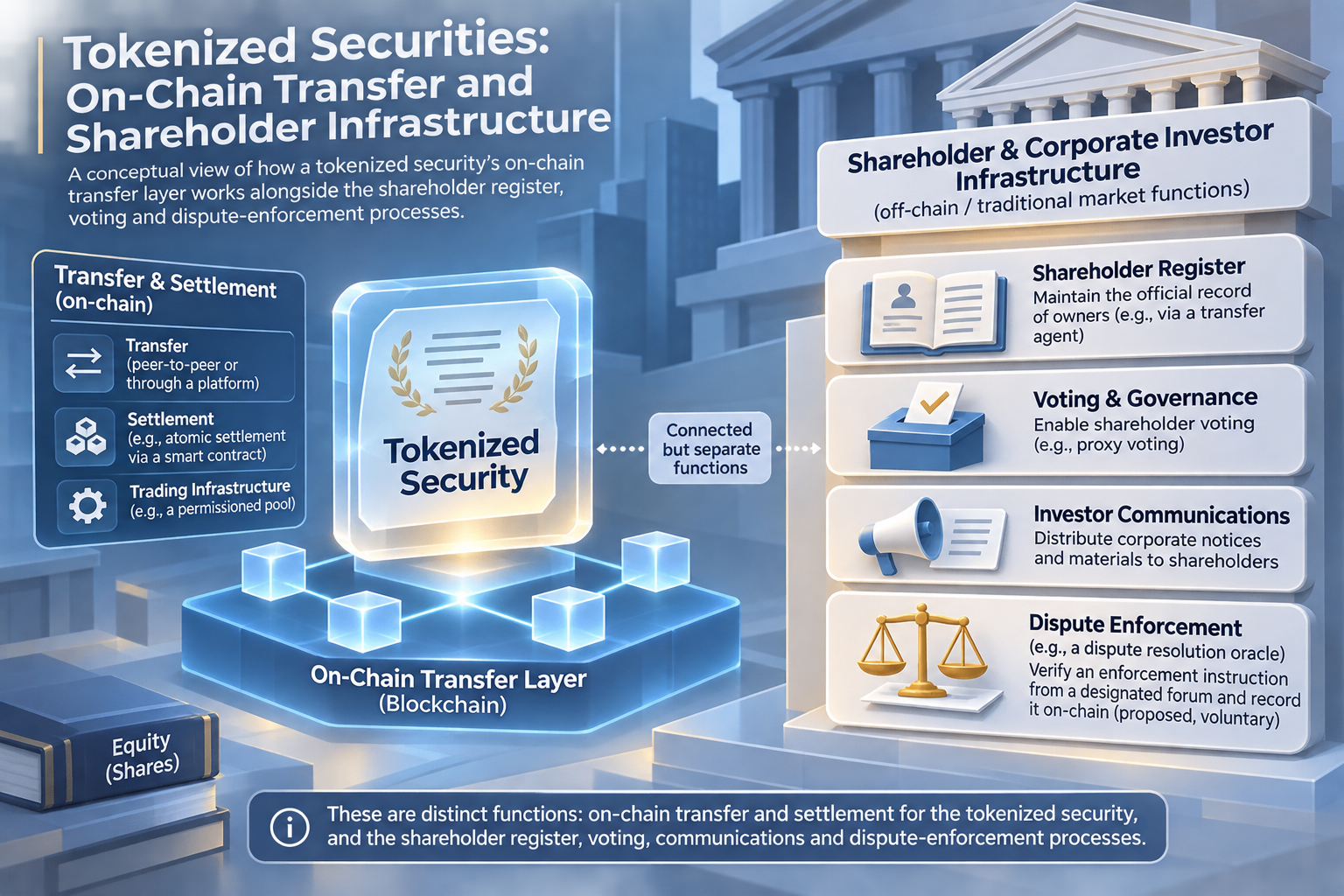
According to Canton Strategic Holdings, its issuer-supported tokenized common shares were traded on November 4 through TSV LLC on Canton Network. The company described them as among the first tokenized US-stock trades under an SEC innovation-exemption framework. It said Five North sold to DRW Cumberland, Flowdesk supplied liquidity, and settlement occurred atomically through a permissioned Tradecraft AMM pool. The company also said token holders have the same rights as shareholders holding through Nasdaq; that rights claim is the company’s characterization.
Morgan Stanley said it was among the first banks to use DTCC Tokenization Services, converting US equities and Treasuries into tokenized form. DTCC’s service, launched October 28, creates tokenized representations backed by securities held at DTC. Meanwhile, the New York Stock Exchange selected Broadridge for shareholder-record, communications and proxy-voting services for its planned tokenized-stock platform—an indication that maintaining conventional shareholder functions remains part of the design.
Issuer consent is another unresolved boundary. In a November 5 notice, OKXICE TSV said the number of public companies objecting to trading tokenized versions of their shares on its platform had risen from 62 to 67. The newly listed objectors included Palantir, S&P Global and Meta. Their objections should not be conflated with a general prohibition on tokenized shares.
Legal and capital requirements
Dubai International Financial Centre Courts published a November 5 white paper proposing a Dispute Resolution Oracle. Under the voluntary proposal, parties would designate a dispute forum in advance; the oracle would verify an enforcement instruction and produce an auditable on-chain record, rather than decide the dispute itself. It remains a proposed mechanism, not an operating rule for tokenized assets generally.
Nigeria’s central bank issued regulations dated November 5 for non-security virtual assets. The reported requirements include 15 billion naira in minimum paid-up capital for locally licensed issuers of foreign-currency-pegged stablecoins and 10 billion naira for naira-pegged issuers. Platform-facilitated peer-to-peer activity requires specific central-bank approval, alongside bank-verification-number checks for relevant naira accounts. The framework assigns non-security payment, settlement and exchange assets to the central bank, while securities remain under the securities regulator.
In France, three crypto-related tax and reporting amendments were removed from the version of the 2027 budget headed to the Senate after the National Assembly rejected its revenue section, according to Cointelegraph. They were not enacted through that version of the bill and could still be reintroduced during Senate consideration.