In a report published on November 9, 2026, TechFlow described Vitalik Buterin’s argument for moving away from fee burn as the basis for valuing ETH. The question is not whether EIP-1559 burns fees—it does—but whether that burn can support a durable cash-flow-style valuation without compromising Ethereum’s priorities.
The gap in the burn-based model
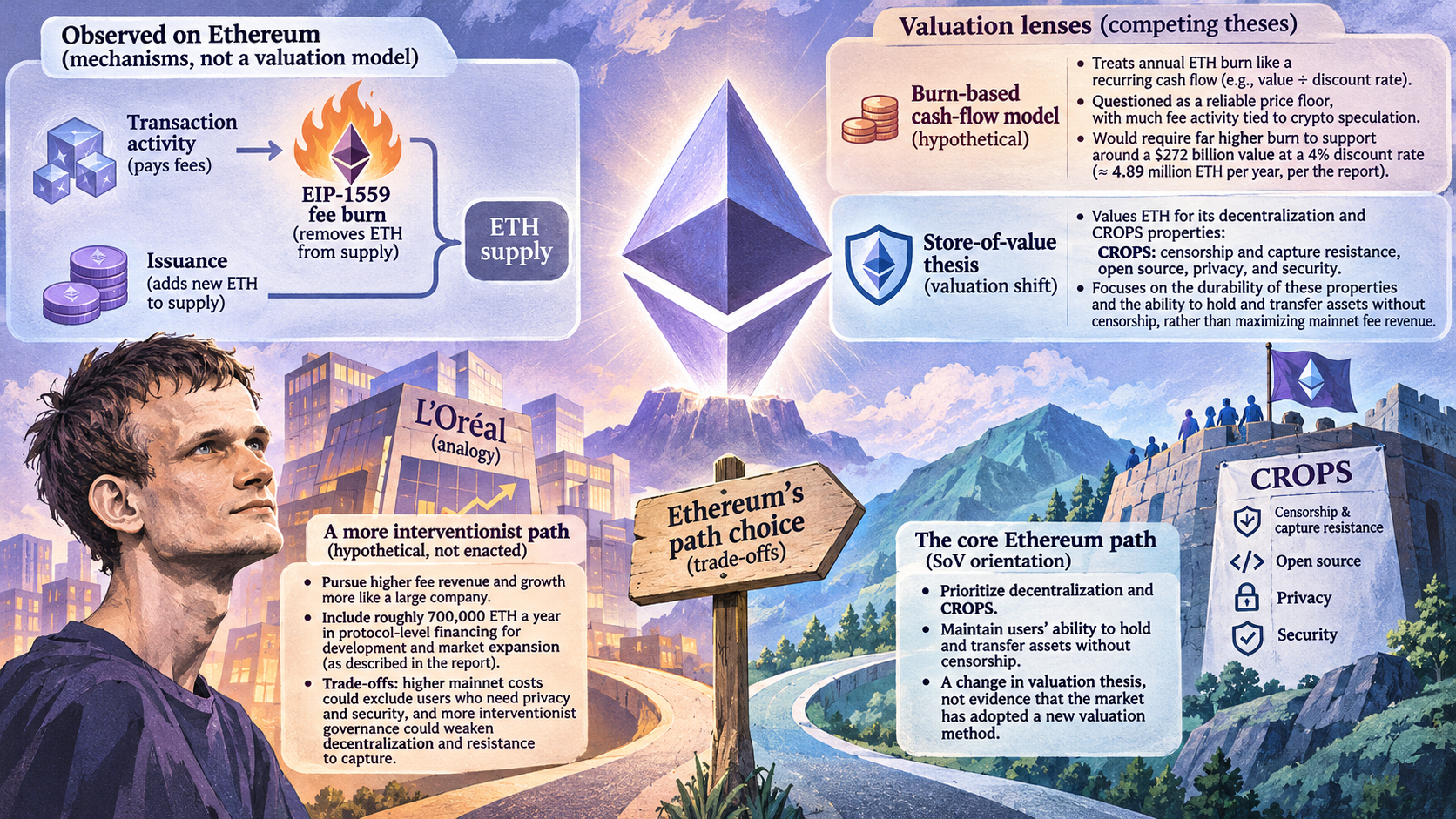
A simplified valuation model treats annual ETH burn like a recurring cash flow: divide its value by a discount rate to estimate a market value. According to the report, Buterin argues that this model never provided a reliable price floor. Much of the activity generating fees has depended on speculation within crypto; the report cites the Yuga Labs virtual-land sale as an example associated with $180 million in fees burned in one day. If ETH’s price falls, the purchasing power and profitability behind such activity may fall with it.
The report gives three burn measurements: approximately 1.48 million ETH in 2022, 19,200 ETH in 2026 through November 8, and 2,694 ETH over the 30 days ending November 8—about $6 million at the value used in the report. It says the last figure did not offset new issuance over the same period. The report does not identify the underlying dataset, so these figures should be read as its reported measurements rather than independently verified on-chain results.
For comparison, the report attributes to Buterin a calculation that supporting an approximately $272 billion market value at a 4% discount rate would require burning about 4.89 million ETH annually. Its stated 149-fold gap compares that annual requirement with the annualized rate implied by the reported 30-day burn—not with the 2026 year-to-date total. This is a test of the model’s assumptions, not a forecast or an established valuation floor.
Why higher fee revenue is not a neutral fix
The report frames a more interventionist alternative through Buterin’s comparison with L’Oréal: Ethereum could seek growth more like a large company, including what the report describes as roughly 700,000 ETH a year in protocol-level financing for development and market expansion. That is a hypothetical path, not an enacted funding rule.
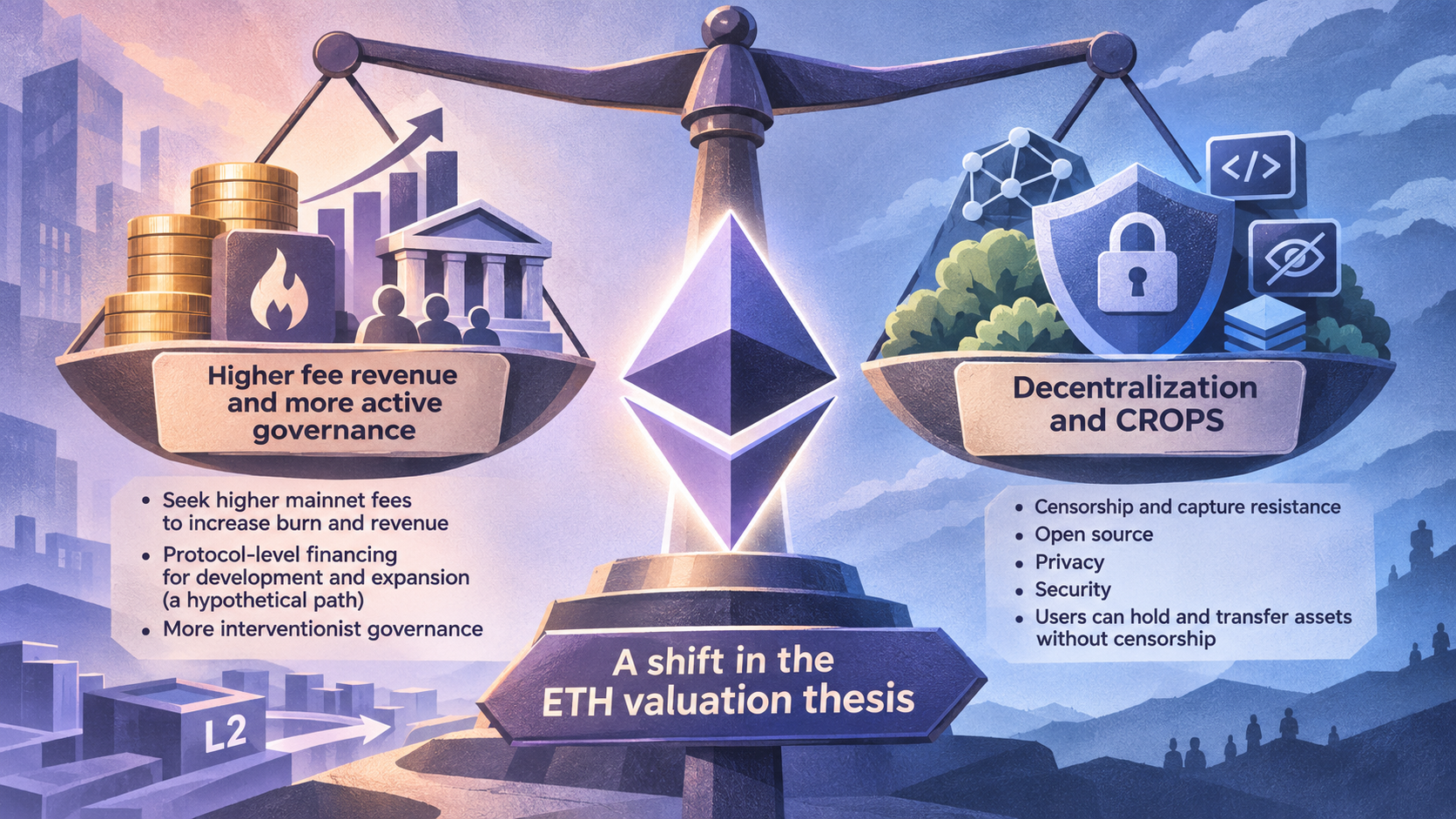
In the argument as reported, pursuing higher fees and more active governance to sustain revenue would create a trade-off. Higher mainnet costs could exclude users who need privacy and security, while interventionist funding and governance could weaken decentralization and resistance to capture. The report connects the decline in mainnet burn to Ethereum’s Layer-2-centered scaling path, but it does not provide a breakdown establishing how much of the decline each cause explains.
What a store-of-value thesis would need to show
Rather than treating ETH chiefly as a claim on burned fees, the report says Buterin emphasizes Ethereum’s decentralization and CROPS properties: censorship and capture resistance, open source, privacy, and security. On that account, ETH’s proposed store-of-value case rests on the durability of those properties and users’ ability to hold and transfer assets without censorship—not on maximizing mainnet fee revenue.
That is a change in valuation thesis, not evidence that the market has adopted a new valuation method. TechFlow’s author interprets it as an adjustment to lower burn and weak price performance. The report also mentions six consecutive weeks of net outflows from US spot ETFs, but supplies no ETF dataset or measurement dates for that claim. Neither the ETF reference nor the burn figures, on their own, establish what ETH should be worth.