In TechFlow’s November 17, 2026 publication of a Glassnode Insights market report, Bitcoin was trading near $64,000 on Monday after falling about 13% over the preceding week. It had briefly dropped below $63,000 on Saturday, its lowest level since late August. The report’s central distinction is that derivatives leverage had eased sharply, while ETF outflows and losses among recent buyers remained unresolved.
Derivatives risk fell, but selling persisted
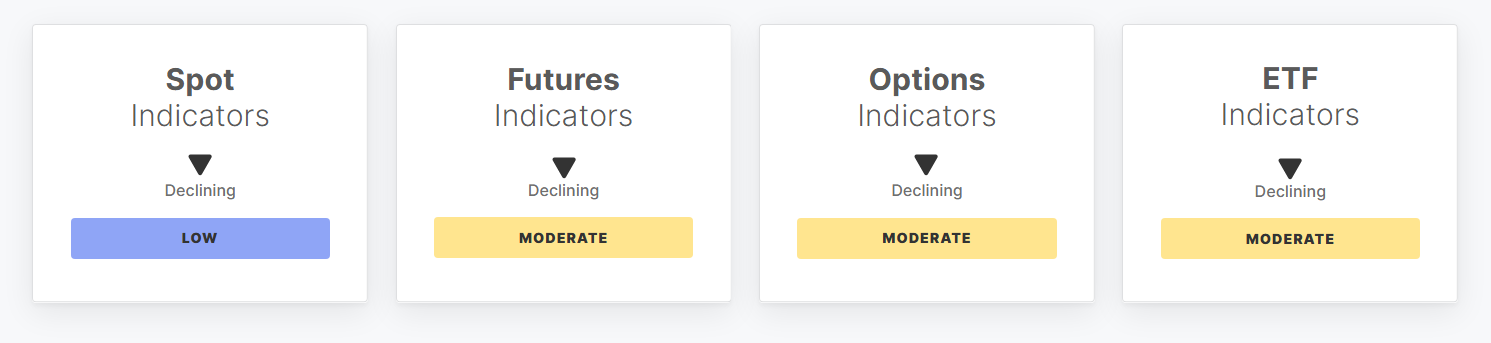
Glassnode’s figures showed futures open interest down 7.2% from the previous week to $34.2 billion, near the bottom of its observed range. The report also said perpetual-futures funding rates had retreated into a neutral range after several weeks at elevated levels. Perpetual cumulative volume delta (CVD), a measure of the balance between aggressive buying and selling, widened from −$493 million to −$1.4 billion. Glassnode interpreted the move as reflecting both long liquidations and active selling.
Spot-market readings offered little evidence that selling had ended. The report’s price-momentum measure fell 36.1%, from 35.6 to 22.8, its weakest reading since August. Spot CVD deteriorated from −$51.5 million to −$133.7 million; aggressive selling was most pronounced from Thursday through Saturday before easing on Sunday. In options, 25-delta skew rose 30.9% to 13.7%, which the report described as the highest put-option premium since August.
ETF flows and holder losses
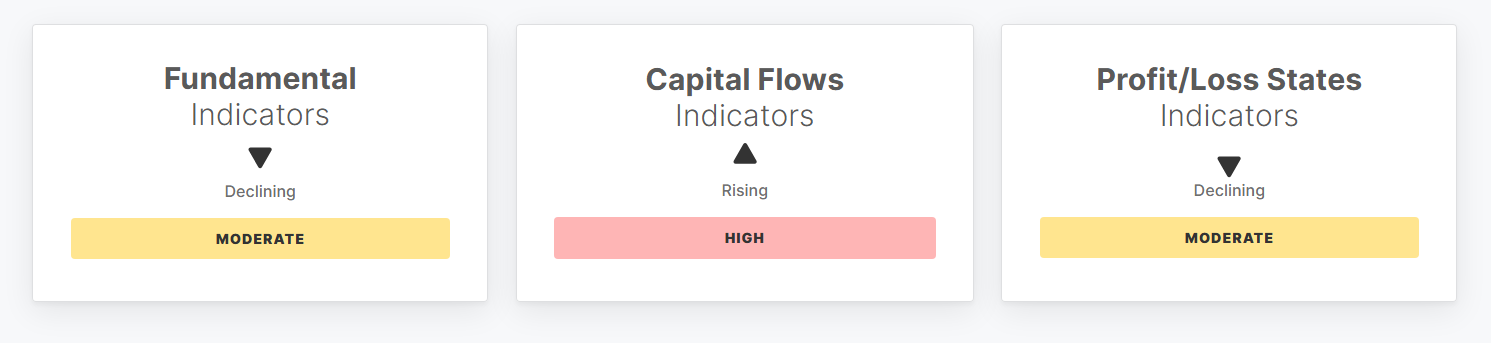
According to the report, US spot Bitcoin ETFs recorded net outflows on every trading day of the preceding week. Weekly net outflows narrowed slightly to $995.4 million, while weekly trading volume fell to $11.5 billion. Glassnode put the ETFs’ aggregate MVRV—a comparison of market value with estimated cost basis—at 1.06, close to the 1.0 break-even level.
On-chain activity remained substantial despite the price decline. Entity-adjusted daily transfer volume rose 3.6% to $5.4 billion, and daily active addresses stood at approximately 659,700. Yet monthly realized-cap growth slowed from 0.43% a week earlier to 0.04%. That is consistent with slower growth in the network’s aggregate cost basis, though it does not by itself identify every source or destination of capital.
The share of coins in profit fell from 60.4% to 55.3%. Short-term holders’ net unrealized profit/loss (STH-NUPL) turned negative at −7.4%, indicating that this cohort was, in aggregate, holding unrealized losses. The short-term-to-long-term holder supply ratio edged up to 15.1%, while the report’s hot capital share measure remained at 22.0%. Glassnode also said realized losses had reached their highest level since July.
What remains uncertain: Lower open interest and cooler funding suggest that one source of market risk—crowded leveraged positions—had diminished by the reporting date. They do not establish a price floor. Glassnode’s account points instead to subsequent ETF flows and whether selling by short-term holders spreads to longer-term holders as questions for assessing whether Bitcoin can hold around $64,000. The report also cited macro risk aversion as a contributor to the decline, but the supplied figures do not isolate its effect.