Historical-source review: The original article was published on November 11, 2026, at 09:52 UTC+8. Its market figures and proposals reflect that reporting period, not a current assessment.
Rex St. John’s central argument is that many earlier crypto projects depended on something smart contracts could not provide: affordable judgments about events and obligations outside a blockchain. In the article, translated by AIdidiaoJP for Foresight News, he proposes that AI models, stablecoins and faster, cheaper chains could make some of those designs more practical. This is a thesis about potential businesses, not evidence that AI adjudication has already solved their trust or legal problems.
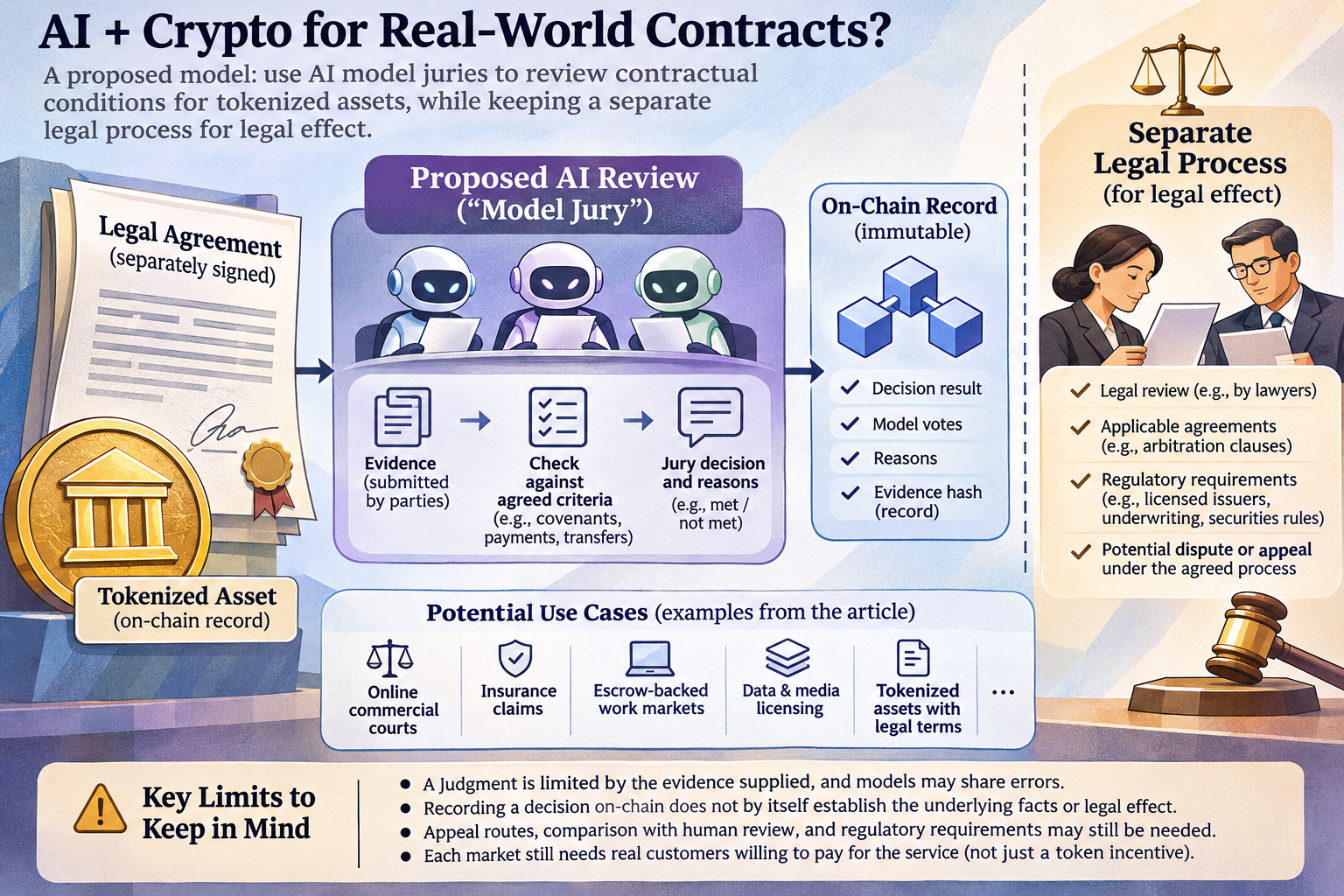
The proposed mechanism is a model jury: multiple models examine agreed criteria and submitted evidence, then record votes and reasons. It could assess whether work met a brief or whether an insurance claim fits a policy. But a judgment remains limited by the evidence supplied, and models may share errors. Putting the result on-chain would record the decision; it would not establish that the underlying facts were true.
Where the thesis might apply
The article ranks 15 directions by the author’s estimates of potential revenue capture and readiness, not by forecast returns:
- Online commercial courts: assess small disputes that are costly to send to human jurors.
- Oracles for ambiguous questions: settle outcomes that cannot be read from a straightforward data feed.
- Insurance claims: compare policy language with documents and other evidence; licensed underwriting or regulated partners would still be needed.
- Escrow-backed work markets: judge deliverables against acceptance criteria before releasing payment.
- Data and media licensing: assess whether documented uses comply with license terms.
- Machine payments: let agents pay for small services. The article cites TRM Labs figures of approximately 198.9 million x402 transactions and $52.7 million in volume through September 2026, while noting TRM’s finding that most volume was not yet genuine agent commerce.
- Reputation and bonds: use recorded outcomes and forfeitable deposits to make an agent’s commitments more consequential.
- Proof of personhood: connect agents to an accountable person or company—a proposed use case, not a solved identity method.
- Rule-bound organizations: check proposals against written rules before treasury authorization.
- Curated registries: assess entries against stated listing criteria.
- Content provenance: weigh evidence of origin beyond a file timestamp or hash.
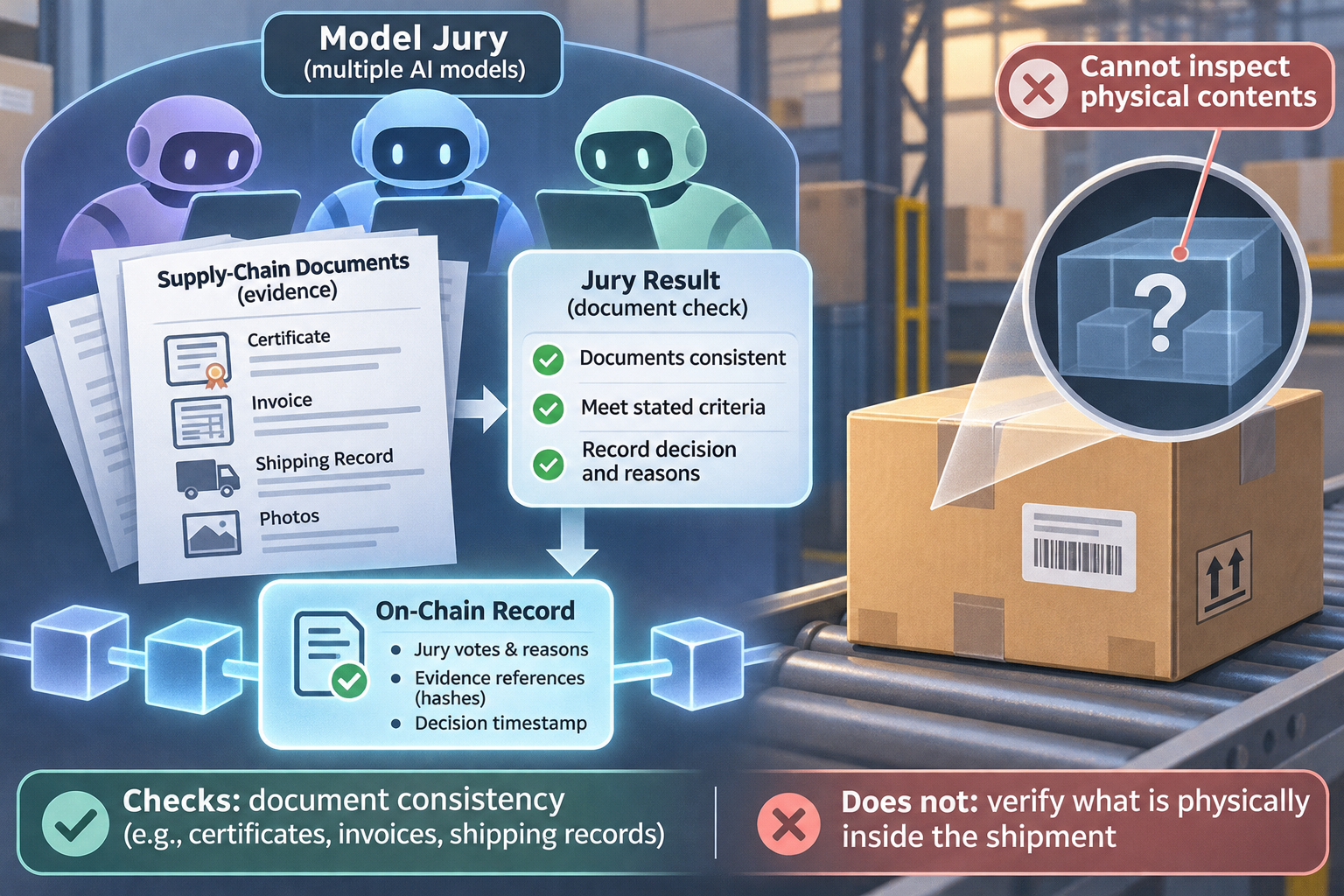
- Supply-chain documentation: check records for inconsistencies, without claiming to verify what is physically inside a shipment.
- Tokenized assets with legal terms: assess covenants, transfers and payments against agreements. Legal effect would depend on the agreements and applicable processes; the article says licensed issuers and lawyers would be required.
- Shared compute and infrastructure: assess service evidence and potentially forfeit a provider’s bond. The article cautions that proven paying demand remains limited.
- Contract-backed intellectual property: connect signed legal documents with on-chain records and assess license compliance; legal review would remain necessary for some filing services.
St. John favors starting where customers already pay people to make imperfect judgments—particularly commercial disputes, market settlement and insurance claims. His proposed test is whether a jury can answer the question from evidence it can actually inspect, and whether the service works without a token subsidy.
Those conditions also define the limits of the argument. Evidence can be forged, models can make correlated mistakes, and an appeal route and comparison with human review would be needed to evaluate decisions. Regulation does not disappear when judgment becomes cheaper. Nor do working payment rails establish demand: each proposed market still needs customers willing to pay for the service.
Source: panewslab.com (originally published 2026-11-11 09:52 UTC+8)